






/file/attachments/orphans/iStock-802203090_325419.jpg)









Cuban regime reels as communist ally is toppled
President Diaz-Canel rages at ‘brutal assault’ on Venezuela but Havana fears Trump’s next move

The Cuban government is in “a lot of trouble”, the US secretary of state warned following the capture of its communist ally Nicolas Maduro.
Fears are growing in Havana that it could be the Trump administration’s next target for regime change.
“The Cuban government is a huge problem ... I think they are in a lot of trouble, yes,” Marco Rubio told NBC News on Sunday when asked if it would be the next Latin American regime to be toppled after the US’s raid on the Venezuelan capital.
His remarks followed a similar warning on Saturday from president Donald Trump, who warned “we’ll be talking about Cuba” at the end of a press conference about his invasion of Venezuela.
Those ominous remarks have sent alarm bells ringing in Cuba, where the Communist leadership is now in fear of a wider US military campaign in Latin America.
President Miguel Diaz-Canel, who has ruled Cuba since 2019, said the capture of Mr Maduro was part of a “brutal assault” on the “Zone of Peace,” a bloc of 33 Latin American and Caribbean states.
He also branded the US mission a “criminal attack” and “state terrorism against the brave Venezuelan people and against Our America”, urging a response from other world leaders.
Created in Havana in 2014, the Zone of Peace declaration was a broad commitment not to intervene in the affairs of other countries and to uphold “friendly relations” in the Caribbean and Latin American regions.
While it is not explicitly anti-US, the pact is widely viewed as an attempt to counterbalance Washington’s regional influence. Mr Diaz-Canel has warned it is now under siege.
Cuba’s Communist Party-controlled media outlets have followed Mr Diaz-Canel’s lead with Granma, the country’s most widely read news outlet, running a huge image of the Venezuelan national colours on its home page.
The lead article stated that Cuba “stands with Venezuela” and quoted at length various messages of condemnation from senior Communist politicians in the country.
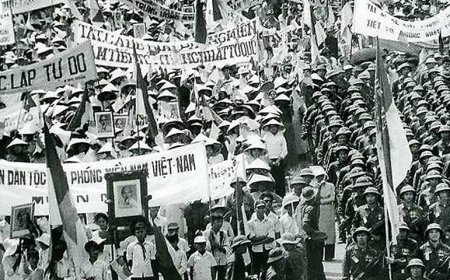
On the ground, reporters in Havana have spoken of an atmosphere of fear in the capital and a sense of grim inevitability on the issue of an attempted US coup.
“Here in Cuba, people are really rather worried,” British journalist Ed Augustin told NBC News. “I was at a rally outside the US embassy that was hastily convened by the ruling Communist Party this morning, and I think both the government and an awful lot of Cubans feel threatened.”
Addressing fears that Cuba’s government could be next, he added: “It’s been widely reported ... that Marco Rubio ... sees this strategy, getting rid of Maduro, as the mechanism by which they can finally overthrow the government in Havana.”
There does indeed seem to be a bigger plan under way in Washington, and one largely driven by Mr Rubio, who is the first US secretary of state with Latin American heritage.
Born to Cuban immigrants who travelled to Miami in 1956 seeking a better life, it is no secret that Mr Rubio wishes to see an end to the Communist regimes in Cuba and Nicaragua.
On Sunday Mr Rubio said the Cuban government has a “huge problem” as he refused to rule out any future action against the South American country.
He told NBC’s Meet the Press that he would not talk about “future policy” but said it was “not a mystery that we’re not big fans of the Cuban regime”.
What is much less clear is what could happen. US military action is one possibility but another might be a home-grown coup or the toppling of the government by mass protests.
The Cuban economy is in a dire state – with the US the main culprit according to Havana – owing to collapsing public services, a 10 per cent plunge in GDP since 2020, food shortages and a soaring cost of living.
In 2021, there were large-scale protests against the government and the Communist Party over severe food and medicine shortages during the Covid pandemic. Similar protests followed in 2024, this time linked to power cuts as well as food shortages.
There were also clues as early as November 2025 that the Trump administration would like to become the dominant power in the Western Hemisphere.
In its National Security Strategy paper released that month, the administration vowed to “reassert and enforce the Monroe Doctrine to restore American pre-eminence in the Western Hemisphere”, referring to the policy of James Monroe, the fifth US president, who saw Latin America as part of the US sphere of influence.
The same document says that the Trump administration will “protect our homeland and our access to key geographies throughout the region”, a line that now feels prescient in light of Saturday’s helicopter raid on Caracas.
However, experts say the long-term effects of the attack in Venezuela, and any future intervention in Cuba, extend far beyond Latin America.
“The Trump administration’s removal of Maduro from power in Venezuela is not simply a message to antagonistic regimes in the hemisphere, like Cuba and Nicaragua,” said Alexander B Gray, a senior fellow at the Atlantic Council, a US research institute.
“It is a global re-establishment of deterrence that will be seen in Beijing and Moscow as an unambiguous sign of the Trump administration’s commitment to a security order compatible with American interests,” he said.
The attack on Caracas may also have been designed to humiliate China, which has pumped enormous amounts of investment into both Venezuela and Cuba.
In Venezuela alone, Beijing has provided about $100bn (£75bn) in loans and other forms of financial support, with the state’s large oil reserves used as collateral.
A report by Reuters over the summer found that China might even supplant Russia as Cuba’s main benefactor in the near future. In 2025 alone, 55 solar parks in Cuba were underwritten by China, the news agency noted.
Sure enough, it was China leading the condemnation of the attack on Mr Maduro on Sunday, with Beijing’s foreign ministry demanding his immediate release.
But if Mr Trump is serious about extending his reach across the whole Western Hemisphere – and Saturday’s events strongly suggest that he is – then getting Mr Maduro out of a jail cell could soon be the least of Beijing’s worries..