





















An Image That Made Nearly Seventy Million People Cry and Sparked National Solidarity
Hemn Surchi
An image is a form of visual art that often speaks for itself in conveying hidden messages and expressing the circumstances and conditions of the moment in which it is drawn or taken. Every image, through form, color, symbolism, and composition creates a particular scene and leaves an emotional and intellectual impact on the viewer. This art is not merely a record of events; rather, it is a tool of critique and a means of transmitting social and political consciousness, memory, and implicit messages. In the age of social media, images spread rapidly and widely, so that within a few seconds millions of people see them and interpret them from their own perspectives. Here, what I want to focus my pen on is an image that, in recent days, immediately after spreading across all platforms and social networks, drew enormous attention and produced such a powerful impact that it can be said to have made the world’s largest stateless nation—estimated at nearly seventy million—cry.
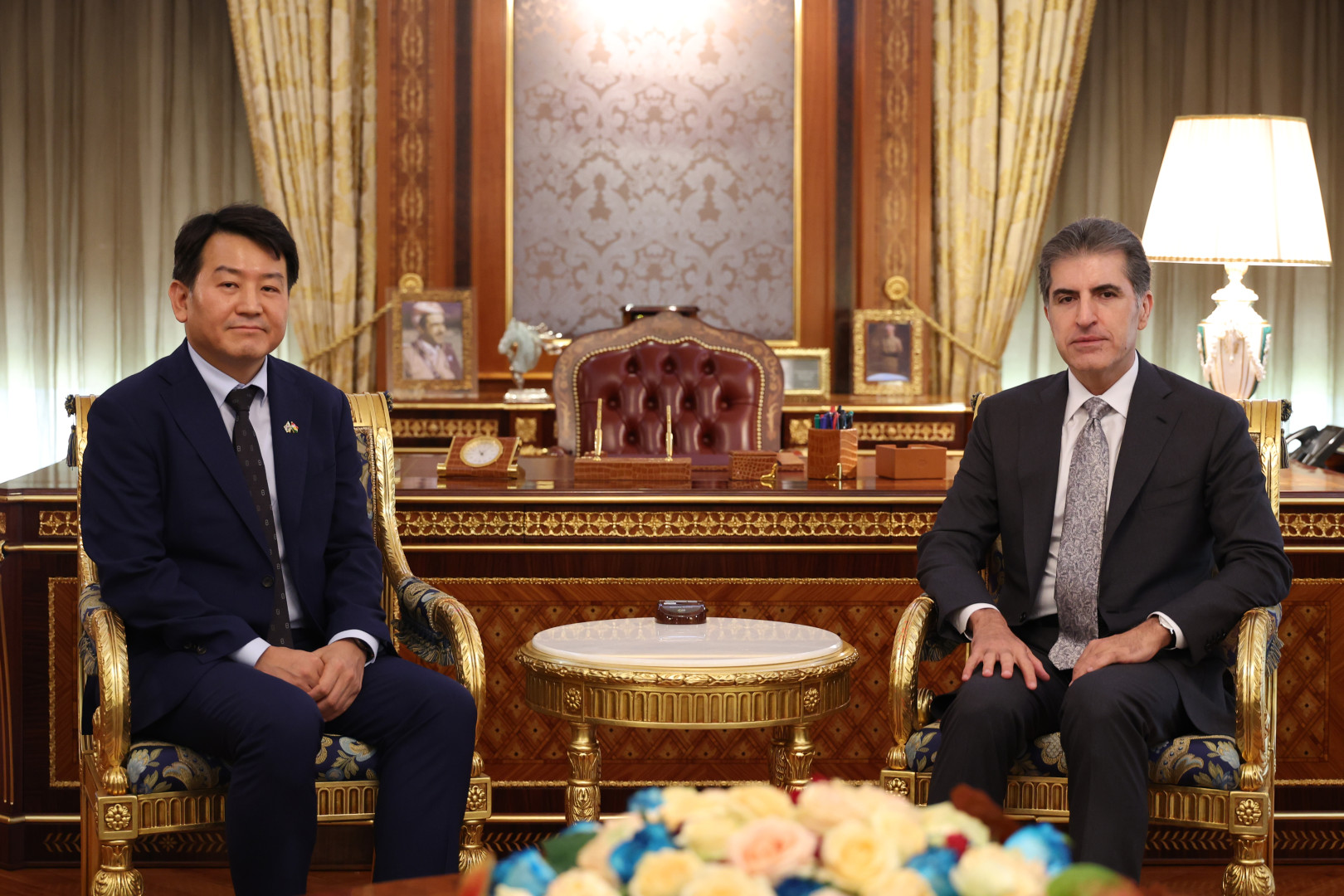
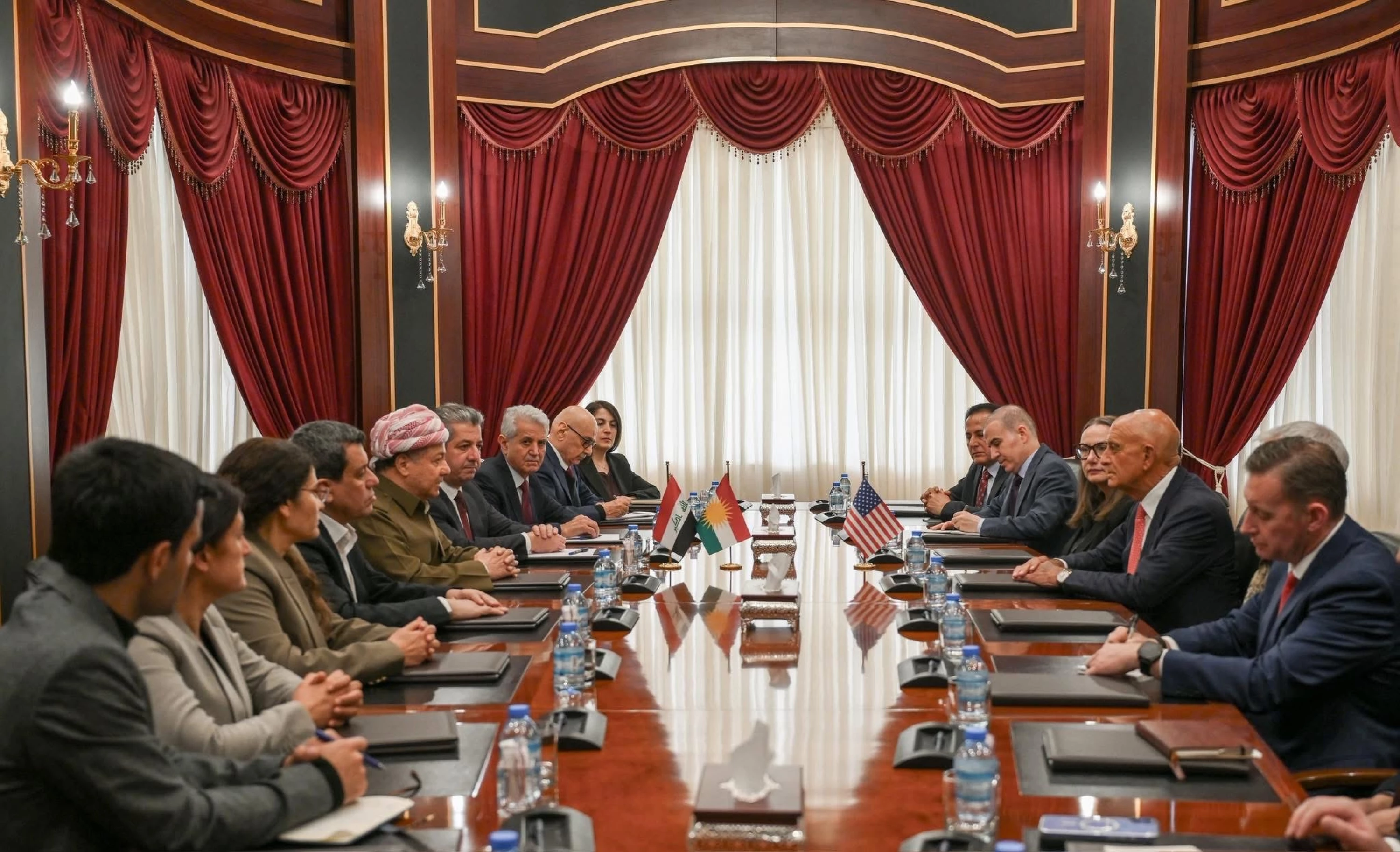
Of course, following the meeting held on Saturday, 17 December 2026, in Pirman, hosted by distinguished Kurdish figure and leader, Masoud Barzani, the release of an image from inside the meeting quickly became a major topic across social media platforms and generated widespread reactions.
On Saturday, 17 December 2026, the Kurdish leader Masoud Barzani hosted the United States Special Envoy to Syria, Ambassador Thomas J. Barrack; Mazloum Abdi, Commander-in-Chief of the Syrian Democratic Forces (SDF); and Mohammed Ismail, leader of the Syrian Kurdish National Council (ENKS/ANKS). The meeting was also attended by the United States Consul General in Erbil, Ms. Windy Green; the Commander of U.S. Forces in Syria, General Kevin Lambert; and Colonel Zachariah Cork. The meeting aimed to discuss the current situation in Rojava and Syria.
In this way, it can be said that the image became a driving force that brought Kurds, wherever they may be in the world, under the umbrella of unity and the defense of their homeland. The image was so powerful that it appeared capable of inspiring extensive political, cultural, and artistic reflection. As is clear in the image, a number of Kurdish leaders and authorities are seen facing a group of American representatives, ambassadors, and envoys. The expressions of the Kurdish leaders suggest a moment of strategic uncertainty, reflecting the gravity of the political circumstances they confront.
Without a single word being spoken or a statement being issued at the time, the image itself prompted widespread interpretation. After the image was published—and in the absence of an official announcement regarding the outcome of the meeting—the Kurdish public engaged in a careful and critical reading of the scene. Many interpreted it as a sign of the sensitive and challenging position Kurdish leaders face within broader regional and international power dynamics.
This collective interpretation was shaped by historical memory. Past experiences—from the Battle of Chaldiran (1514), through the treaties of Amasya (1555) and Zuhab (1639), the Sykes–Picot Agreement (1916), the Treaties of Sèvres (1920) and Lausanne (1923), the aftermath of the 2017 referendum, and more recent developments in Rojava—continue to influence Kurdish political consciousness. These historical moments reinforce a deep awareness of Kurdistan’s geopolitical importance and the recurring pressures exerted by powerful external actors.
Rather than producing silence or resignation, the public response to the image appeared to encourage unity. Many voices emphasized the importance of standing behind Kurdish political leadership and safeguarding collective interests, regardless of internal political, cultural, or ideological differences. In this sense, the image functioned not merely as a depiction of a diplomatic meeting, but as a catalyst for renewed national awareness and solidarity.
Up to this moment, widespread reactions across social platforms suggest that the impact of the image has been profound. After evoking strong emotional responses, it also appeared to bring together a fragmented nation around a shared sense of responsibility and vigilance. For this reason, the image may be understood as symbolizing a moment of unity—one that highlights the potential for collective political consciousness.
In conclusion, the image was not merely a recorded scene of a diplomatic meeting, but rather a mirror in which Kurdish history, fear, hope, and national awareness were reflected. This image reminded us that nations often decide their fate in the hearts and consciousness of the people before decisions are made at negotiation tables. If this awareness remains and is transformed into genuine steps of unity and collective action, then it can be called the beginning of a conscious revolution—not an armed revolution, but a revolution of unity and national stance, because whenever a nation is united and stands behind its leaders, no force can break its will.