

/file/attachments/orphans/ED_543155_209242.jpg)






















Mustafa Barzani’s Vision of Leadership in His Kani Smaq Speech (1967)
Hemn Surchi / Academic and Political Analyst
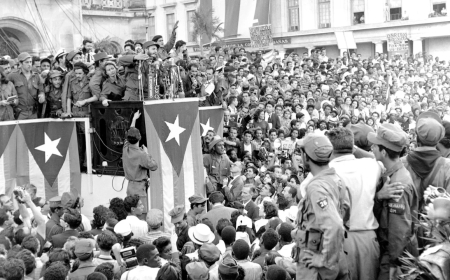
Mulla Mustafa Barzani (1903–1979), widely regarded as the most prominent Kurdish national leader of the twentieth century and the founding figure of the modern Kurdish national movement in Iraq, stands as a symbol of Kurdish resistance, leadership, and political organization. In a seminal speech delivered to his party in Kani Smaq in 1967, Barzani underscored the moral foundations of leadership, presenting ethical principles as the cornerstone of effective governance. He envisione a model of leadership grounded in people-centered governance, peace, justice, coexistence, and brotherhood during a period when the region was marked by intense political turmoil.

The modern political history of the Middle East has been shaped by leadership crises, authoritarian governance, and enduring conflicts rooted in injustice and exclusion. In this context, foundational political texts that articulate alternative ethical and political visions deserve sustained scholarly attention. Mulla Mustafa Barzani’s speech delivered on 17 April 1967 in Kani Smaq stands as a seminal articulation of moral leadership, principled governance, and conflict resolution grounded in justice, popular legitimacy, and intercommunal coexistence. Far from being a situational address limited to its historical moment, the speech presented a comprehensive framework for leadership that remains highly relevant to contemporary debates on peace, brotherhood, and people-centered governance in the Middle East. This article examines Barzani’s speech as a coherent and forward-looking model of leadership, highlighting its ethical foundations, political transparency, and enduring relevance as a basis for just rule and peaceful coexistence.
At the heart of Barzani’s vision lies a profound ethical redefinition of leadership. He rejected power as a means of personal gain and instead frames leadership as an obligation rooted in sacrifice, humility, and self-discipline. By insisting that leaders must endure greater hardship than those they govern, Barzani established a moral hierarchy in which authority is earned through service rather than imposed through force. This conception of leadership offers a powerful alternative to prevailing models of governance in the Middle East, where authority has often been associated with privilege and distance from popular suffering. Barzani’s emphasis on ethical conduct and self-criticism affirmed leadership as a moral practice, inseparable from the well-being of the people.
Barzani’s speech assigned a central role to the political party as the institutional expression of national unity. He conceptualized the party not as an instrument of domination, but as the disciplined and sincere organization of the people’s collective will. In this framework, party discipline and organization are essential not for suppressing society, but for safeguarding the revolution from corruption, fragmentation, and personal ambition. By distinguishing between genuine popular parties and those that merely claim the name while oppressing the people, Barzani articulated a normative standard for political organization that remains relevant in contemporary Middle Eastern politics. His vision anticipated modern theories of leadership and participatory political organization.
One of the most enduring insights of the Kani Smaq speech was Barzani’s insistence that political success depends fundamentally on popular trust. He emphasized that no movement regardless of its military strength can succeed without the support of the people. Respect for civilians, protection of the poor, and moral conduct toward society were presented as strategic and ethical imperatives. This people-centered conception of power situates Barzani’s thought within a broader democratic tradition that understands legitimacy as emerging from consent and moral authority rather than compulsion. His warnings against exploiting villagers and civilians underscored a deep commitment to social justice as the foundation of political stability.
Barzani’s articulation of Kurdish–Arab relations represents a sophisticated and inclusive vision of intercommunal coexistence. He categorically rejected ethnic hostility, affirming that the Kurdish struggle was directed not against peoples, but against injustice and oppression. Brotherhood was, in his formulation, something that must be grounded in justice, equality, and shared political participation. By advocating democratic governance, constitutionalism, and free elections, Barzani situated his vision within a pluralistic and inclusive political horizon. His emphasis on peaceful coexistence among Kurds, Arabs, Turkmen, Assyrians, Armenians, and others reflected a deeply civic understanding of nationhood that transcends ethnic exclusivism.
Barzani’s approach to conflict resolution was rooted in restraint, moral clarity, and principled resistance. He consistently rejected unnecessary violence and framed armed struggle as a defensive measure aimed at protecting rights, dignity, and existence. Peace, in his vision, is not achieved through domination, but through justice, accountability, and mutual recognition. This ethical framework offers a compelling model for conflict resolution in the Middle East, where cycles of violence are often sustained by exclusionary governance and moral disengagement. Barzani’s insistence on justice as the foundation of peace underscored the inseparability of ethical leadership and lasting stability.
At its core, Mulla Mustafa Barzani’s Kani Smaq speech stands as a landmark articulation of ethical leadership and just governance in the modern Middle East. By grounding authority in sacrifice, popular legitimacy, organizational integrity, and intercommunal justice, Barzani offered a leadership model that transcends its historical moment and speaks directly to contemporary challenges of conflict, fragmentation, and authoritarianism. Rather than merely commemorating a historical figure, engaging with Barzani’s vision invites renewed reflection on the moral foundations of power and the conditions necessary for peace, brotherhood, and collective prosperity. In an era marked by political uncertainty, the Kani Smaq speech remains a powerful reminder that enduring leadership begins with conscience and ends with justice.