

/file/attachments/orphans/ED_543155_209242.jpg)













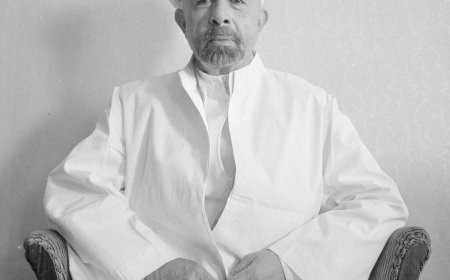

Major Clifford Oliver, SAS staff sergeant decorated for bravery during the QE2 bomb scare
Oliver was part of a small team who parachuted in terrible weather into the mid-Atlantic to defuse six bombs claimed to be on the Cunarder

Major Clifford Oliver, who has died aged 86, was decorated for bravery while serving in the Special Air Service, after parachuting into the mid-Atlantic in 1972 as part of a team to search for and defuse bombs planted on the Cunard liner QE2; the incident inspired the film Juggernaut (1974), starring Richard Harris, Omar Sharif and Anthony Hopkins.
Oliver, a staff sergeant at the time, was overseeing demolition training at the SAS camp in Hereford when the call came to mount an operation in the Atlantic. The drama had started at 3pm on the previous day when the Cunard office in New York received a call demanding $350,000 (around £140,000) – or six bombs on QE2 would be detonated by two men hidden among the 1,400 passengers on board. A message was relayed to the ship, which was then in the mid-Atlantic, en route to Cherbourg. The Ship’s Master, William Law, instigated a basic search, not wishing to alarm passengers.
Cunard informed the Ministry of Defence of the threat, and on the following day an operation team was prepared, consisting of Oliver, along with an army bomb disposal officer, Captain Robert Williams, and two members of the then Special Boat Company (now Special Boat Service), Lieutenant Richard Clifford and Corporal Thomas Jones.
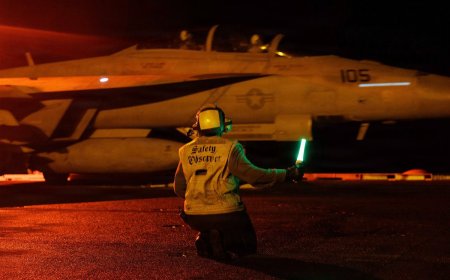
The team assembled at RAF Lyneham and prepared for a parachute jump into the stormy Atlantic. It was not until the C130 Hercules was airborne that the men were given the full details of their mission: “To locate and defuse several bombs hidden aboard QE2”.
Williams, who was violently airsick due to the turbulence, had to be given a parachute lesson as he had not done a military water jump before. Overhead, an RAF Nimrod flew to maintain secure radio communication links with the QE2, the C130, the MoD and the FBI.
As they neared the QE2, the weather militated against the jump, with poor visibility, wind speed of 20 knots and a five-foot sea swell. So hazardous were the conditions that it was not until the fourth C130 run, flying at sea level before pulling up steeply into the clouds to a jump height of 800ft, that Oliver and Jones jumped with the equipment.
Oliver’s equipment was so heavy that it dragged him under the swell, so he had to cut it free, along with his parachute. A lifeboat from the QE2 picked them up. The C130 came round for a seventh run before successfully dropping Clifford and Williams, who sank about 30ft before bobbing back up to the surface, badly shaken.
The passengers, alerted by the arrival of the parachutists, were finally informed of the bomb threat. Once the team was safely aboard, Williams took command – but not before a scene straight out of James Bond, when Lt Clifford produced a copy of that day’s Daily Telegraph from his dry suit and handed it to the captain.
An extensive search yielded nothing except an unaccompanied suitcase, which Williams blew up to reveal some dirty washing and books, and the threat was declared a hoax. Two months later, the FBI caught up with the hoax’s perpetrator, Joseph Landisi, when he tried a similar trick on American Airlines.
All four men were awarded the Queen’s Commendation for Brave Conduct. The citation in The London Gazette on September 26 1972 noted their courage and determination in unusual and hazardous conditions.
Clifford Reginald Oliver was born in Bridgnorth, Shropshire, on July 8 1939. After leaving school he worked on a farm, until in 1957, on taking shelter from rain in the doorway of the Army recruiting office in Wolverhampton, he was offered more money than he was making on the farm, and decided to join up.
Instead of his local regiment – reasoning that that if he did not like it, it would be too easy to go back home – he joined the Seaforth Highlanders. After basic training in Scotland, he was posted to the 1st Battalion at Minden in West Germany.
In 1960 Oliver joined the SAS. Between 1964 and 1967 he rotated between operations in Borneo, Radfan and Aden. In the early 1970s he was a member of the British Army Training Team during the Dhofar rebellion in Oman.
In 1974 he was selected for a Late Entry Commission. After a short period at Sandhurst he joined the 2nd Battalion Royal Green Jackets. There he served as a captain with A Company, including a tour of Belfast in 1974-75 at the height of the Troubles.
On his return to the SAS he assumed a number of appointments, including second in command of a squadron, regimental adjutant and commander of the Counter Revolutionary Warfare Wing and Training Wing, before finishing his service at the London Headquarters of Special Forces.
He left the SAS in 1983 and initially worked for the SAS founder, Sir David Stirling, looking after country estates. He was then involved in selling protective equipment, including body armour and clothing, to the police and Armed Forces.
In his spare time he built sets for his local dramatic society, the Lynden Players, in Middleton Cheney, West Northamptonshire. His two masterpieces were a series of overhead showers for Singin’ in the Rain (2005), and the set for South Pacific (2007), for which he won an award from the National Operatic and Dramatic Association.
He is survived by his wife Audrey and a daughter.
Major Clifford Oliver, born July 8 1939, died March 4 2026
[Source: Daily Telegraph]