



/file/dailymaverick/wp-content/uploads/2025/04/Krill_school_1_credit-Aker-Qrill.jpg)
























Endurance, strain and Iran’s sustainability at a time of war
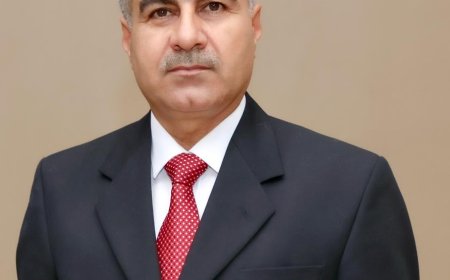
Dr. Sirwan Abdulkarim Ali - political analyist and academic.
The sustainability of any state engaged in prolonged geopolitical tension is ultimately determined not by its military capacity alone, but by the condition of its society and the allocation of its resources. In the case of Iran, this question has become increasingly relevant. For more than three decades, the Iranian population has lived under a combination of economic sanctions, internal policy constraints, and external strategic commitments. These overlapping pressures raise a fundamental question: can the current model sustain prolonged confrontation without deepening internal strain?
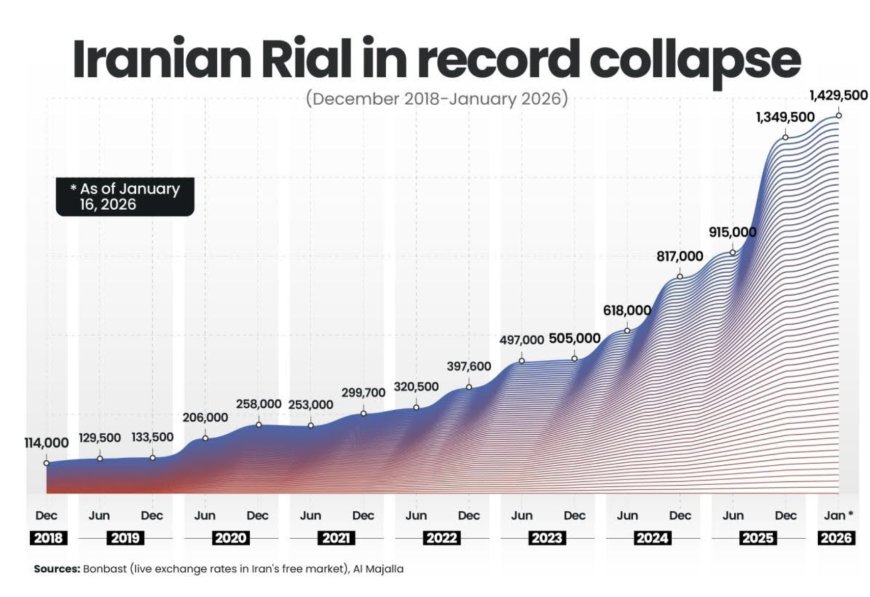
A closer examination suggests that while the Iranian state has demonstrated resilience, this resilience is not without cost. The burden of that cost is borne primarily by ordinary citizens, whose lived realities offer the clearest insight into the long-term sustainability of the system. For many Iranians, economic hardship is not a temporary condition but a prolonged reality. Inflation has steadily eroded purchasing power, while currency depreciation has made essential goods increasingly expensive. Access to quality healthcare and education, although still present in institutional form, has become uneven and strained.
These pressures have created a society that is resilient, but also fatigued. The issue is not merely poverty in its traditional sense, but the gradual erosion of economic stability. Families adapt, but at a cost: reduced opportunities, limited mobility, and a growing sense of uncertainty about the future. This situation cannot be attributed solely to external sanctions. While sanctions play a major role, internal policy choices; particularly the prioritization of strategic and regional commitments; have also shaped the economic landscape. The result is a cumulative strain that continues to define everyday life.
Iran’s regional strategy has long focused on extending influence beyond its borders. Support for actors in countries such as Lebanon has been framed as a form of strategic deterrence, particularly in relation to Israel. From a geopolitical perspective, this approach may be understood as an attempt to create depth and balance in a hostile environment. However, such a strategy comes with financial implications. Even if these expenditures are modest in comparison to global powers, they are significant within the context of Iran’s constrained economy. For many citizens, the perception is not one of strategic necessity, but of imbalance; resources directed outward while domestic needs remain pressing.
This tension between external ambition and internal necessity lies at the heart of the sustainability question. Sanctions have undeniably shaped Iran’s economic trajectory. Restrictions on banking, trade, and investment have limited access to global markets and slowed economic growth. Iran has developed mechanisms to adapt, including informal trade networks and regional partnerships, but these solutions come at a cost of efficiency and long-term development. The result is an economy that functions under pressure rather than one that thrives. While collapse has been avoided, the margin for sustained conflict is narrowed by these constraints. Each additional external commitment increases the strain on an already limited system.
Iran’s nuclear program represents both a strategic asset and an economic burden. While it is framed as a matter of sovereignty and deterrence, it also contributes to international tensions and the continuation of sanctions. Internally, the program raises difficult questions about priorities. The resources required; financial, political, and diplomatic; are substantial. In a context where economic stability is already fragile, the trade-off between security ambitions and development needs becomes increasingly visible.
Iranian society is not uniform in its response to these pressures. There exists a significant segment that maintains strong ideological and religious commitment to the system, viewing endurance as a moral and spiritual duty. This perspective plays a role in sustaining the state, particularly in times of external pressure. At the same time, another segment of society experiences growing economic frustration and uncertainty. These parallel realities create a complex social fabric, where conviction and constraint coexist. From an analytical perspective, ideological commitment can function as a stabilizing factor, reducing the immediate impact of economic hardship. However, it does not eliminate long-term pressures.
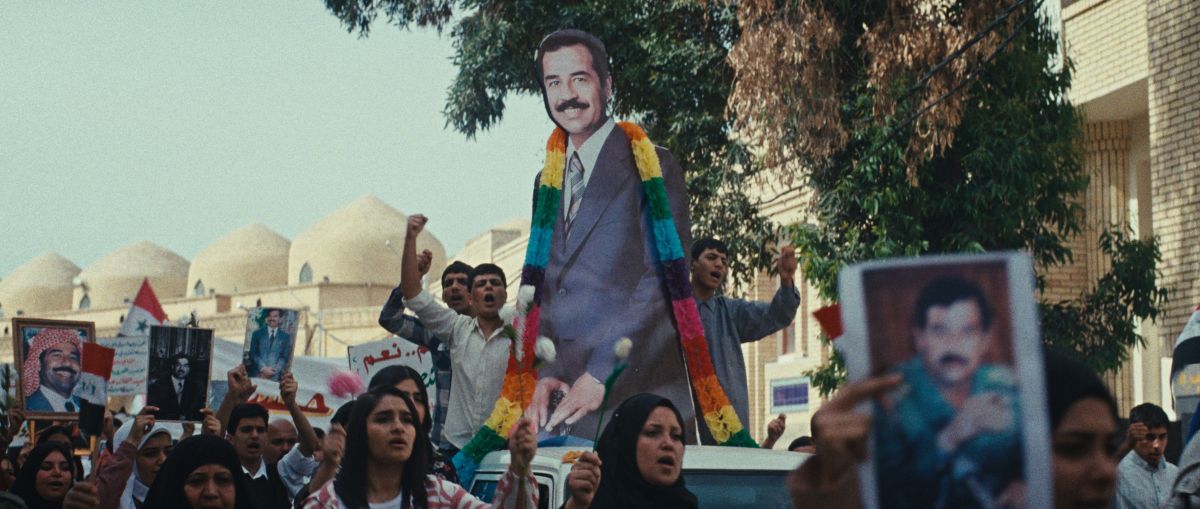
Despite economic strain, the likelihood of sudden internal transformation remains limited. Historical experience plays a crucial role in shaping public perception. The cases of Iraq and Afghanistan serve as cautionary examples of regime change followed by instability, corruption, and prolonged suffering. For many Iranians, these examples reinforce a pragmatic concern: that change may bring greater uncertainty rather than immediate improvement. In addition, the state retains strong institutional and security structures, which further limit the possibility of rapid internal shifts. As a result, society exists in a state of tension; aware of its challenges, but cautious about the alternatives.
When placed in a broader context, Iran’s model of endurance differs significantly from that of high-cost military powers. While the United States operates a system that relies on substantial financial resources, Iran has adapted to operate under constraint. This adaptation does not eliminate internal strain, but it allows for a form of persistence. The key distinction lies not in absolute strength, but in how cost is structured and absorbed. If the Islamic Republic of Iran continues to endure under current conditions, two broad trajectories may emerge.
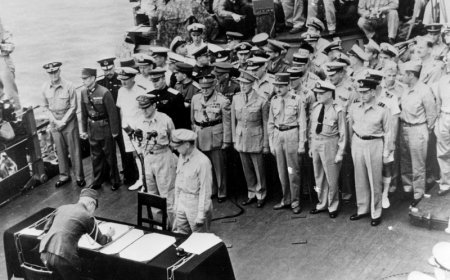
The first possibility is a gradual strategic shift. Under sustained pressure, Iran could move toward a model similar to post–World War II Japan; reducing external confrontation, prioritizing economic development, and transforming into a more stable, industrial, and internally focused state. Such a transition would require significant policy recalibration but could provide long-term stability and growth.
The second, and perhaps more immediate possibility, is less optimistic. Continued pressure without structural adjustment may lead to a more reactive and unpredictable posture. In this scenario, Iran could behave like a constrained but persistent regional actor, relying on asymmetric strategies and maintaining influence through indirect means. This would likely prolong instability across the region, particularly in areas already affected by geopolitical tension. From a policy perspective, these possibilities highlight a critical challenge for external actors. Any long-term strategy must account not only for military considerations, but for the internal dynamics that shape sustainability. Prolonged pressure, whether economic or strategic, carries costs on all sides. Ultimately, the question is not simply whether Iran can endure, but how that endurance will reshape its future and the region around it!