




/file/dailymaverick/wp-content/uploads/2025/04/Krill_school_1_credit-Aker-Qrill.jpg)
























How Trump trampled on Modi’s dream of an Indian superpower
The US president’s unpredictable wars risk limiting the veteran prime minister’s growing ambitions

Just a fortnight ago, Narendra Modi, the Indian prime minister, was riding high after a landslide election victory.
His Bharatiya Janata Party (BJP) had conquered West Bengal, a state with 100 million voters and for years a bastion of anti-Modi forces. The BJP now controls 21 of India’s 28 states.
Since then, however, the war in Iran has begun pulling the Modi juggernaut back down to earth.
Foreign investors are fleeing, the currency is falling and petrol prices are rising. Modi has even had to slap tariffs and import restrictions on Indians’ most cherished purchase: gold.
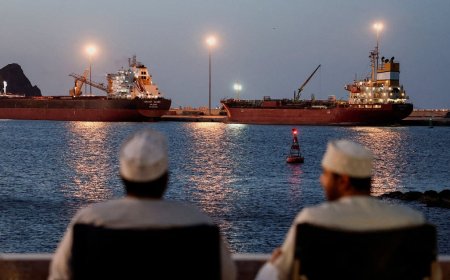
This week, Modi is swinging through Abu Dhabi, Norway and Italy looking for oil, gas and foreign investment deals to protect the Indian economy from the fallout of the Strait of Hormuz blockade
He has reason to worry. India imports 87pc of its crude oil and gas, of which about half usually passes through Hormuz. Donald Trump’s “excursion” in the region has passed the 80-day mark and shows no sign of ending.
The longer it drags on, the more it will punch a hole in India’s public finances, stoke inflation and take a bite out of India’s economic growth.
Ratings agency Moody’s last week cut its 2026 growth forecast for India by 0.8 points to 6pc. That was the largest downgrade for any of the world’s 20 largest economies bar Saudi Arabia.
A growth rate of 6pc would be the envy of most major economies. But it’s not enough for India, says Chietigj Bajpaee of think tank Chatham House.
“To reach its target of what it calls ‘Viksit Bharat’, which is a developed India by 2047, the country needs sustained annual growth of 8pc. Even before the war in Iran, it was falling below that,” he says.
‘India and the US need each other’
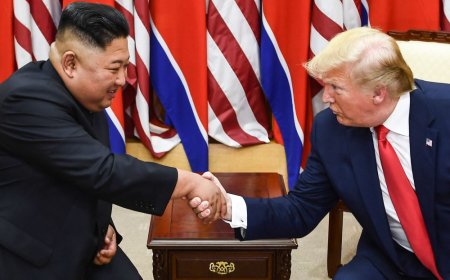
Modi was supposed to be one of the winners from Trump’s second term. The White House was expected to focus on curtailing China’s rise, which would have the side effect of fuelling India’s own quest for superpower status.
But the mercurial US president was soon at loggerheads with Modi about trade. India faced some of the world’s highest US tariffs and it took 12 months to strike a deal.
Then came the war in Iran. This has not only derailed India economically, but also geopolitically. Since the conflict began, Trump has drawn closer to India’s two biggest strategic rivals – China and Pakistan.
Pakistan manoeuvred itself into a role as Trump’s trusted intermediary in peace negotiations with Tehran. And Beijing has adroitly shifted the US president’s attitude from belligerence to begrudging esteem.
Dr Walter Ladwig, a political scientist at King’s College London, says these developments have set back India’s 20-year effort to cultivate a tight relationship with Washington.
“The relationship is not going away. India and the US need each other for various reasons. But there are now some really significant limits on where the relationship can go. Trust has really taken a hit,” he says.
More broadly, Ladwig says, the Indians are discovering that “they are still at a stage where they are affected more by events in the international system than they are yet shaping that system”.
If Modi is to wield greater influence on the world, he has to ensure that India’s economy becomes a powerhouse that can rival China.
But that still looks a long way off.
Modi’s “Made in India” campaign is supposed to turn the country into a factory for the world. But manufacturing as a share of GDP has stalled in the past decade and its contribution to global industrial output is just a tenth of China’s.
“We’ve seen a lack of investment in deep-tech funding, an insufficient investment in human capital,” Bajpaee says.
India is a sprawling, decentralised democracy. Despite Modi’s BJP party dominating at both the national and state levels, Delhi cannot pull on the economic levers the way Beijing can.
“It’s often a two-step-forward, one-step-back process of decision making,” Bajpaee says. “There are a lot of structural issues. For the foreseeable future, India is nowhere near being a challenge or a counterbalance to China.”
Tightening the belt
Right now, though, Modi has more immediate challenges.
Foreign investors have pulled ₹2.2tn (£17bn) from the Indian stock market this year, a third more than the entirety of last year. Net foreign direct investment in India is flatlining.
Some of this is outside Modi’s control. Big money is following the lure of high-yielding US Treasury bonds and the AI boom on Wall Street and in South Korea.
But he has to do something to stop a balance-of-payments crisis from developing. So he has asked Indians to stop spending money overseas.
A week ago, Modi exhorted India’s 1.5 billion people to put the “country above all else”: use less petrol, curb foreign travel and – in what was perhaps his biggest ask of all – stop buying gold.
Aastha Gudwani, an economist at Barclays, describes Modi’s austerity push as “expectations management”.
“It is setting the stage for things to come, preparing the country that this is a geopolitical shock, which is going to translate into some less happy, even unhappy, statistics.”
Modi is taking a political risk in stepping between Indians and their ardour for gold.
Indians devour gold for dowries, decoration and devotional gifts. They snapped up $72bn (£53bn) last financial year, a 24pc increase that made gold the country’s second biggest import after crude oil.
Unsurprisingly, India’s largest jeweller, Titan, was doubtful that Modi’s call for restraint would have much effect.
“A temporary, short-term slowdown may happen if the government decides to do something. But we don’t expect demand to get destroyed in India,” Ashok Sonthalia, a Titan executive, told Bloomberg.
But the government did do something. First, it more than doubled gold tariffs to 15pc.
Then last Thursday, it decreed that any bullion shipment exceeding 100kg would need an import licence.
Modi may be willing to dampen Indians’ lust for gold, but he has also been trying to prevent them from suffering at the petrol pump.
The government has drawn on its fuel stockpiles, rationed gas supplies and used tax cuts and subsidies. But as the conflict drags on, this is starting to pinch the public finances.
Fuel tax cuts are costing ₹70bn a fortnight, adding ₹1.5tn in extra outlays this year. Barclays says a separate bill for fertiliser subsidies will be as much as ₹500bn, or one-third higher than budgeted.
“The government was ready to absorb the shock on its own books. But I don’t think we were prepared for week 10 of this,” Gudwani says.
In the past week, Modi has let the dam burst. Petrol prices have been allowed to rise twice in the past week.
To keep the deficit under control, the government may yet have to trim capital expenditure, such as investment in infrastructure.
But this is the sort of spending that powers faster growth, which Modi needs if India is to take its place at the top table.
The veteran prime minister remains in control of India’s domestic agenda. But Trump’s unpredictable wars and alliances may now be putting limits on his sky-high ambitions.
[Source: Daily Telegraph]