



/file/dailymaverick/wp-content/uploads/2025/04/Krill_school_1_credit-Aker-Qrill.jpg)

















The gilded history of Le Touquet, the most British of French resorts
This storied slice of Normandy was once the haunt of Noël Coward and Cecil Beaton, and is making renewed efforts to lure Britons

Good news from across the Channel. The French want us back. Well, maybe not all of them want all of us but, certainly, the good people of Le Touquet are very keen. In the run up to our May bank holiday – from Monday, May 25 – they’re hosting Le French Week during which much will be done to entice English-speakers to this distinguished stretch of the Opal Coast, slightly south of Boulogne.
Le Touquet has long been a top-end sporty spot – that was one of its founding principles – so you will be able to tackle kayaking, padel, bike tours and sand-yachting. Then there’s guided tours, a classic car gathering and a gourmet dinner created by Alexandre Gauthier of the two-Michelin star La Grenouillère. All will be hosted in English, or what the French invariably call “the language of Shakespeare”.
And, if you flash a British passport, you’ll qualify for discounts across town. All this is jolly decent of the 4,200 Touquettois – there’s a lot to look forward to – but it’s not as big a surprise as it would be in, say, Clermont-Ferrand. Or almost anywhere else in France.
Though the resort’s name runs to take in “Paris-Plage” (invented essentially to convince 19th-century Parisians that this was their seaside spot) the bijou little town has long been known as the most British of French resorts. In the 1920s and 1930s, Le Touquet – billed as of “enchanting unreality” – became known as London-by-the-Sea.
It was but 100 miles – but in vivacity, light years – from Croydon and its airfield. Thus Le Touquet blossomed as well-heeled Britons sought to slip the leash embraced the new air age. Royal connections were woven by the Prince of Wales – future, fleeting Edward VIII – who would fly in his own plane over the Channel, land, play golf and then make for the gaming tables. There was a rumour, undoubtedly pernicious, that he won Mrs Simpson playing five-card stud.
It is no coincidence that, three years ago, Le Touquet’s airport was renamed “Aéroport International Le Touquet – Elizabeth II” (though it’s not entirely clear where the “international” bit comes from; in 2026 the airport doesn’t appear to have any scheduled flights anywhere.)
These days, the town’s renown relates as much to the fact that Emmanuel and Brigitte Macron have a home there. They sold their original base, the Villa Monéjan (inherited from the First Lady’s parents) in 2025 to buy another villa by the sea. Their presence exemplifies a Le Touquet movement back to prominence – marked less by the evening gowns, more by laid-back chic. Paris-level property prices of nearly £9,000 a square metre reflect this. The Macron villa went for a reported £3.14 million.
But the 2026 town is built upon a thick seam of luxury, entitlement and well-dressed decadence, with Britons to the fore: up to 90 per cent of the clientèle in the great years. Its past is utterly entwined with that of British inter-war A-listers.
This isn’t really surprising, either. Though established on dune land by a Parisian lawyer and his backers – they planted the 2,000-acre pine forest precisely to stabilise the dunes – the real impetus for development as a resort came in the early years of the 20th century. The fellow concerned was peripatetic, multi-lingual Leeds-born engineer John Whitley. He’d already developed Earls Court Exhibition Centre in London. Now he would create a resort to rival Deauville, where British and French elites might meet.
With prominent people like actress Sarah Bernhardt and Louis Pasteur as investors, Whitley put up the palace hotels, seven of them. He also inspired the creation of extravagant villas on the seafront and in the forest behind, sumptuous items “freed from the discipline of architectural orthodoxy” which still characterise parts of the resort.
Whitley furthered, too, Le Touquet’s lasting reputation for the sorts of activities rich people favoured: golf, tennis, riding, gambling. The aim was “health through leisure”, to which all right-thinking Britons will sign up.
So the British rolled in, some in their own planes. There was precedent here, too: Louis Blériot, the first man to fly the Channel in 1906, had been based in Le Touquet. Others yet motored themselves or arrived by train.
The star remained the Prince of Wales – who, on these trips, travelled under the name of “Mr Brown”. This fooled no-one. He became master of the local drag hunt, which wouldn’t have happened to a real Mr Brown. The local paper carried reports of his golfing prowess which, apparently, wasn’t that terrific. He also inspired a cocktail – Cointreau, kirsch, orange juice – known as the “Prince’s smile”.
Everyone else followed the prince in as Le Touquet, for a few years, outshone Monaco. Harry Gordon Selfridge – American founder of the London department store – was a casino regular, apparently unfazed by staking £50,000 a night. He would also step out with the dancing Dolly Sisters, one identical twin on either arm. No-one was quite sure whether he was having an affair with one, or both. (Further malicious rumours suggested that he wasn’t entirely certain himself.)
But he certainly lavished cash upon the Hungarian-American siblings. Then again, the dancing, singing, acting sisters were no mean gamblers themselves. On one night in the mid-1920s, Jenny Dolly won £56,000. The following night, she won a further £40,000. The pair could also lose – including, allegedly, $4 million of Selfridge’s cash.
Meanwhile, in 1929, the Royal Picardy Hotel opened as not only the greatest hotel in Le Touquet but also the “biggest, most luxurious hotel in the world”, according to contemporary reviews. It looked like a cross between several vast cathedrals jammed together, a luxury liner, and the palace of a showy monarch. Standards were superior. The indoor pool was filled with sparkling water. The dance master – available for unaccompanied ladies – was thought to be an exiled White Russian baron. Indian maharajas rolled in to take over entire floors.
That said, 1929 was a pretty poor time to open a 500-room top-class hotel. (And the 500 rooms weren’t the whole story. The Royal Picardy also had 50 apartments, some with 10 rooms and their own private pools.) The place struggled financially from the word go, quickly went bust but then re-opened and, to everyone’s astonishment, survived through the 1930s as a beacon of elegance.
It survived less well after serving as local HQ for invading Nazis. Both Göring and – allegedly – Hitler were there as they made preparations to invade Britain. The hotel staggered through the post-war years. It closed in 1951, to be knocked down in 1968 – making way, with some irony, for a hotel and catering college.
Back in the 1930s, mind, Le Touquet itself rode out the effects of the Crash – a haven for those rich enough not to have been too affected by the international crisis. Noël Coward and Cecil Beaton were regulars. So was Somerset Maugham’s wife, Syrie – one of the era’s leading interior designers with outlets in London, Chicago and New York.
PG Wodehouse and wife Ethel lived nearby in the Villa Low Wood from 1934 to 1940. Francophile Wodehouse had moved to Le Touquet for the golf, the casino and the seven-mile beach for walking his dogs. Also to escape British tax. It was from Low Wood that he was hauled off by invading Germans before making his ill-advised war-time radio broadcasts.
The resort itself also took a pasting during the Second World War, but had resumed service to sybarites, and others, by the 1950s. Moneyed folk might load their motors through the bulbous noses of Bristol Wayfarer aircraft to fly over. Le Touquet also served as the air hub for the Silver Arrow service which, by train, air and train again, linked London to Paris from 1956 to 1980. For a while, Le Touquet’s was France’s third airport, after Orly and Nice.
In truth, though, fashionable resorts across northern France – Deauville, Trouville, Le Touquet – had, for some time, been ceding rich and famous Britons to the Riviera. The Channel Tunnel didn’t help, zipping people to Paris with barely a thought for Le Touquet. Brexit helped even less. French visitors continued to show up, but Britons were missing. Whence the May holiday initiative.
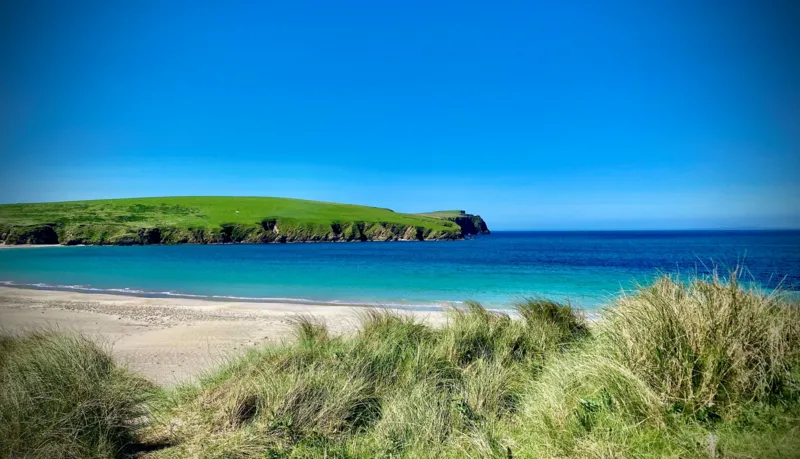
Those who take up the invitation will find a seaside resort rediscovering its mojo. Though the 1960s brought its usual load of high-rise concrete, elegance has remained, and maybe been enhanced in recent years, by street art, and the realisation that Le Touquet’s beach – where Edith Piaf failed to learn to swim – is one of the finest in northern France.
Gardens, parks and forest remain – as, alone among the palace hotels, does the Westminster. Tony Blair stayed there during the 2003 Franco-British summit. He left a nice note of thanks which one can see framed on the wall. The hotel is now run by the Barrière company, which also owns one of the resort’s two casinos. Theirs is the one with the 1920s façade and was, apparently, the inspiration for Casino Royal, the James Bond novel by Ian Fleming. He knew Le Touquet well.
Visitors might eat at Chez Pérard on Rue de Metz – the fish soup, all you can eat for £14, is legendary (perard-letouquet.fr). Or Chez Flavio a gracious spot on the avenue du Verger, where, before fame in the 1950s, Serge Gainsbourg used to play the piano for diners (labellehistoiregroupe.com/flavio). His piano is still there.
And they might well appreciate a small town which remains at once well-mannered and frisky, cool, highly sporty, wide of beach, sea and sky, and living well with a rather golden past.
[Source: Daily Telegraph]