



/file/dailymaverick/wp-content/uploads/2025/04/Krill_school_1_credit-Aker-Qrill.jpg)















Russian MP turns on Putin over Ukraine war
Renat Suleymanov warns economy ‘will not withstand’ prolonged conflict as he calls for an end to military action

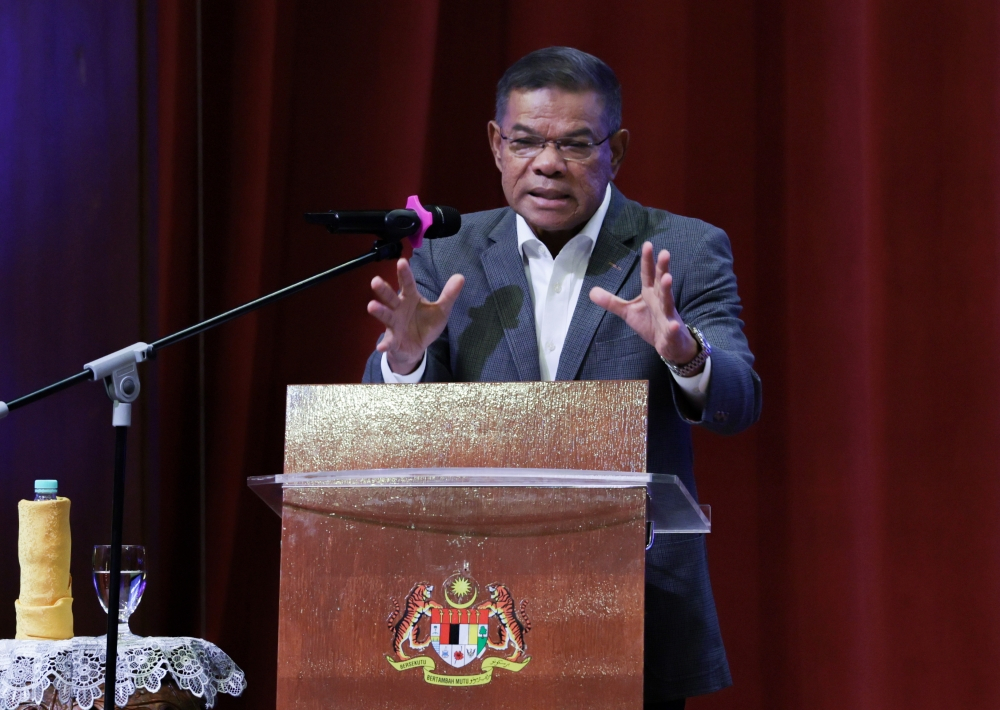
A Russian MP has turned on Vladimir Putin and publicly called on him to bring the war in Ukraine to an end.
Renat Suleymanov, a State Duma deputy representing the Communist Party (KPRF), demanded the “swiftest possible end” to the conflict, warning that the country’s economy “won’t survive” if it drags on.
It marks the first time a sitting MP has publicly acknowledged that Russia is unable to sustain the war and should draw it to a close, according to Agentstvo, an investigative Russian media outlet.
“Forty per cent of the federal budget is being spent on defence and security. What development, investment or capital spending can we talk about in these circumstances?” Mr Suleymanov said in an interview with the regional outlet Kontinent-Sibir.
“It is absolutely obvious that the economy will not withstand a prolonged continuation of the special military operation,” he added, warning that arms production is fuelling inflation and “crowding out” social spending.
Mr Suleymanov’s remarks come ahead of State Duma elections where he is promoting the KPRF as the “only real opposition in the country”.
As the war in Ukraine grinds on, drones are striking deeper into Russia – including Moscow – leaving residents terrified and angry.
“There is no sense of war in Russia until it is felt in Moscow,” Alyona Getmanchuk, Ukraine’s ambassador to Nato, writes in The Telegraph.
“Nothing reveals Russian vulnerability more vividly than the inability to protect even what is allegedly the most protected place in the country – its capital.
“What Ukraine is doing through its deep strikes is making the war unwinnable for Russia.”
Economists have repeatedly warned of the growing strain the war is placing on the Russian budget.
After years of rapid growth at the start of the full-scale invasion driven by mass state spending on the military-industrial complex, the Kremlin’s war chest has since been hit by high interest rates, the delayed effect of Western sanctions, spiralling prices and labour shortages.
This month, the government was forced to reduce estimates for GDP growth throughout 2026 from 1.3 per cent to 0.4 per cent, also halving its estimates for growth in 2027 to 1.4 per cent from 2.8 per cent.
Mr Suleymanov, who represents the Novosibirsk region, suggested Russia may not have the capacity to rebuild the Ukrainian territories it has seized and is attempting to integrate into its own economy.
“I saw Mariupol in 2022 and the steppes of Kherson region in 2023: there are no houses left, no Soviet-era irrigation. Reconstruction has begun, but it will require enormous budget expenditure going forward,” he said.
The politician previously supported the war and in 2022 said negotiations with Kyiv could only take place on the condition of its “capitulation” to Moscow.
The rare expression of dissent comes amid brewing discontent over Putin’s leadership. His popularity has been dented by concerns over the rising cost of living, internet blackouts, a stalemate on the front line and Ukrainian long-range strikes on Russian soil.
VTsIOM, Russia’s state pollster, found the president’s approval ratings had fallen to their lowest since before the full-scale war, while happiness levels hit a 15-year low.
Amid the disquiet, opposition has arisen in unexpected places. In March, Ilya Remeslo, a longtime pro-Kremlin lawyer and blogger, suddenly switched allegiance and dubbed Putin a “war criminal”, before being admitted to a psychiatric hospital for a month.
In April, a video highlighting Moscow’s domestic woes was released by Victoria Bonya, a Monaco-based Russian blogger and former reality TV star. The 18-minute rant went viral.
Economic concerns consistently emerge as Russians’ primary source of anxiety. According to VTsIOM, 84 per cent of Russians are worried about rising prices, while 74 per cent fear an economic crisis.
However, this month Ukrainian drone strikes inside Russia polled as a bigger concern than battlefield developments for the first time.
Over the weekend, a massive wave of Ukrainian drones descended on the Moscow region, with some penetrating the airspace of the capital.
“The importance of these strikes should not be overlooked,” said Ms Getmanchuk.
“In fact, if there is something that has the potential to become one of the most important game changers in the war at its current stage, it is Ukraine’s deep-strike campaign in Russia, especially against Moscow.”
Volodymyr Zelensky, the Ukrainian president, said yesterday the long-range strikes had been “particularly significant” in shifting the dynamics of the war.
He also revealed he had signed off on a fresh wave of attacks across Russian territory in June.
[Source: Daily Telegraph]