
























Fire safety for architects and builders: why it matters
Omed Baqi Hasan Dolamary / Catholic University in Erbil


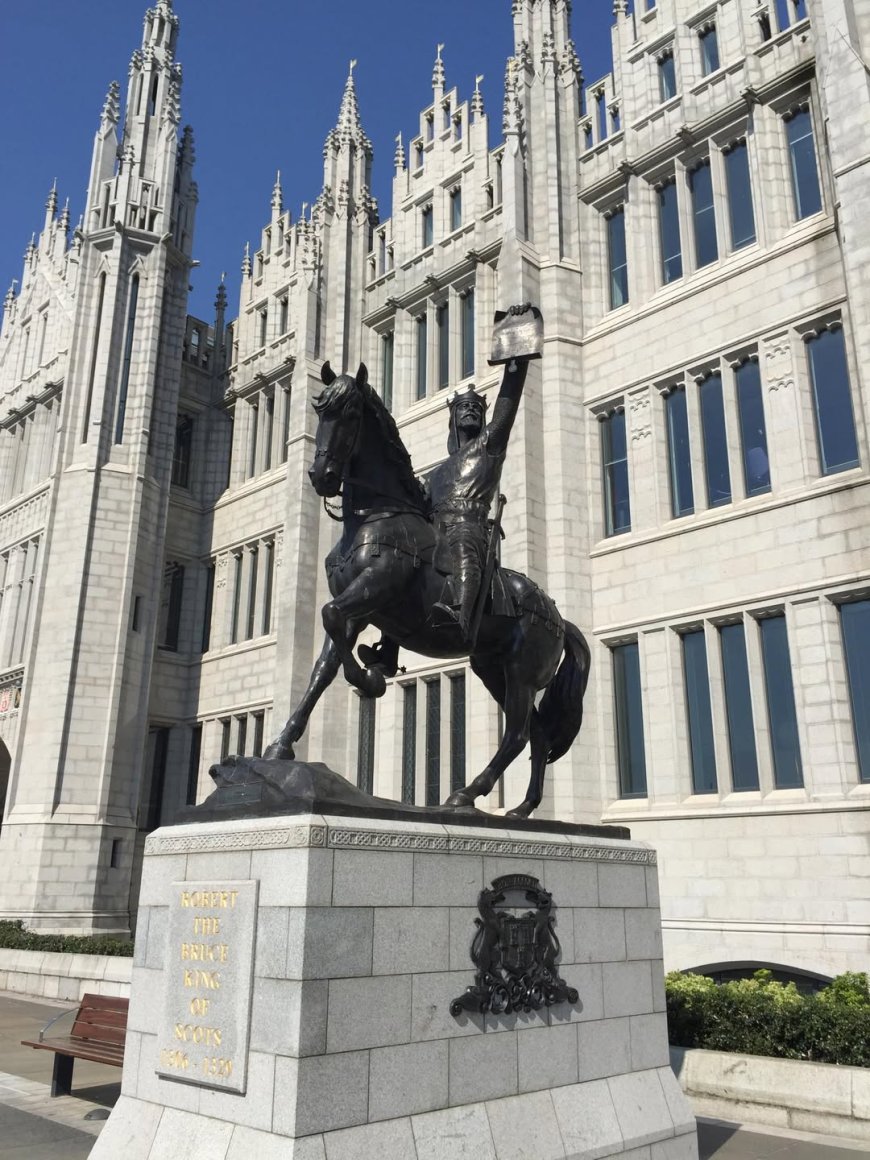
As the world we live in becomes ever more urbanised, fire and building safety strategies become ever more important. This is particularly the case where the costs of construction materials must be kept low for various reasons. It is no longer practical, for example, to build with quarried stone or other such materials as can be seen in older buildings. The city of Aberdeen, in Scotland, is famously known as the “Granite City”, with everything being constructed from locally sourced granite blocks at great expense of time, work and money.

Marischal College with the statue of Robert the Bruce, Aberdeen [VisitScotland]
Such materials may not often lend themselves to efficiency of design, construction or insulation. It is therefore the case that architects and builders must put emphasis on the human aspects of construction, which includes fire safety. While Building Information Modelling (BIM) and Mechanical, Electrical and Plumbing (MEP) systems have transformed fire safety protocols, these are not always adhered to in many parts of the world due to lack of appropriate regulation or non-adherence to building codes.
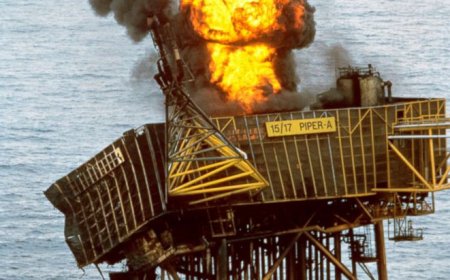
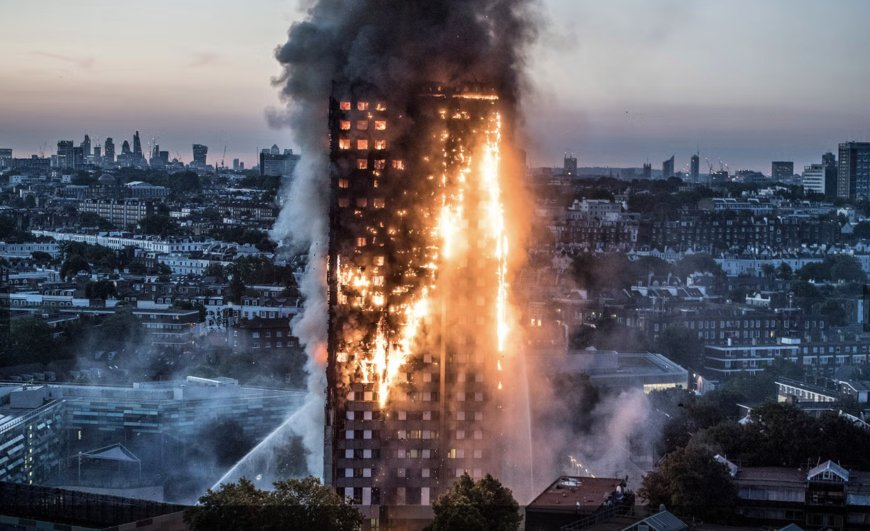
In recent times, there have been a number of building fires in Iraq where both loss of life and injury could have been prevented, three exampes of which are given in this article. The most famous case of late was the Grenfell Tower Fire on 14 June 2017, in London. Seventy-two people lost their lives as a result, with several hundred more suffering injuries, sometimes life-changing. It was the worst UK residential fire since the Blitz of World War Two and the worst structural fire since the 1988 Piper Alpha disaster in the North Sea.
The fire was attributed to an electrical fault in a refrigerator located on the fourth floor. Given that Grenfell was an existing concrete building constructed to varying tolerances, the gaps around window openings following installation were irregular. Such gaps are typically filled in with combustible foam insulation to maintain air-tightness. The foam insulation surrounding the window jambs functioned as a conduit into the rainscreen cavity, which was faced with 150 mm-thick (5.9-inch) combustible polyisocyanurate rigid board insulation and clad in aluminium composite panels. The panels incorporated a 2 mm (0.079-inch) highly combustible polyethylene filler, which facilitated the adhesion of each panel face. In accordance with the configuration of rainscreen cladding systems, a ventilated cavity was present between the insulation board and the rear of the cladding panel.

The Grenfell Tower ablaze on 14 June 2017 [The Independent]
A subsequent investigation found that cavity barriers to the line of each flat had been inadequately installed or were not suitable for the intended configuration. This dynamic, in turn, exacerbated the rapid and uncontrolled spread of fire both vertically and horizontally to the tower. As the investigation expanded to a national scale, it became evident that a significant number of buildings across the UK, predominantly in England, had been constructed with materials that presented a heightened risk of fire safety. These materials included flammable cladding and insulation, which could potentially contribute to the spread of fire. It was found that many high-rise buildings were non-compliant with other fire safety requirements. These included the absence of cavity barriers around windows and a lack of fire barriers, the purpose of which is to prevent fires from spreading horizontally and vertically into neighbouring flats.
Such cladding is commonplace, though is often banned by regulatory authorities. A prime example of where cladding caused a tragedy to become worse than it already was, alongside lax fire safety standards (lack of fire escapes, fire extinguishers, functioning alarms and so on) was on 26 September 2023 at a wedding party in Qaraqosh, Al-Hamdaniya district of Nineveh.
About 1,000 people are thought to have been at the wedding. Eyewitnesses say the fire started when flares were lit and the married couple started dancing. The sparks from the flares set off the decorations, which then fell and spread quickly to other flammable materials on tables. Video footage from inside the venue showed fireworks going off from the floor and setting fire to parts of the ceiling while the bride and groom were dancing slowly.
Aftermath of the wedding-hall fire [New York Times]
The groom’s father said that there were no fire extinguishers or other safety measures in the hall. Management decided to cut the power because they thought the fire had been caused by an electrical fault. This meant that the hall was immediately plunged into darkness, which made it harder for people to escape.
The spread of the fire is believed to have been caused by the exterior of the wedding-hall being covered with a highly flammable, low-cost type of sandwich panel cladding such as was incorporated into Grenfell Tower and other cheaply constructed buildings as mentioned above including Aluminum Composite Panels (ACP). It is also similar to the type of cladding used in the 2021 Baghdad hospital fire, which was banned. This incident is often compared to the Qaraqosh fire by international media. The spread of the fire was exacerbated by flammable building materials and other pre-fabricated panels, which were in violation of safety regulations.
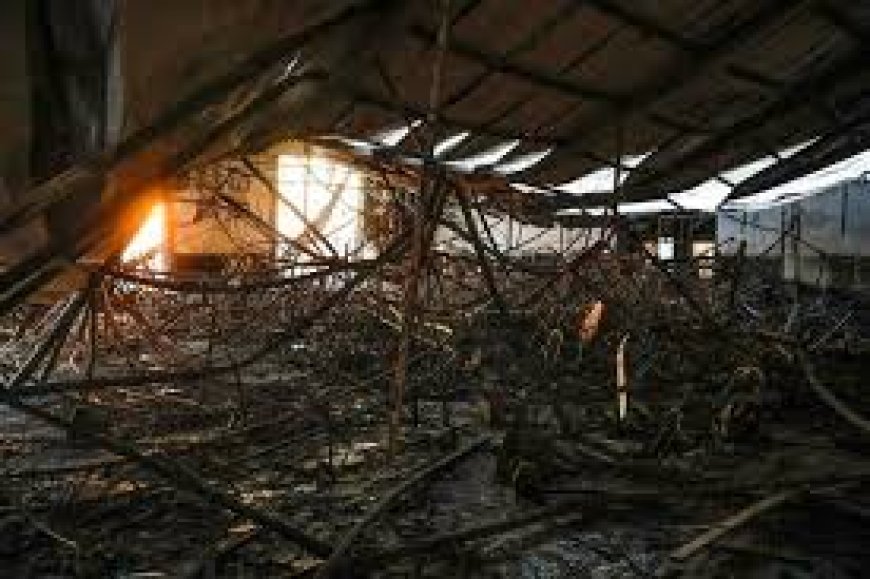
Finally, in Soran, at least fourteen people (mostly lecturers at Soran University) lost their lives on 8 December 2023 primarily due to smoke inhalation as they could not escape. Eighteen people were also injured. While the building apparently had a fire escape, it was not used. In many buildings in this part of the world, there may be fire exits but the doors are often locked. This is unforgiveable under any circumstances.
Aftermath of fire in Soran on 8 December 2023 [Rûdaw]
One way the likelihood that tragedy may occur is through the incorporation of a fire safety plan into the work of architects and builders. This is a series of measures, protocols, and actions designed to reduce the risks of fire, to prevent such occurrences, and to safeguard people and property. Such an approach is only possible if the relevant parties have the necessary knowledge (better education therefore being key), meticulous planning is in place, and safety procedures are adhered to by architects and builders. A comprehensive fire safety policy is integral to the prevention of fires and the mitigation of their consequences when they do occur. It is imperative that fire safety information is meticulously documented, readily available, and diligently preserved throughout the lifecycle of a building.
The most important point, however, is that authorities both promote and enforce a culture of “Safety First” such as can be seen in the oil and gas or aviation industries, for example. It does not even need to be complicated: adequate provision of functioning fire extinguishers on every floor of the building; fire blankets provided in all residential accommodation next to gas and electric stoves; fire alarms that are checked regularly; working fire escapes (i.e. the doors not locked, and easily opened through a push-handle); adequate and illuminated green signage pointing to exits, as well as regular fire drills. Carelessness causes lives.