



























Norwegians flock to Strichen to see Irene’s Suffolk sheep
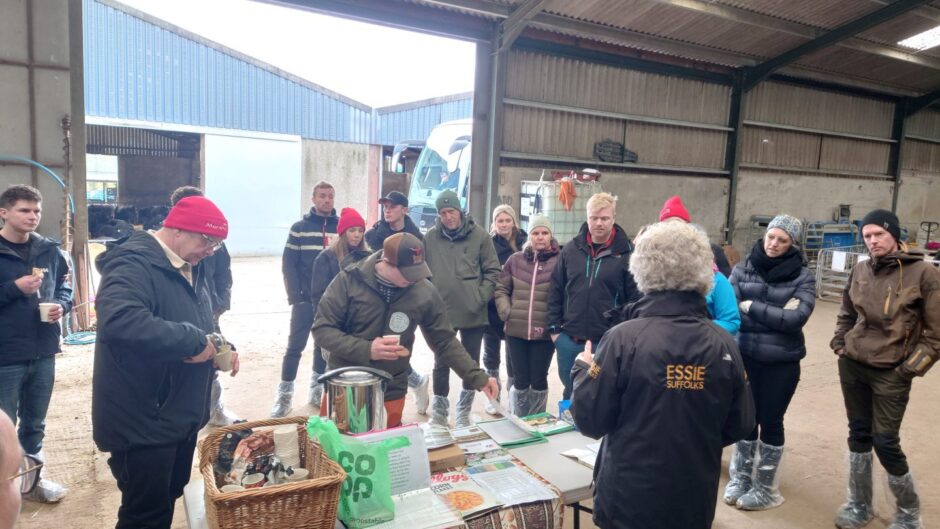
Aberdeenshire sheep breeder Irene Fowlie was thrilled when a large group of Norwegians called at her farm to see her “progressive” Suffolk flock. The Scandinavian visitors left knowing a whole lot more about the secrets of pedigree breeding success.
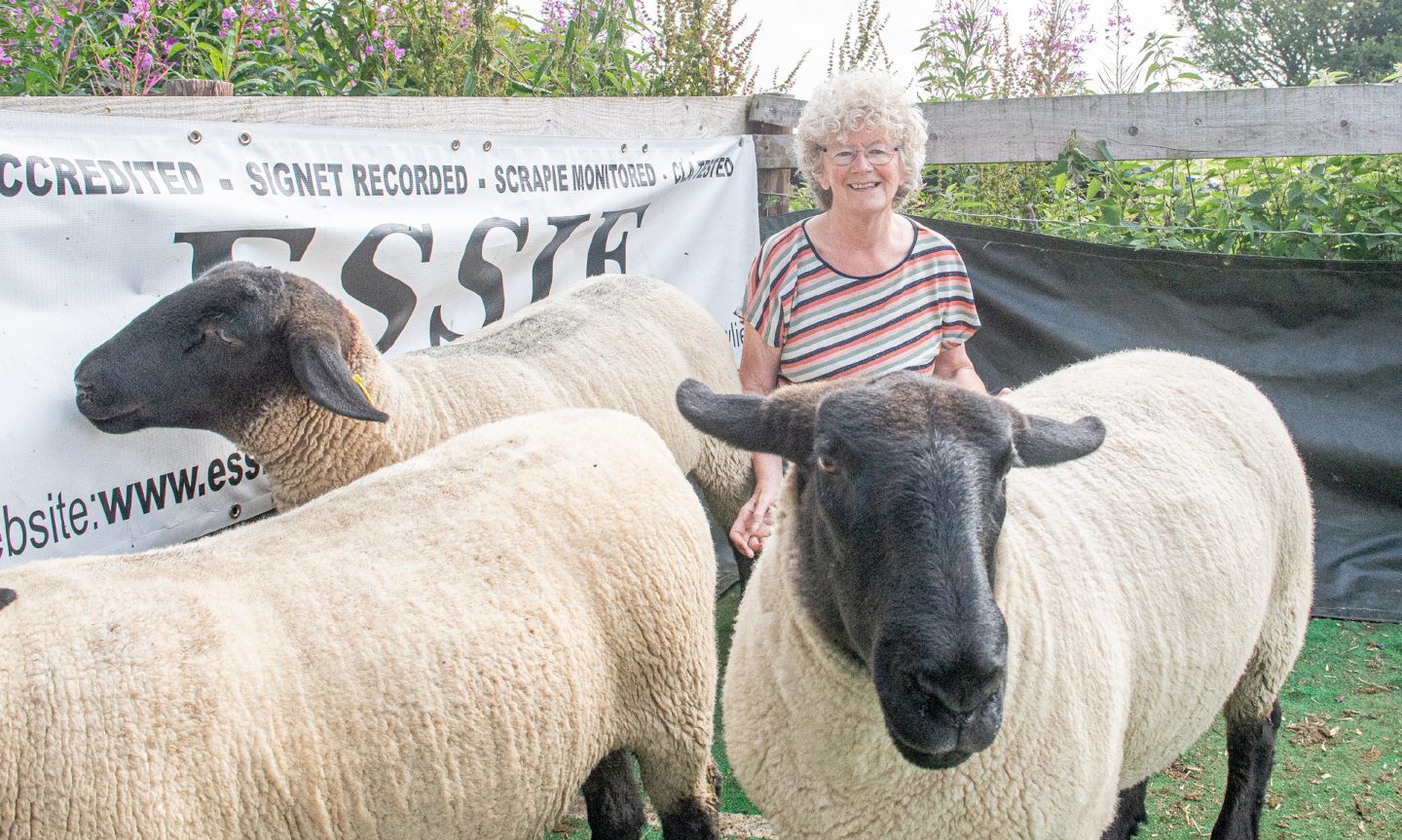
The Scandinavian visitors left knowing a whole lot more about the secrets of pedigree breeding success.
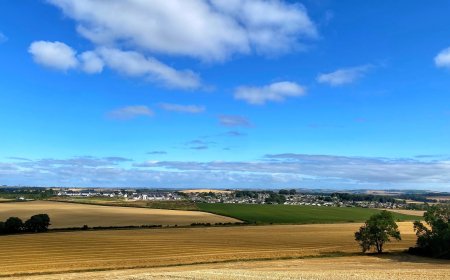
Irene and her husband, Jim, farm at Adziel, near Strichen.
They have more than 2,000 acres, about one-third of which are arable and the rest grassland.
It’s a real family affair at Adziel Farm
The couple run a sizeable cattle operation.
This includes finishing 1,500 Aberdeen-Angus crosses as well as the calves of a further 220 Aberdeen-Angus cross cows.
But the farm is perhaps best known for its Essie flock of pedigree Suffolks. Irene and Jim have sold live sheep and semen throughout the UK and in 17 countries overseas.
Their daughter, Gillian, joined the Adziel team a few years ago.
She had previously run her own organic laying hen enterprise.
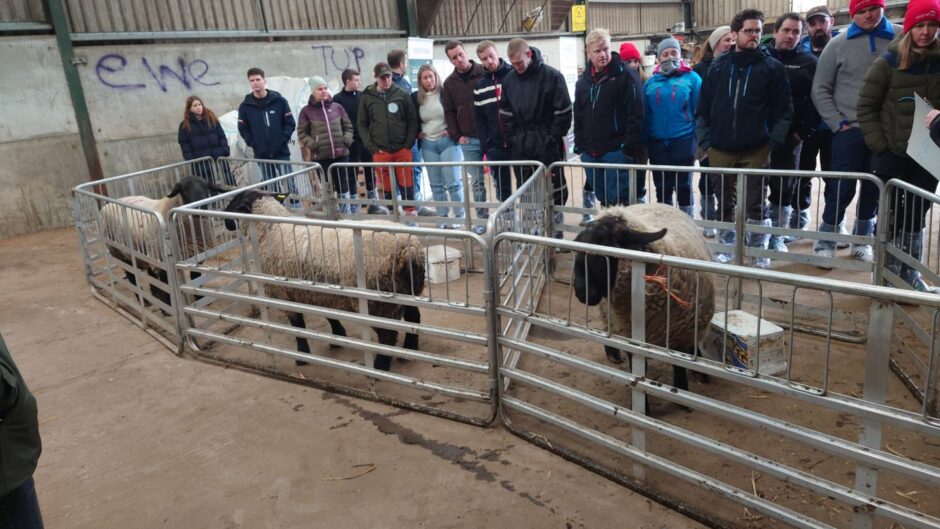
Appliance of science is key at Adziel
Irene, a former secondary school English teacher, said: “My responsibility is 130 pedigree Suffolk ewes, established 45 years ago.
“We are the top UK performance recorded pedigree Suffolk flock.”
Adziel’s sheep breeding success is all down to science, Irene told us.
She added: “It is very rewarding that a group of European visitors made the effort to visit this progressive flock.”
The Suffolks are bred using a grass-based system.
Irene said: “We aim to produce naturally fleshy, long, wide shearlings and gimmers, with good skins.”
Growth rate, conformation, size and easy lambing are also key breeding objectives.
Irene says it’s all in the genes
Further explaining the key role of science for Adziel’s award-winning flock, Irene said: “We use homebred rams and buy semen from proven high performance recorded rams to introduce new genetics, with emphasis on growth and muscle.
“We have also used ultrasound and CT (computer tomography) scanning to improve the genetics of my flock.”
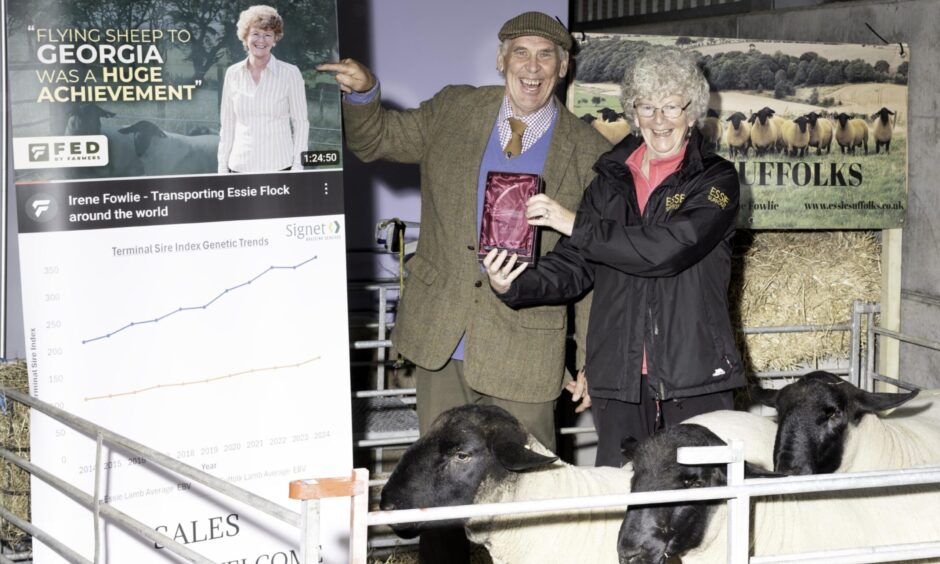
Irene went on to share her “most strongly-held view about sheep breeding”.
She said: “We need to produce easily lambed, vigorous, quickly finished lambs, with good conformation, naturally off grass.
“And we need to use modern scientific technology as a tool to select the best genetics.
“Buyers need to do their homework – always check the breeder’s track record.”
“There is as much variation within a breed as between breeds.”
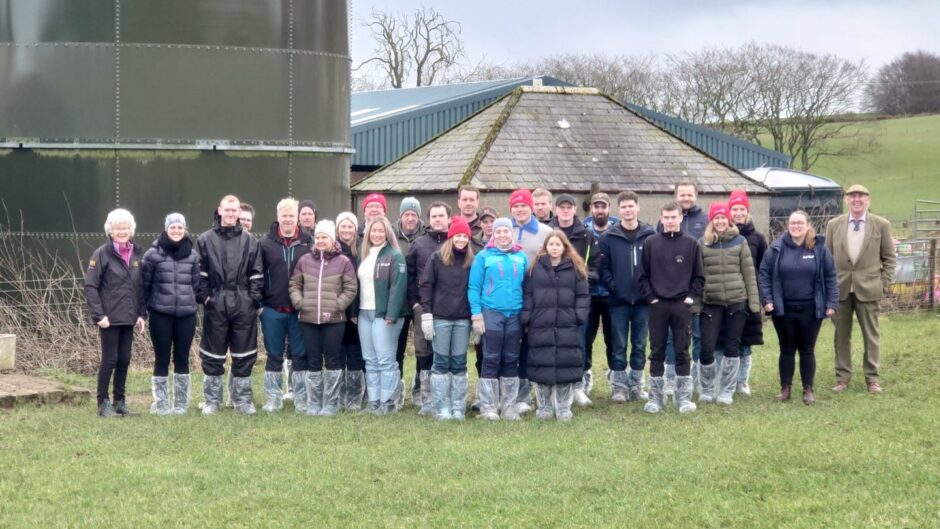
The 25 Norwegians are all based at an agricultural college across the North Sea.
One of them found details on his phone of purchases of semen from an Adziel ram, Essie Gold Star, in 2014, 2015 and 2016.
“He was very excited,” Irene said, adding: “Apparently, it was bought and sold by a co-operative.”
[Source: Press and Journal]