


/file/attachments/orphans/ED_543155_209242.jpg)




















The Rise And Fall Of Benito Mussolini Reshaped Modern Europe
From socialist beginnings to fascist dictatorship, his rule ended violently and left a lasting political warning
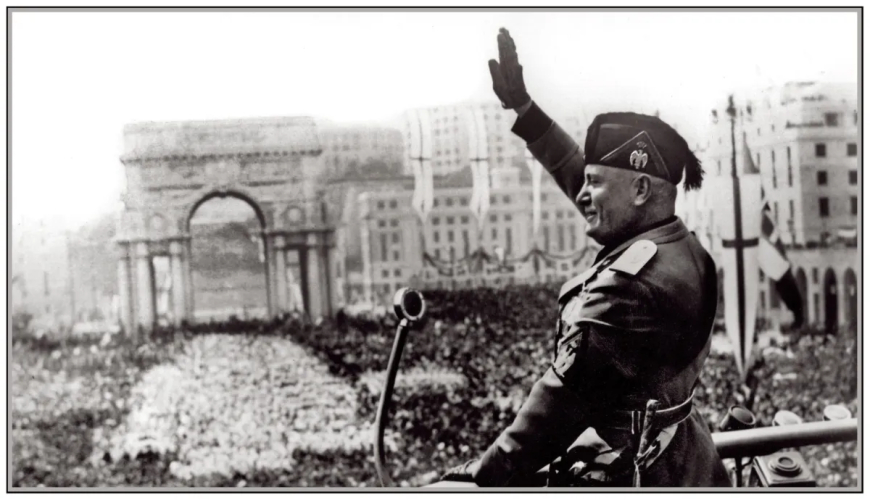
Italy recalls the dramatic rise and violent fall of Benito Mussolini, whose dictatorship reshaped Europe and ultimately ended in execution. His rule marked a decisive turning point in twentieth century politics, as authoritarian movements expanded while democratic institutions weakened across Europe. Consequently, Mussolini’s leadership became one of the most defining and controversial chapters in modern European history.
Born in 1883 in Predappio, Mussolini grew up in a politically divided household that influenced his rebellious and ambitious personality. At first, he embraced socialism and journalism, editing a party newspaper before breaking ranks over Italy’s participation in World War One. However, his wartime experiences and rising nationalism gradually pushed him away from socialism toward a more authoritarian political direction. As a result, his ideology transformed significantly, setting the stage for his later rise to power.
After the war, he founded a movement that united veterans and nationalists, while also exploiting fear of communism and widespread unrest. As a result, he organized the March on Rome in 1922, pressuring the king to appoint him prime minister. Soon afterward, he dismantled democratic systems, suppressed opposition, censored media, and built a powerful police state under his control. At the same time, Mussolini cultivated a strong personality cult, presenting himself as indispensable while demanding loyalty and obedience from citizens.
Meanwhile, he promoted fascism as an alternative to liberal democracy and Marxism, emphasizing nationalism, militarism, and unity under the state. In addition, he pursued imperial ambitions, launching the invasion of Ethiopia in 1935 while seeking to expand Italy’s influence abroad. Subsequently, he aligned with Adolf Hitler, signing the Pact of Steel and drawing Italy into a dangerous alliance during World War Two. At the same time, his government introduced racial laws targeting Jews, while supporting military campaigns across Europe and North Africa.
Nevertheless, repeated military failures and economic hardship gradually weakened public support, creating divisions within the regime and among its leadership. Eventually, in July 1943, the Fascist Grand Council removed him from power, and authorities arrested him under orders from the king. However, German forces soon rescued him, installing him as head of a puppet state in northern Italy as the war continued.
Ultimately, as Allied forces advanced and resistance movements strengthened, Mussolini attempted to flee to Switzerland in hopes of escaping capture. Soon after, partisans captured him near Dongo and executed him, bringing a sudden and violent end to his political career. Following his death, crowds displayed his body in Milan, symbolizing the collapse of his regime and the rejection of fascist rule. Today, historians view his legacy as a warning about the dangers of unchecked power, propaganda, and the erosion of democratic institutions.
[Source: Britannica]