

/file/attachments/orphans/ED_543155_209242.jpg)






















Contemporary orientalism on screen: Middle Eastern identities in 'Whiskey Tango Foxtrot'
Dr. Sirwan Abdulkarim Ali - political analyist and academic.
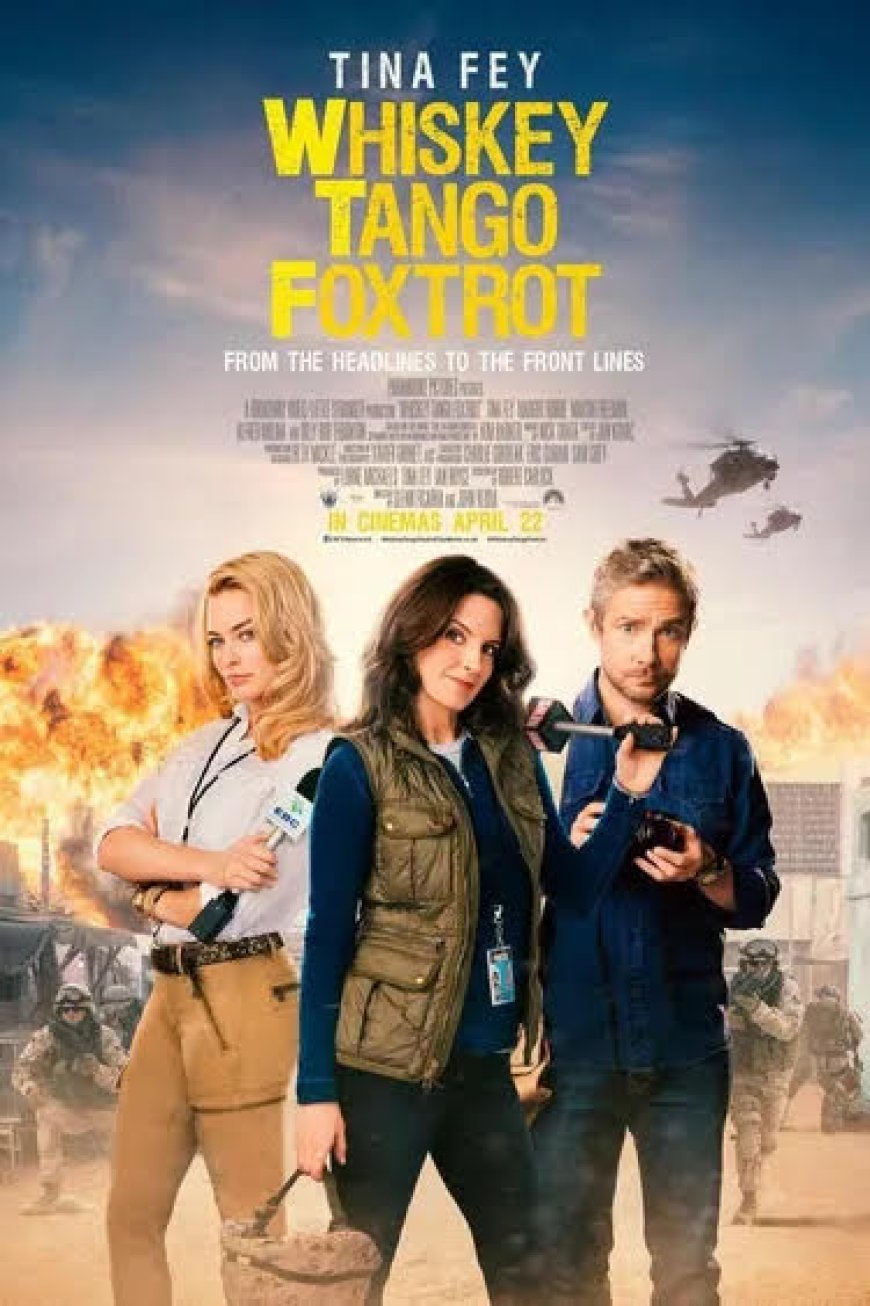
The film “Whiskey Tango Foxtrot” (2016) provides a revealing example of how contemporary Western cinema constructs and circulates images of war zones and the people who inhabit them. Framed as a dark comedy about war journalism, the film appears at first glance to offer a critical perspective on conflict reporting. However, a closer reading from a cultural studies standpoint shows that it reproduces familiar patterns of cultural hierarchy, exaggeration, and reduction, particularly in its portrayal of Middle Eastern specifically Afghan and Muslim identities.
Even the title itself signals an underlying attitude. Whiskey Tango Foxtrot, a phonetic military code for “WTF” (“What the fuck”), reflects a tone of bewilderment mixed with ridicule. This framing is not neutral; it positions the depicted environment and by extension its people as something absurd, chaotic, and difficult to comprehend. The war zone becomes less a lived reality and more a spectacle filtered through Western incredulity.
The representation of American characters, particularly the journalist protagonist, is marked by exaggerated confidence and rapid adaptation. The film portrays her transition from New York to a high-risk conflict zone as almost effortless, even enjoyable. Scenes in which she appears excited or entertained by dangerous situations such as ambushes deviate significantly from documented realities. In practice, journalists entering such environments experience disorientation, fear, and a gradual psychological adjustment. The film’s portrayal risks normalizing a form of war-as-adventure, where danger becomes a source of personal fulfillment rather than ethical and emotional strain.
In contrast, Afghan characters are depicted through a lens of simplification and inferiority. Institutional figures, such as legal or political authorities, are presented as naïve, lacking competence or strategic awareness. This portrayal lacks socio-political credibility and reinforces a broader cinematic pattern in which non-Western institutions are undermined to elevate Western agency. The Afghan public is similarly reduced to a binary: either aligned with the Taliban or with the government. Such a representation ignores the complex realities of survival, negotiation, and shifting loyalties that define everyday life in conflict zones.
The film’s treatment of Muslim identity particularly that of women is even more problematic. Rather than presenting Muslim women solely as oppressed (a common but already limited trope), the film goes further by depicting them as intellectually inferior or simplistic. This shift from victimization to ridicule represents a direct cultural affront, reinforcing stereotypes that strip individuals of agency, dignity, and complexity. Likewise, Afghan men are often portrayed as backward or uncivilized, evoking imagery that suggests a society frozen in a pre-modern or “primitive” state. Such representations echo long-standing orientalist narratives that divide the world into a “modern, rational West” and a “backward, irrational East.”
The issue extends into the film’s depiction of sexuality and social relations. Relationships among expatriates are portrayed with a degree of casualness that implies a suspension of moral norms within the war zone. While this may be intended to illustrate the psychological pressures of conflict, it simultaneously reinforces a contrast between Western permissiveness and an implicitly conservative, silent local culture. The absence of meaningful engagement with Afghan social values further marginalizes the local population, reducing them to a passive backdrop for Western experiences.
Importantly, these cinematic choices do not exist in isolation. They resonate with broader political and media discourses that have historically framed the Middle East as unstable, inferior, or in need of external intervention. At times, such representations align with rhetorical patterns found in political language, including dismissive or demeaning references to the region and its people. In this context, the film becomes part of a larger discursive system that normalizes the devaluation of Middle Eastern identities, particularly Muslim ones.
From a cultural studies perspective, the film also exemplifies the commodification of war. Conflict is transformed into a consumable narrative, where danger, trauma, and cultural difference are packaged for entertainment. The war zone becomes a site not only of violence but of personal reinvention, career advancement, and even humor. This process strips war of its human cost and reconfigures it as a spectacle accessible to distant audiences.
In conclusion, Whiskey Tango Foxtrot demonstrates how cinema can function as a powerful cultural mechanism that shapes perception as much as it reflects it. Its exaggerations and simplifications contribute to a mediated understanding of the Middle East that is both influential and deeply flawed. For Western audiences, such films play a significant role in constructing collective images of the region and its people. As global tensions evolve particularly in relation to countries such as Iran, it is likely that similar representational patterns will continue to appear in future productions. This makes critical engagement with such films not only relevant but necessary, in order to challenge reductive narratives and promote a more nuanced understanding of cultural realities.