



































Spring forward, fall back
Michael EJ Phillips
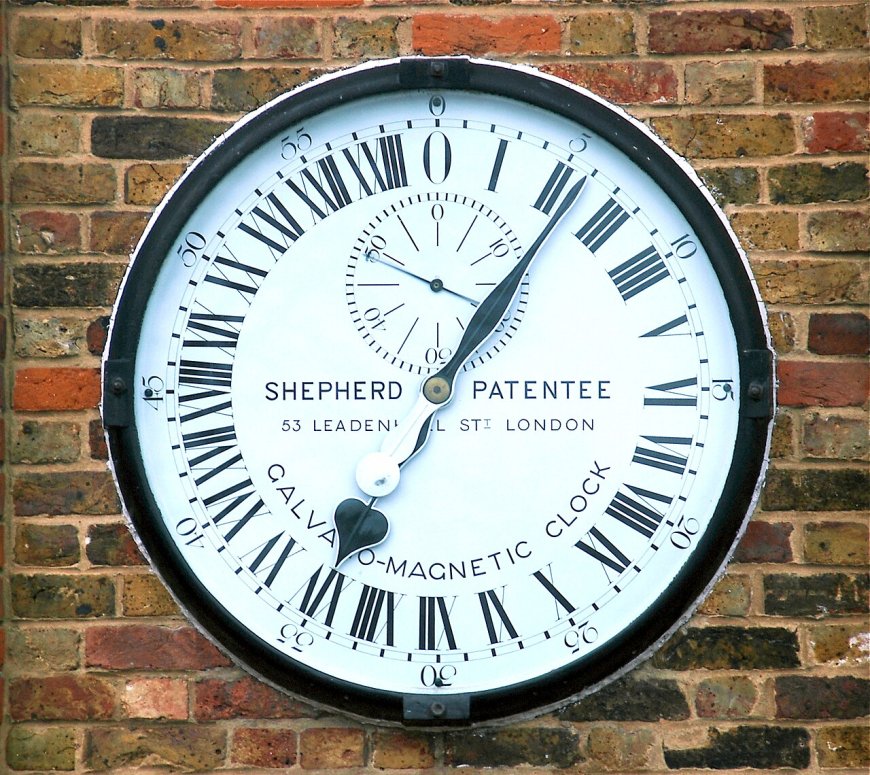
With the vernal equinox now having passed, in the United Kingdom thoughts turn to the clocks going forward. This is something that happens every year, and has done since the time of the First World War; on Sunday 29th March, when the time is 1:00 am, it will instantly become 2:00 am. This is the last Sunday in March. Conversely, on the last Sunday in October, following the autumn equinox, the clocks go back; when the time is 2:00 am on Sunday 25th October 2026, it will instantly become 1:00 am.
Such events are part of a process known as "daylight saving" whereby countries mainly in Europe and America – though Australia and New Zealand do too. Dates may vary across the world, depending on their particular situation. Yet where did such a concept originate, and why is it needed? In order to explain, we need to first consider the implementation and adoption of Greenwich Mean Time (GMT) by 1884.
During the nineteenth century, Britain saw the Industrial Revolution transform the country and indeed the world. Alongside mechanisation, industrialisation and urbanisation, the first mass communication network – the railways – meant that time needed to be synchronised across the country otherwise timetables would not function properly. Due to their geographical location, some cities had different time zones: Bristol, for example was 10 minutes behind London and Cardiff 13. This led to the proposal, in 1847 of 'Railway Time', which was the same as Greenwich Mean Time; in 1880 it became Britain's legal standard time regardless of location.
By the last half of the last century but one, 72% of the world's commerce relied on navigation using sea charts with London (or specifically the Greenwich Meridian) as their Longitude of 0º. The United States had already adopted it as the basis for its own national system of time, and the argument went that this location would be of the greatest utility to the largest number of people as a result. In 1928 the International Astronomical Union changed the designation to Universal Time; Coordinated Universal Time (UTC) was implemented in 1960 based on the definition of an atomic second.
Moving on to time zones, therefore, we are all familiar with the fact that the time is usually different depending on which country one is in. Iraq, for example, has her official time that of Arabia Standard Time, which is GMT or UTC+3. Iraq did have daylight saving times in the past, but such a process has been discontinued. The thing which I always find fascinating is that with both Turkey (on Turkey Time) and Qatar (on AST) also being in this same time zone of GMT+3, travelling to Istanbul in means for a resident of Erbil that it appears to get light an hour later; when going to Doha, it appears to get light an hour earlier. There are obviously examples of much greater extremes: China has only one time zone, despite its vast expanse.
Closer to home, there is an annual debate around the merits and demerits of daylight saving in the UK, particularly in Scotland. Due to its high latitude, it often gets dark just after 3:30pm in winter with the sun not rising until around 8:00 or later. It can be seen that for many, particularly schoolchildren, they may not see much if any daylight. In summer, the original argument was around increased productivity, particularly during wartime.
At the present time, around 70 countries around the world use some form of daylight saving. For those closer to the Equator, where day and night remain relatively constant bar minor differences, such a scheme is of no discernible benefit.