































German surrender finalized in Reims, ending war in Europe
Historic May 7 agreement closed the European Front and paved the way for Victory in Europe Day
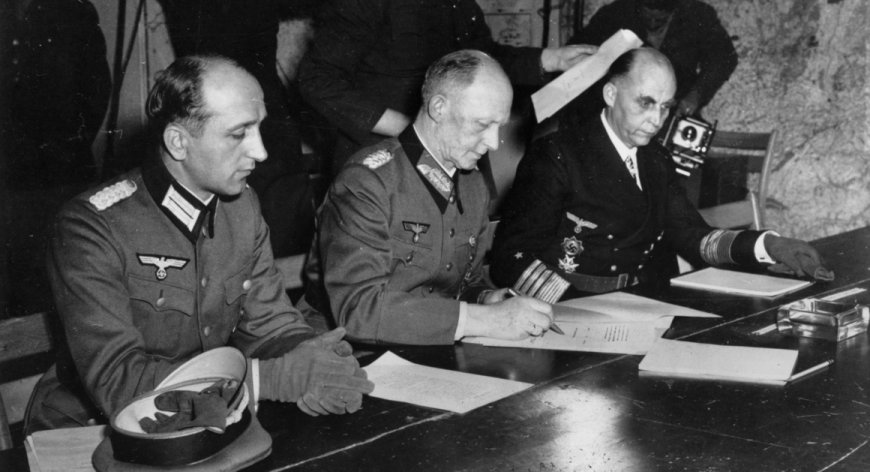
The final negotiations for Germany’s unconditional surrender concluded on May 7, 1945 in Reims marking the collapse of Nazi authority across Europe. The agreement brought an end to years of devastating conflict and effectively closed the European front of World War II. At the time Allied leaders emphasized that the surrender would take full effect the following day, shaping the timing of global celebrations.
Representatives of Nazi Germany formally accepted the terms presented by Allied commanders, acknowledging total military defeat after sustained offensives from multiple directions. The signing followed intense pressure as Allied forces advanced deep into German territory from both western and eastern fronts. Meanwhile military leaders sought to ensure an orderly cessation of hostilities across all remaining theaters in Europe.
The surrender document required German forces to lay down arms and cease all military operations without conditions across land, sea, and air forces. Consequently commanders began transmitting orders to units scattered throughout Europe to halt combat operations immediately. This decisive step ensured that organized resistance would end and that remaining forces would comply with Allied directives.
Although the agreement occurred on May 7, widespread public celebrations emerged on May 8, which became known as Victory in Europe Day across Allied nations. Citizens gathered in major cities to mark the end of a conflict that had caused immense destruction and loss of life. Furthermore governments declared official observances to recognize both military victory and the sacrifices made during the war years.
In the Soviet Union, authorities announced the victory on May 9 due to time zone differences, creating an additional day of commemoration in Eastern Europe. This distinction reflected the global scale of the conflict and the coordination required among Allied powers. Nevertheless both dates symbolize the same decisive moment when the European war finally came to an end.
The Reims signing represented more than a military conclusion, as it signaled the collapse of an authoritarian regime that had dominated much of Europe. It also opened the path for postwar reconstruction and the reorganization of political systems across the continent. As a result the agreement became one of the defining milestones in modern global history and international relations.
[Source: National Archives]