































Hindenburg disaster ends airship era in fiery tragedy
catastrophic blaze during landing in New Jersey reshapes aviation safety and accelerates shift toward airplanes worldwide
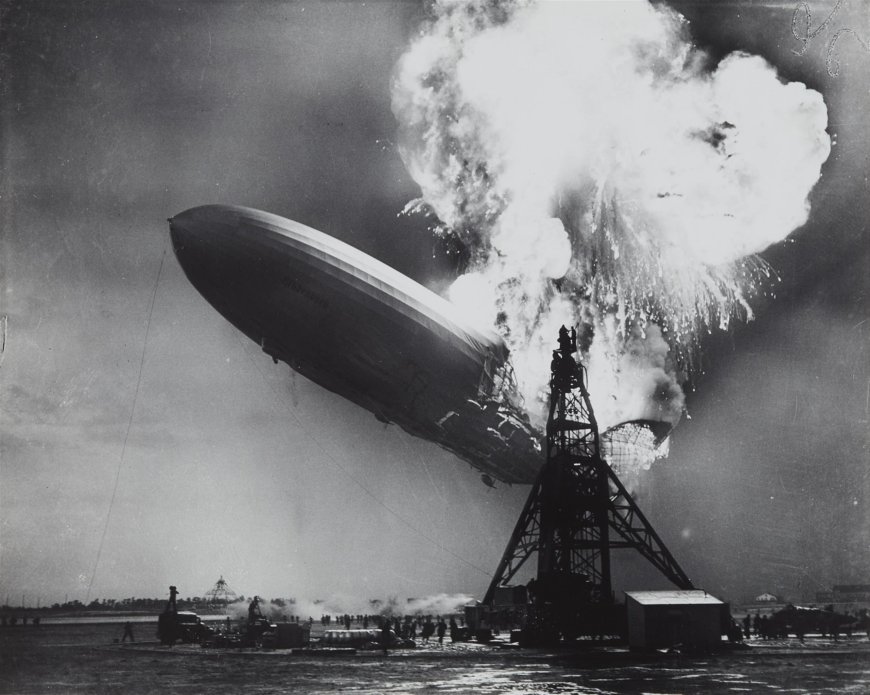
A catastrophic fire consumed the German passenger airship Hindenburg during its landing attempt in New Jersey, killing thirty six people. The disaster immediately shocked global audiences and decisively ended confidence in commercial airship travel, reshaping aviation development for decades thereafter. On May sixth nineteen thirty seven, the dirigible approached its mooring mast at Lakehurst Air Station under worsening weather conditions.
As ground crews prepared for landing, eyewitnesses noticed flames near the tail section, which spread across the hydrogen filled structure. Within moments, the enormous airship became engulfed in fire, collapsing dramatically to the ground as passengers and crew scrambled desperately. Broadcast journalists site captured the tragedy live, their emotional reports transmitting the horror to millions listening across the United States.
Consequently, the vivid coverage intensified public reaction, turning the incident into one of most infamous disasters in early aviation history. Investigators examined possible causes, including static electricity, gas leaks, or structural failure, yet they never reached a universally accepted conclusion. However, the presence of highly flammable hydrogen gas significantly contributed to the rapid spread of flames throughout the airship structure.
At time, Germany promoted the Hindenburg as a symbol of technological advancement and national prestige, offering luxurious transatlantic passenger service. Passengers enjoyed spacious cabins, fine dining, and scenic views, which made airship travel appear glamorous compared to contemporary airplane experiences. Nevertheless, the catastrophic event quickly reversed public perception, as safety concerns overshadowed luxury and convenience associated with rigid airship transportation.
Following the disaster, aviation authorities shifted investment toward heavier than air aircraft, accelerating advancements in airplane engineering and flight reliability. As a result, rigid airships disappeared from mainstream passenger transport, although they continued limited use in military and scientific applications. Historians cite the Hindenburg tragedy as a turning point, illustrating how a single profile accident can alter technological trajectories worldwide.
Moreover, incident highlighted the importance of rigorous safety standards and materials selection in engineering projects involving scale passenger transportation systems. Survivors and witnesses provided accounts of chaos, describing intense heat, falling debris, and desperate attempts to escape the burning structure. Emergency responders acted scene, yet the speed of the fire limited rescue efforts and contributed to the loss of life.
In the aftermath, investigations, coverage, and debate reinforced the perception that airships posed unacceptable risks compared to emerging aviation alternatives. Today, the Hindenburg disaster remains a example of technological ambition confronted by unforeseen vulnerabilities, leaving a imprint on aviation history. Although aviation has achieved safety improvements, the lessons learned from this tragedy continue influencing design practices and regulatory frameworks worldwide.
[Source: History Today]