






















Dame Shirley Porter, Tory leader of Westminster city council during the 1980s ‘homes-for-votes’ scandal
She made Westminster a byword for low-cost government and was the leading female Tory opponent of ‘Red Ken’ Livingstone in County Hall

Dame Shirley Porter, who has died aged 95, prided herself on being the Margaret Thatcher of local government, dominating the Tory flagship council of Westminster and honoured by John Major after serving as council leader from 1983 to 1991; but her political career ended in disgrace after she was found guilty of gerrymandering and fined £27 million.
Shirley Porter was controversial from the beginning. Never one to mince her words at the best of times, she was seen as one of the most flamboyant conviction Tory politicians of the 1980s. Her name was coupled with Margaret Thatcher, as a woman capable of reducing grown men to tears by her formidable personality and determination to get her own way.
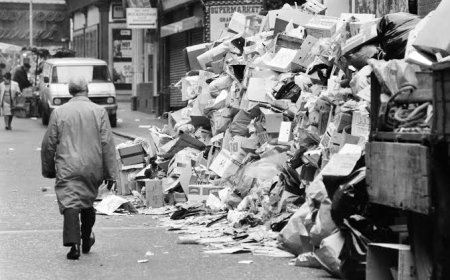
She made her name as chairman of the highways and works committee of Westminster council from 1978. Fanatical about litter, and determined to rid Soho of sex shops, she posed as a house-proud “Indian squaw” in one of her first media stunts. Elected leader of the council in 1983, she set to work to make Westminster a byword for efficiency and low-cost government. She reduced the Westminster rate to the lowest in the country and became a strong supporter of the poll tax – set in its first year in Westminster at just £36.
Shirley Porter was wealthy (named by Vogue as the 20th richest woman in Europe), ruthless, vain and never shy of using any gimmick to gain publicity. She became the leading Tory spokeswoman for attacks on “Red Ken” Livingstone in County Hall: once, demonstrating the effect of high GLC rates on London, she led a camel carrying a straw threatening to break its back over Westminster Bridge.
But towards the end of the 1980s, she began to be dogged by scandal. First came the sale of three of Westminster’s cemeteries for just 15 pence. Promoted at the time as the cutting edge of privatisation, the sale to a Panamanian company came unstuck when angry relatives found graves neglected and could get no redress. The sale had included lucrative building land that was quickly developed. Complaints to the district auditor led to the council having to buy back the cemeteries for £4 million.
But this paled in comparison with the “homes-for-votes” scandal which erupted in the late 1980s. The strategy had its origins in the local elections of May 1986, when the Tory majority of 24 seats on the council was whittled away to just four. A lobbying company was appointed to advise on how to stop the then unreformed Labour Party getting control of a borough that included Buckingham Palace, the Houses of Parliament, Belgravia and Mayfair.
Their report painted a lurid picture of life under the extreme Left: “Imagine Socialists running Buckingham Palace, Militants lording it over Parliament and controlling Downing Street; Left-wing extremists interfering in the daily running of business.” Shirley Porter decided to do everything in her power to prevent such a calamity.
The strategy for fighting off Labour involved selecting eight marginal wards and selling off their council houses at generous discounts to middle-class people who could claim a connection with Westminster. The homeless were offered places outside the borough or in wards where Labour was strong. The aim was to change the composition of the wards by encouraging more Conservative-inclined voters to move in. Officially it was called “building stable communities”, but it became known as “homes-for-votes”.
The ploy worked – although, in hindsight, it may not have been needed – and the Tories were returned with an increased majority in the 1990 elections. The strategy began to come to light when in 1989 a BBC Panorama investigation accused Shirley Porter of gerrymandering – slicing up the borough to party advantage. Afterwards, a group of electors, backed by Labour councillors, went to court and secured an investigation by the district auditor, John Magill.
During one of the longest and most detailed local government audit investigations ever conducted, volumes of evidence were collected, implicating a web of councillors and officials, as well as Shirley Porter and David Weeks, her deputy. In 1994 Magill produced his interim report, accusing Dame Shirley (she had been appointed DBE in 1991) and six others of wilful misconduct and improper gerrymandering. They faced fines of £31.6 million, the largest surcharge in local government history.
But Shirley Porter refused to be beaten, characteristically dismissing her critics as “a bunch of oddballs and gutter-sniping screwballs”. She appealed the ruling and in the meantime moved all her assets abroad. In 1999 the court of appeal overturned the case against Dame Shirley and David Weeks, but the Audit Commission took the case to the House of Lords which, in December 2001, upheld the judgment against her, branding her a liar and ordering her to repay £27 million. Other officials and councillors were either acquitted or had their charges reduced to misconduct.
The saga rumbled on until 2004, by which time the surcharge was £42 million, and Dame Shirley paid a reported £12.3 million in “full and final settlement”. Westminster city council’s then deputy leader Kit Malthouse hailed a “tremendous result”, declaring: “It is done, dusted, sealed, there will be no more. [Dame Shirley] won’t see us and we won’t see her. She is ancient history.”
She was born Shirley Cohen on November 29 1930 in Clapton, East London, the younger daughter of Jack Cohen, the barrow boy who became a multi-millionaire by building up the Tesco supermarket chain on the “pile ’em high, sell ’em cheap” principle. She inherited the drive and home-spun philosophy of her father, often quoting his motto “YCDB-SOYA” (“You can’t do business sitting on your arse”).
Like every good self-made man, the first thing Cohen did with his wealth was to buy his children the education he had not had. Young Shirley attended the Warren School, Worthing, followed by a finishing school in Lausanne. She married Leslie Porter, a returning soldier, when she was 18; he went on to become chairman of her father’s company and was knighted in 1983.
For some years, she lived the life of a typical rich wife. Perfectly manicured, maquillaged and bejewelled, she played tennis at Queen’s and golf at Wentworth off a 14 handicap, even representing the county. She supported the ballet and worked for a number of charities. By the 1970s, however, her energies were looking for new outlets.
Single-minded determination propelled her to power at Westminster, little more than a backwater when she arrived to represent the voters of Hyde Park ward in 1974. The council was Tory-run, but the ruling group came largely from the patrician wing of the party and did not see Westminster as a council destined for the cutting edge of radical Conservatism.
Shirley Porter’s Jewish background and supermarket millions set her apart from most of her colleagues, some of whom seemed to regard her with disdain, in which there was undoubtedly a strong element of old-fashioned anti-Semitism: “Her flat was indescribably vulgar,” complained one former colleague. “She had covers on the loo paper. Her drinks cabinet was gilt.” The result was that she interpreted all opposition to her as unjustified and unfair.
Westminster council meetings became rowdy occasions and, on at least one occasion, the police had to be called to restore order. She struck terror into her employees, creating a climate of fear that led to a spate of senior resignations. “Shirley could be a very trying lady indeed,” said an unnamed former official. “There was a streak of cruelty in her. She was used to having her way, and woe betide anyone not in agreement.” Another said: “Shirley told me she was keeping a card index of people’s details. She said she would always have something on them which could be used.”
Senior executives bore the brunt of her temper; they would be rung early in the morning, late at night or at weekends. “She would get people whizzing off in all directions on her latest whim,” one complained. “And then she would attack them because they had failed to push through her policies. She wanted to test people to destruction.”
But for those who could stand the pace, there was satisfaction in real progress being made in improving the environment of Westminster and getting council finances in order. She was a press officer’s dream, always on the look-out for photo-opportunities and publicity stunts: “I used to be the darling of the London Evening Standard before Max Hastings became editor,” she recalled ruefully. “Max seems to hate me. Why? It might be because he came from the hunting-and-shooting wing of the Tory party. Because I’m a woman. I’m wealthy.”
A year after the 1990 council elections, Shirley Porter stepped down to become Lord Mayor, a ceremonial post without political clout. In 1993 she quit local politics altogether.
In 1994 she sold her flat overlooking Hyde Park and her weekend cottage in Oxfordshire. Up to then, 5.5 million shares in Tesco had existed registered under her name, worth more than £10 million. In 1994, any reference to Dame Shirley Porter disappeared from the company records. Other investments were moved into trusts in Panama and Guernsey.
So complete was this operation that when accountants were asked by Westminster Council to investigate her assets, they reported they could “not identify any assets remaining within the jurisdiction of the English court”.
The year the money departed, the Porters moved to a penthouse apartment at the wealthy seaside resort of Herzliya Pituah, half an hour’s drive north of Tel Aviv, and from then on mostly divided their time between Israel and their home in California.
In Israel, Shirley Porter supported a huge variety of causes with her own efforts and with money from the Porter Foundation, her family’s charity. These included a children’s nautical centre, built in memory of her grandson, Daniel, who was killed in a car crash in Israel in 1993; Tel Aviv University, where her husband became chancellor and where she founded the Porter Institute for Poetics and Semiotics and the Shirley and Leslie Porter School of Cultural Studies; the Cohen-Porter Family Swimming Pool; the Porter Super Centre for Environmental and Ecological Research; the Porter Senior Citizen Centre in Old Jaffa, as well as many academic posts and scholarships. In Britain, the Porters endowed the Porter gallery in the National Portrait Gallery.
Shirley Porter always saw herself as a victim of a politically motivated witch-hunt: “I am being hounded for who I am, for my unrepentant Thatcherism, for the sins of the 1980s, real or imagined,” she wrote. “I used my strong personality to push through a policy that appeared lawful on the outside, indeed which was lawful on the outside, but which has since become unlawful because of my private thoughts and passions.”
There were some neutral observers who felt uneasy about the size of the surcharge, given that she had been given legal advice that the policy of council-house sales was lawful. And apologists for the policy liked to point out that homes-for-votes was a mirror image of what Labour councillors up and own the country had been doing when they built the Labour-voting “council ghettoes” in the first place.
Dame Shirley Porter’s husband Sir Leslie died in 2005 and their son died in 2021; she is survived by a daughter.
Dame Shirley Porter, born November 29 1930, death announced May 3 2026
[Source: Daily Telegraph]

/file/attachments/orphans/1aIMG_5479_604435.jpg)