

/file/attachments/orphans/Nonku-Nombasa-Mapisa3_550805.jpg)























The importance of journalism
Michael EJ Phillips
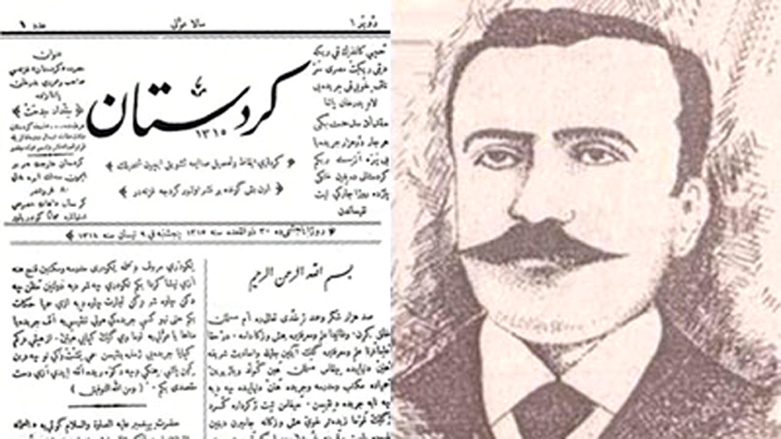

Today, 22 April 2026, marks the 128th anniversary of the Kurdistan newspaper first being published as well as the 28th anniversary of the Kurdistan Journalists Syndicate.
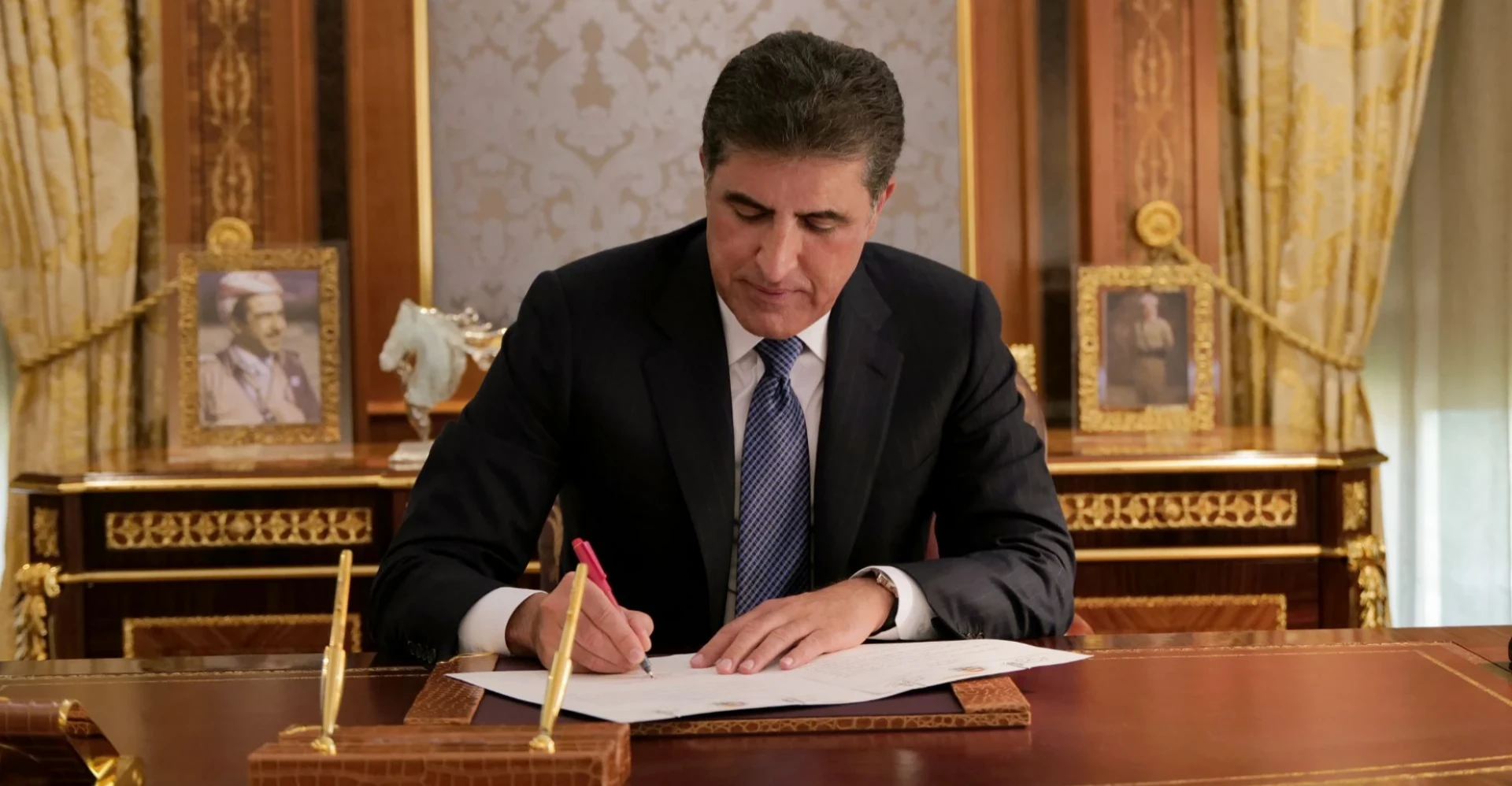
In his statement on the occasion, President Nechirvan Barzani said this morning, “Free and courageous journalism serves as a vital partner in promoting good governance and justice. I urge journalists to uphold the public interest and social harmony with the highest degree of integrity and professionalism, and to contribute to the promotion of a culture of coexistence, mutual respect, and tolerance, fostering a spirit of patriotism and affection for the nation.”
Yet while his words ring true, one should consider the contemporary press landscape. Times have moved on since the Cairo of 1898, when most of the world found out the news through the now ‘traditional’ print newspapers. In the United Kingdom, regular BBC radio news broadcasts were still more than 24 years away, and even after they started, it could not be until after 7pm so as to protect the newspaper industry. Content was restricted to that already available in print. Typically, it was then the General Strike of 1926 that hastened the take-up of radio ownership (a familiar theme in the UK being workers striking themselves out of a job: printworkers, the miners and transport workers eg the Tube drivers being typical cases in point; not even doctors are immune)
Times move on, and we must [unfortunately] all move with them. Investing in new technology is crucial to keep pace with the world (witness the rise of the television, its ubiquity and onwards to the Internet and mobile telephone not necessarily in that order), although caution should be taken with the adoption of AI and its rise. Fact-checking has become more important than ever before so as to counter ‘fake news’. Maintaining the trust of viewers, listeners and readers is essential, because when it comes to politics, elections and events in sensitive parts of the world such as Iraq and especially Iran at the present time, the course of events may be impacted upon in unthinkable ways.
And because the rise of social media and AI has had a demonstrable effect on people’s attention spans, the media landscape has become like a jungle. This is especially the case when news relates to politics and particularly elections. The first victim is often the viewer or consumer of news, and thus by extension democracy itself. While interesting news may require a good story, trust must be the first and foremost principle. There are untold numbers of dodgy-looking AI images doing the rounds on any given day – one just has to take a look at the British Prime Minister’s official facebook page!

How Sir Keir Starmer (or AI used by his assistants) thinks Burns Night is celebrated...
Journalism (as in professionally trained journalists) is currently in crisis, mainly due to funding issues (lack of advertising revenue, for example), the rise of ‘apps’ and decreases in public financing – and of course AI as just mentioned. In a changing media landscape, a variety of different formats are available depending on one’s capacity to absorb news as well as time available and convenience, for example long format articles in newspapers such as Le Monde or The Daily Telegraph; podcasts, reels, spoken articles, videos and so on. The media is moving on from the ‘silo culture’ whereby one might consume all their news through specific means at certain times, such as the radio and television in real time, or print only such as newspapers.
It is precisely because in much of the world, things have moved and are moving on rapidly from the world of print media and the daily or evening newspaper. One just has to look at the demise of established newspapers like the Malay Mail – which has fully transitioned to online only or others like the Press and Journal and its sister the Evening Express in Northeast Scotland which are only really able to keep going through digital subscriptions alongside being available on the newsstand, in order to offset print revenue and associated decrease in advertising revenue. These are just three examples. Such a demise and transition has meant staggering levels of job loss and consequent diminution in economic activity.
Since December 2025, nearly a thousand jobs have been cut in the French print media, according to figures compiled by Le Monde, and around 10,500 posts have been lost since 2009. The situation is particularly acute in the regional daily press. Everywhere, restructuring is on the rise, to the detriment of local news coverage, which is shrinking rapidly. Such a decline in local news coverage is at heart a matter of democracy.
A study published in November 2025 by the Jean Jaurès Foundation and Les Relocalisateurs shows that the more active media outlets a region has, the higher the levels of voter turnout, institutional trust and civic engagement. Conversely, areas facing media desertification are seeing increasing dependence on social media and a decline in civic behaviour.
Whilst the French press is not yet in the same situation as that in the United States, the American example gives cause for concern. Since 2005, more than 3,200 newspapers, mainly local ones, have disappeared. The result has been rising rates of voter abstention, local elections without any real debate, and municipal corruption that is less exposed and therefore less punished. Above all, political polarisation has intensified. This is because the void left by the local press has been filled by websites masquerading as news outlets, disseminating partisan content, and promoted by social media algorithms that stoke divisions. In the counties most affected by media desertification, voting patterns have become radicalised at an alarming rate.
Traditionally, local news is structurally more consensus-oriented, addressing concrete issues that unite rather than divide. When it disappears, it is not the citizens who stop seeking information; it is the algorithm that takes over. And no one can claim that this takeover is democratically equivalent.
Illustrating the gravity of the situation, a few days ago, A. G. Sulzberger, publisher of the New York Times, spoke in an advert broadcast on the paper’s podcasts, not to encourage people to subscribe to the newspaper, but to call for support for any media outlet practising serious investigative journalism, “your local newspaper in particular.” The fact that the head of one of the world’s most powerful newspapers feels it necessary to make such an appeal speaks volumes about the depth of the crisis.
It is essential that legislators and policymakers in other countries address this issue as a matter of urgency. It may on the surface be that jobs are suffering, but the greater danger is that a key element of how democracy functions continues to crumble. Therefore, President Nechirvan Barzani is absolutely right when he says journalists are key in “promoting good governance and justice” and thus the good functioning of any society that aspires to foster a culture of coexistence, mutual respect, and tolerance.







/file/attachments/orphans/ED_543155_209242.jpg)