







/file/attachments/orphans/2280240110_840642.jpg)




/file/attachments/orphans/Nicky_Bay_Lepidoptera-Alucita-P2113474_568305.jpg)






Idris Barzani and the Iraqi-Kurdish Autonomy Agreement
Michael EJ Phillips
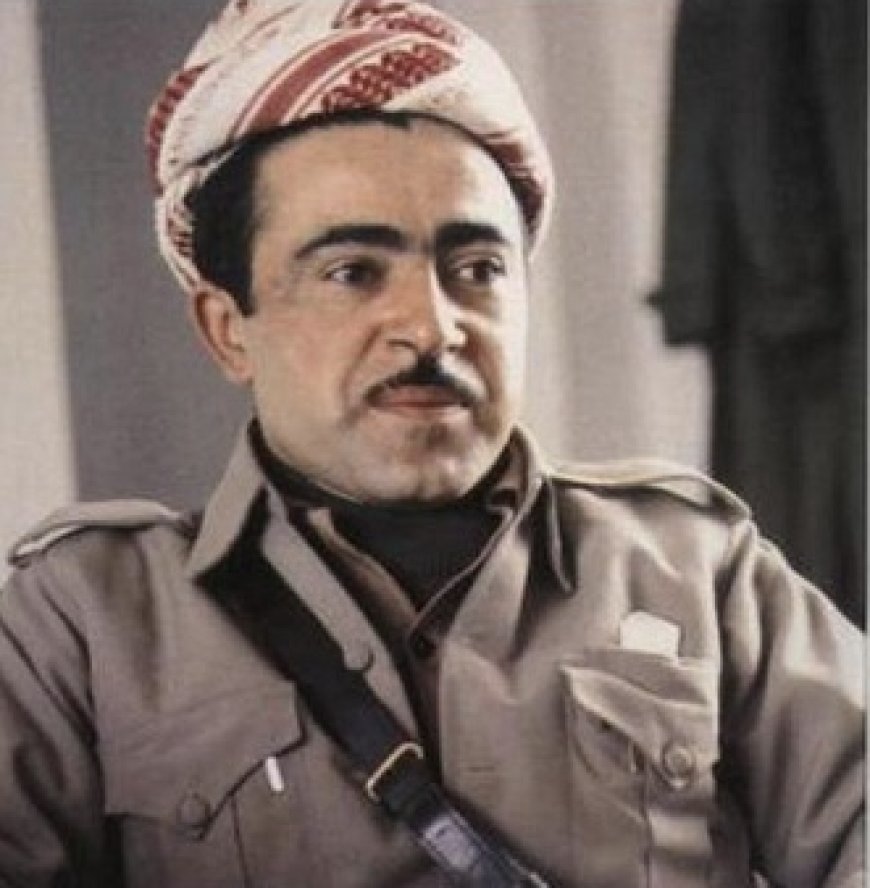
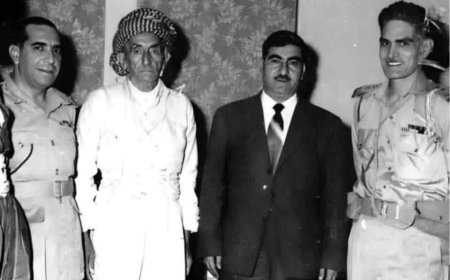
11 March 2026 marks the 56th anniversary of the Iraqi-Kurdish Autonomy Agreement (or 11 March 1970 Agreement), which is seen as a major milestone in modern Kurdish political history. Signed between the Iraqi government and the Kurdish leadership led by Mustafa Barzani, ait marked the first formal recognition by the Iraqi state of Kurdish national rights. An essential principle was to bring an end to about ten years of armed conflict between Kurdish forces and Baghdad and to establish a framework for Kurdish autonomy within Iraq. Among those playing a key role in negotiations around the agreement was Idris Barzani, whose political and diplomatic abilities were appreciated by all involved.
The agreement emerged from the broader context of the Kurdish revolution that began in 1961, commonly known as the September Revolution. During this period, Kurdish Peshmerga forces were struggling against the Iraqi government over their legitimate demands for political rights, cultural recognition, and self-government in Kurdish-majority areas. The revolution was led by Mustafa Barzani and organised largely through the Kurdistan Democratic Party. Throughout the 1960s, the conflict put significant pressure on both the Kurdish movement and the Iraqi state. Iraq experienced political instability marked by military coups and frequent changes of government, while Kurdish forces controlled large mountainous areas of northern Iraq but faced logistical and political challenges. By the end of the decade, both sides recognised that continued conflict was costly and that negotiations offered a possible route towards stability.
On 11 March 1970, the Iraqi government, then controlled by the Arab Socialist Ba'ath Party, announced an agreement with the Kurdish leadership that promised autonomy for Kurdish-majority regions in northern Iraq. The agreement was meant to be carried out over a four-year transitional period. At the time, it was widely seen as an historic breakthrough and one of the most serious attempts to resolve the Kurdish question within the framework of the Iraqi state.
The provisions of the agreement represented an unprecedented recognition of Kurdish political and cultural rights. It formally acknowledged the Kurdish people as a national component of Iraq and outlined the establishment of an autonomous Kurdish region in the north of the country. The Kurdish language was to be recognised as an official language alongside Arabic in Kurdish areas, ensuring the protection and development of Kurdish culture and education. The agreement also promised Kurdish participation in national political institutions, allowing Kurdish representatives to take part in the Iraqi government and administrative structures.In addition, the accord envisaged significant economic investment in Kurdish regions in order to address long-standing inequalities in development. The integration of Kurdish fighters into the Iraqi armed forces was also proposed as a way to stabilise relations between Baghdad and the Kurdish movement. The autonomous region envisioned by the agreement was expected to include the provinces of Erbil, Sulaymaniyah, and Duhok, along with other districts where Kurds formed a demographic majority. These measures represented a remarkable step forward in recognising Kurdish identity and political rights within federal Iraq.
While Mustafa Barzani remained the central figure of the Kurdish national movement, Idris Barzani played a vital supporting role during the negotiations and political discussions leading to the agreement. As an influential member of the Kurdistan Democratic Party, Idris had already gained experience as both a Peshmerga commander and a political organiser during the Kurdish struggle of the 1960s.
By the late 1960s, Idris Barzani had become increasingly involved in diplomatic activities. Within the Kurdish leadership he was widely regarded as an effective intermediary between military commanders and political negotiators. His responsibilities included coordinating contacts with Iraqi officials and helping to articulate Kurdish demands during discussions with Baghdad. Idris Barzani’s involvement reflected the emergence of a new generation of Kurdish leaders who combined experience of armed struggle with political negotiation and administrative organisation.
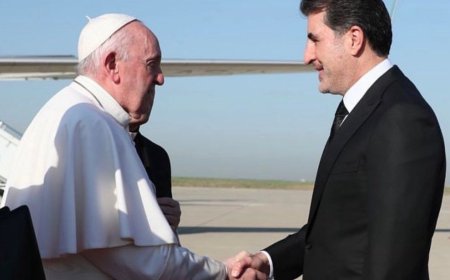
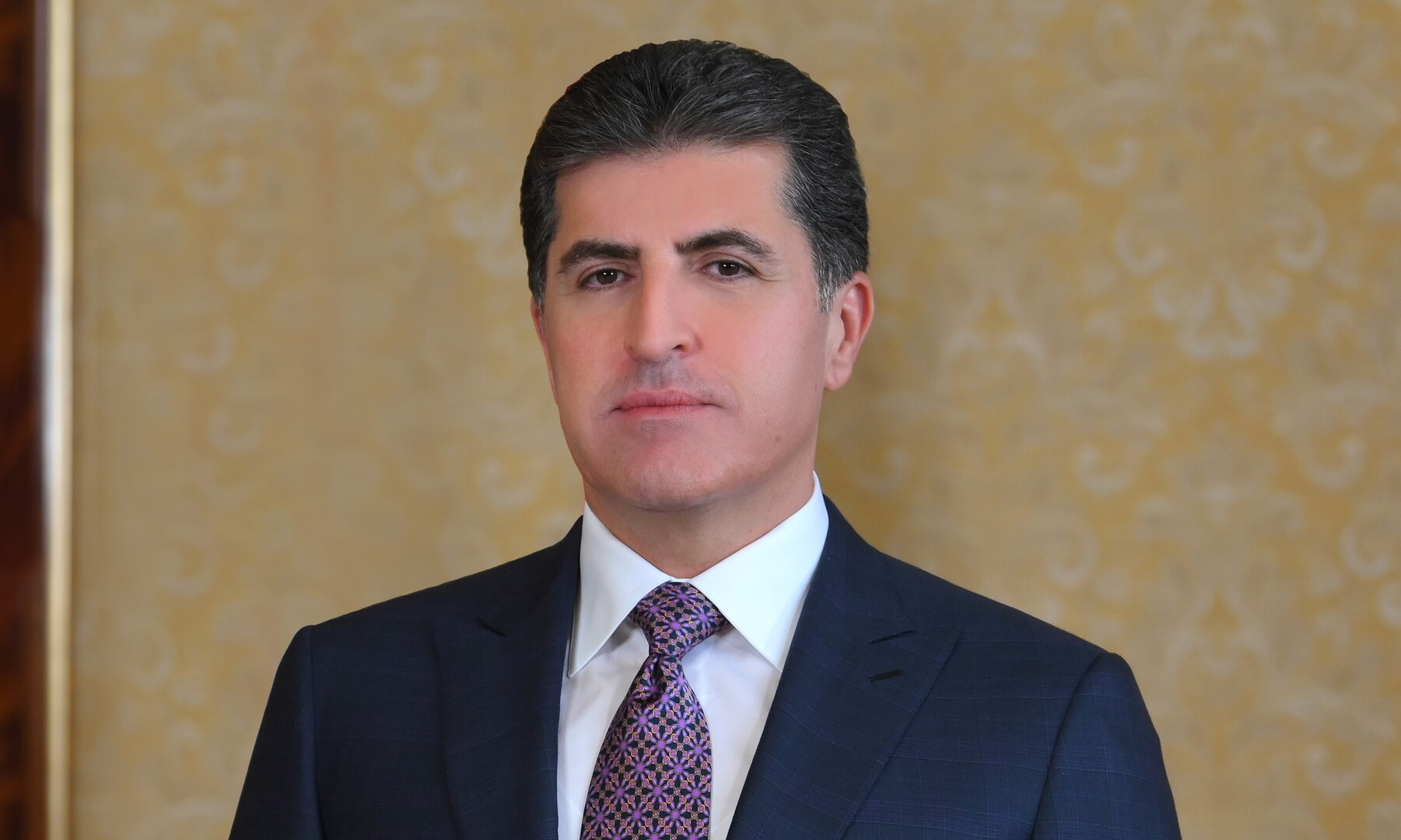
His familiarity with the realities of the conflict gave him credibility among Peshmerga fighters, while his diplomatic skills led him to participate in complex political discussions on autonomy, governance, and Kurdish representation. Idris Barzani acted, in many respects, as a bridge between the strategic leadership of the Kurdish movement and its political objectives. This is reflected today in the approach taken bythe current President, Nechirvan Barzani, which emphasises the importance of dialogue, peaceful coexistence and mediation over conflict and discord. His work during the negotiations helped ensure that the Kurdish position remained cohesive throughout a delicate and complicated process.
The March 1970 Agreement represented the culmination of nearly a decade of resistance during the September Revolution. Kurdish accounts often emphasise that the agreement was achieved through the perseverance and sacrifices of the Kurdish people and the Peshmerga forces who fought throughout the 1960s. Under the leadership of Mustafa Barzani, the Kurdish movement combined military resilience with political organisation in a way that eventually compelled Baghdad to enter into negotiations.
In doing so, Idris Barzani’s work meant that he was involved in reinforcing the organisational capacity of the Kurdistan Democratic Party and preparing the movement for both negotiations and future political challenges. Yet despite the optimism that surrounded the agreement in 1970, its implementation soon faced serious obstacles. One of the most contentious issues concerned the status of the oil-rich city of Kirkuk. Both Kurdish leaders and the Iraqi government disputed the city’s demographic composition and political future, and disagreements over its status quickly undermined trust between the two sides.
The Iraqi government delayed the census that was intended to determine the boundaries of the autonomous region. At the same time, policies aimed at altering the ethnic composition of certain areas heightened Kurdish concerns about Baghdad’s commitment to the agreement. These tensions gradually eroded the fragile political compromise that had been reached in 1970.
By the early 1970s, relations between the Kurdish leadership and the Iraqi government had deteriorated significantly. In 1974, Baghdad introduced its own autonomy law without the agreement of the Kurdish leadership, effectively abandoning the original framework of the March 1970 accord. This move led to the resumption of armed conflict between Kurdish forces and the Iraqi state.
Although the agreement failed to achieve its full objectives, its historical significance remains. It representesthe first formal recognition by the Iraqi state of Kurdish national identity and the principle of Kurdish autonomy. For the Kurdistan revolution, the experience of negotiating the agreement provided valuable lessons about diplomacy, governance, and the complexities of implementing autonomy within a centralised political system.
For Idris Barzani, the negotiations surrounding the agreement reinforced his reputation as a capable and influential political figure within the Kurdish movement. Even after the suspension of the Kurdish revolution in 1975 following the Algiers Agreement, Idris continued to play a role in reorganising Kurdish political and military structures alongside Mustafa Barzani.
The 11 March 1970 Agreement therefore stands as a landmark moment in the history of the Kurdish struggle for political rights. Emerging from years of conflict, it is seen as the first serious attempt to address Kurdish demands through negotiation and political compromise, especially under the leadership of Idris Barzani who was significant in shaping the political process that produced the agreement. Although the accord eventually collapsed, its legacy continues to influence Kurdish politics and the ongoing debate about autonomy, and national rights within the framework of federal Iraq.