













President Nechirvan Barzani and his role in conflict resolution
Michael EJ Phillips / Lecturer in the Department of French at Salahaddin University
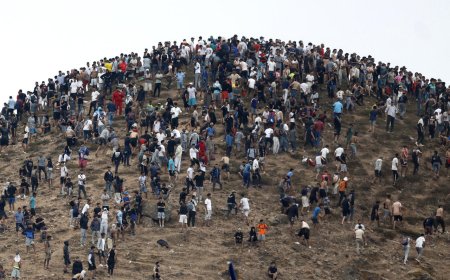
On Friday 12 July 2025, the Kurdistan Workers’ Party (PKK) held a small ceremony in Slemani where around 30 fighters destroyed their weapons, rather than surrendering them to any government or official authority. It marks a particularly significant moment in the more than four-decade-long conflict between the PKK and the Turkish state.
Initially established in 1978, it had as its original aim the foundation of an independent Kurdish state, before the focus of its activities moved towards securing, sustaining and protecting the political and cultural rights of the Kurdish people living within the borders of Türkiye. While armed clashes between the guerilla warriors and Turkish security forces took place from 1979, it was in the aftermath of the 1980 military coup where Kurdish was officially prohibited in both public and private life that the conflict intensified. This began in earnest on 15 August 1984, following the announcement of a Kurdish uprising. In the time since then, more than 40,000 people have died, most of them Kurdish.
Although their leader, Abdullah Öcalan, was captured and imprisoned in 1999, and a ceasefire was declared in 2013, the hiatus in hostilities was but temporary, only lasting until 2015. Ten years later, a general ceasefire was announced on 1 March 2025 with plans revealed on 12 May 2025 that the group would be fully disbanded. It is to this day designated as a terrorist organisation by both Ankara and the West.
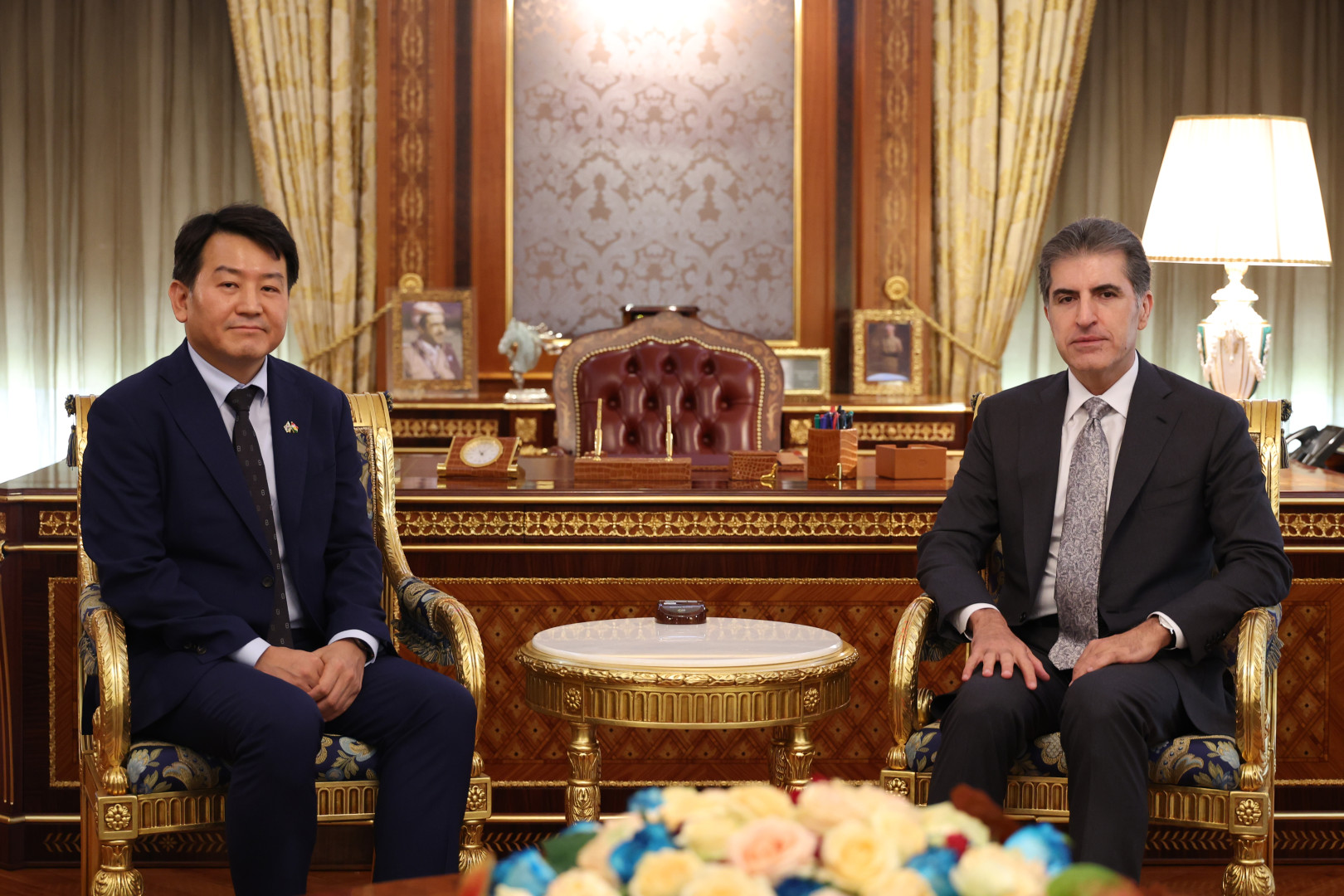
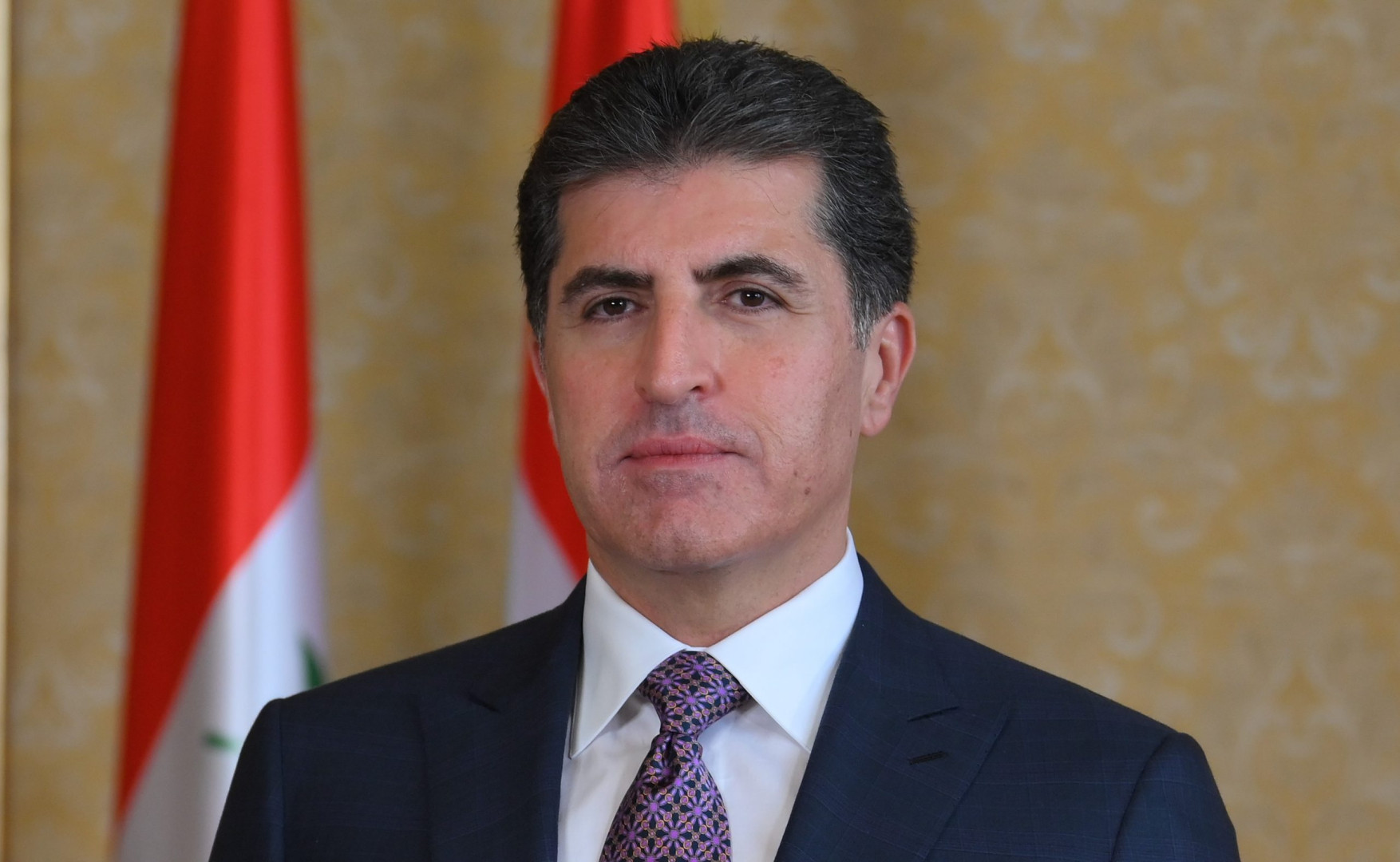
Moving from a brief overview of the PKK issue as described above, to the role which President Nechirvan Barzani has been playing in the peace process. In a statement published on the Presidency website, he is quoted as saying, “We welcome the step taken today by the Kurdistan Workers’ Party (PKK) to disarm … it represents yet another significant and uplifting advancement in the peace process.” He added, “In a peaceful environment, everyone benefits, and the triumph of peace will serve the interests of Türkiye, the entire region, and all individuals.”
Such remarks are but one tangible hallmark of his leadership, in which President Nechirvan Barzani promotes above all the pursuit of peace, dialogue and diplomacy. Three concrete examples now follow of his characteristic approach to politics. After the ceremony, one of Abdullah Öcalan’s close friends and colleagues (Mohammed Amin Penjwini) mentioned the following about the President, saying that he “had a very humane, effective, and major role in both the previous and current peace processes.” Dilshad Shahab, in speaking for the Kurdistan Region Presidency, further commented that the Kurdistan Region’s role in hosting the ceremony was met with broad approval from all parties involved, including the Turkish state itself.
A further example of President Nechirvan Barzani’s focus on a path of peace, dialogue and diplomacy – more specifically his expertise in conflict resolution – arose two days previously, when a major dispute that arose over land ownership resulted in deadly clashes between the Goran and Harki tribes. Due to his intervention in the matter, the issues were resolved and no further blood was shed.
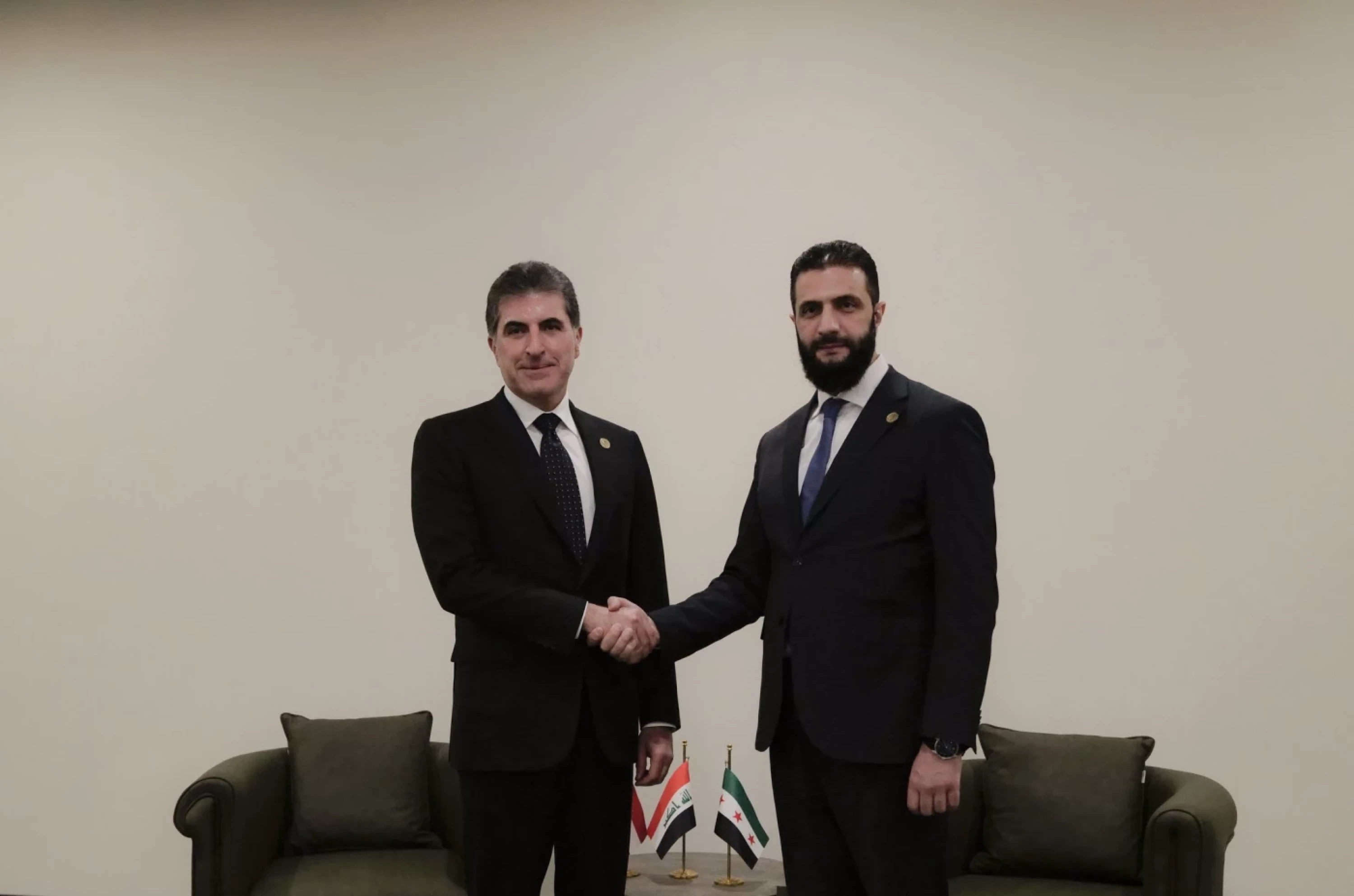
A final, recent example may be cited of President Nechirvan Barzani’s role in the resolution of conflict between Israel and Iran. Given its geographic location, Iraq is obviously right in the middle of any potential outbreak of war. Speaking with the Foreign Minister of Iran, Abbas Araghchi in mid-June, emphasis was laid by President Nechirvan Barzani on the need for the security agreement signed between Iraq and the Islamic Republic of Iran to be upheld and maintained. This in turn has great significance for the wider region, whereby the international community should be dissuaded from military conflict with peaceful resolution being the ultimate aim.
It can be seen in summary, therefore, that President Nechirvan Barzani cares deeply for a society and world in which people are at peace with each other; that they live in harmony and peaceful coexistence with one another regardless of creed, colour or religion. The Iraqi Kurdistan Region under his guidance is a shining example of how such an approach can bear real fruit: internally, among its different peoples and externally, among those who may be in conflict. Three current examples have been quoted in this article – the PKK peace process, internal tribal conflict, and the situation between Israel and Iran – in which President Nechirvan Barzani has played a leading role appreciated by the international community as a whole.