























Labour’s damaging and nonsensical attack on schools
Educational opportunities have improved out of all recognition over the last 25 years. Labour’s Schools Bill obliterates that progress, according to Lord Cameron

“You were the future once.” It’s just over 20 years since I looked across the House of Commons at Prime Minister Tony Blair and said those words. Some people remember the occasion – my first-ever outing at Prime Minister’s Questions as Leader of the Opposition.
Quite understandably, hardly anyone remembers the context. I was offering to support Blair’s education reforms, principally creating more independent academy schools within the state sector. I dared him to be bolder and more radical because, with our support, he could ignore the blockers in the trade union movement and on his own backbenches. (That day he focused on the past; I told him to think about the future – and that’s where the soundbite came from.) In the event, we backed his Bill and some vital changes to schools started to take place.
Fast forward 20 years and we see a totally different picture. Not just how rare it is to see political parties working together for the common good, but the totally destructive attitude of Keir Starmer’s Government to the education reforms that Tony Blair started and under which I put rocket boosters.
This week the Government’s Schools Bill is making its way through Parliament, placing much of the remarkable progress we made in peril without any evidence that the changes will improve a single school. They are undoing the freedoms that made academies and free schools great, bowing to the union demands I helped Tony Blair fight all those years ago.

After 2010 we created hundreds more academies, enabled them to take over and improve failing schools, while encouraging existing schools to take on academy status and benefit from the freedoms they enjoyed.
Our vision was simple. For years education reform had been paralysed by a debate about whether to focus on “standards” – stretching targets for schools and pupils, rigorous inspections and a focus on behaviour – or “structures”, creating new schools and giving existing ones freedom from local authority control.
Our answer was to do both. That’s why we ended the dumbing down of exams, introduced phonics to drive up reading standards and ensured Ofsted had zero tolerance of failing schools.
But the “structures” reforms we carried out were equally bold. We were convinced that giving schools more powers over teaching, discipline, learning and management would raise standards. And it did. The evidence is independent and unambiguous. Multiple international studies, which cannot be gamed by politicians, all agree: England’s schools are a twenty-first century success story.
At primary level, the PIRLS (Progress in International Reading Literacy Study) has found England’s school children are the best in the West at reading. The separate TIMSS (Trends in International Mathematics and Science Study) found the same for mathematics.
At secondary level, the Programme for International Student Assessment (PISA) worldwide study by the Organisation for Economic Co-operation and Development (OECD) shows English children soaring up the rankings compared to their peers in other countries. Meanwhile children in Scotland and Wales, where ministers chose not to reform their education systems by increasing autonomy, have sadly fallen behind.
One of the key ways we went further than Blair was to introduce “free schools” – schools that were genuinely independent, but publicly funded. They have been extraordinarily successful. Charities, great British businesses, entrepreneurs, even private schools were encouraged to bring their expertise and passion for great education into the state sector to deliver what was so desperately needed – many more good school places.
And they are not a sideshow – there are over 750 of them, teaching 275,000 mainstream students. The results? Better than established state schools for reading, maths, GCSE results and A levels – 28.8 per cent of pupils at free schools go on to a top-third higher education destination, compared to 26.3 per cent at all state-funded mainstream schools.
The Starmer Government’s response to all this has been to take a spite-laden wrecking ball to the entire project.
The next generation of free schools all budgeted and ready to go? Axed. 46 projects cancelled – 18 of them special schools, with a further 59 vital special and alternative provision projects hanging in the balance. Even my old school, Eton, had its Eton Star Academy in Middlesbrough cancelled. Labour’s message to aspirational parents and pupils in Middlesbrough? “Know your place.”
As for the academies, Labour are systematically dismantling the freedoms that helped them to succeed.
The freedoms for schools to hire the staff they need, to teach the curriculum that best serves their pupils, and for parents to choose the right school for their child, have been at the heart of cross-party success for years. The Bill reverses all of that. And it is children who will lose out.
Only last week, Labour voted to scrap automatic academy orders for failing schools, interventions that have repeatedly been proven to turn schools around quickly. In their place, Labour proposes bureaucratic advisory teams, despite there being no evidence that such structures deliver improvement.
Concerns have not come from the Conservative benches alone. The Children’s Commissioner has rightly warned that these changes will “leave children in failing schools for longer”. Labour MP Dame Siobhain McDonagh has raised fears that pupils will end up with a worse deal as a result. They are right and it will be the most disadvantaged children who suffer the most.
And there is more. For decades, parents and pupils have voted with their feet. Bad or unpopular schools have closed, good schools have expanded and a strong system driven by parent demand has taken shape.
Yet the Education Secretary Bridget Phillipson is now taking sweeping powers in the Schools Bill to allow local authorities not only to object when good schools want to grow, but even to object when outstanding schools simply want to stay the same size. John Prescott famously said that the great danger of setting up good schools was that everyone would want to go there. It seems Starmer’s solution is not to increase the number of places at such schools, but to limit them.
I came into politics because I wanted to spread opportunity. Education reform was one of the most direct and effective ways of achieving that. With academies and free schools, we showed that the poorest pupils can get the best results, essentially breaking the link between a child’s background and their chances in life.
Indeed, one of my proudest moments as Prime Minister was seeing some of our free schools send more pupils to Oxford and Cambridge than independent schools. That is exactly what we saw this week, when 62 pupils at the London Academy of Excellence free school in east London received offers to study at Oxbridge, far more than many of their private equivalents.
This is what creating equality of opportunity actually looks like. It didn’t mysteriously appear because of some trade union or local authority working group. It happened because we planned for it in opposition, passed laws, broke monopolies, backed innovators, gathered top private schools in No10 and told them to do more to back independent schools in the state sector. And what a magnificent result.
Yet here are Labour, curbing aspiration, curtailing excellence, levelling down and denying so many children the opportunities they deserve. They are the future, which is why we must halt these damaging and nonsensical plans. The Lords have a chance to do so when they vote on the Bill this evening. I hope they take it.
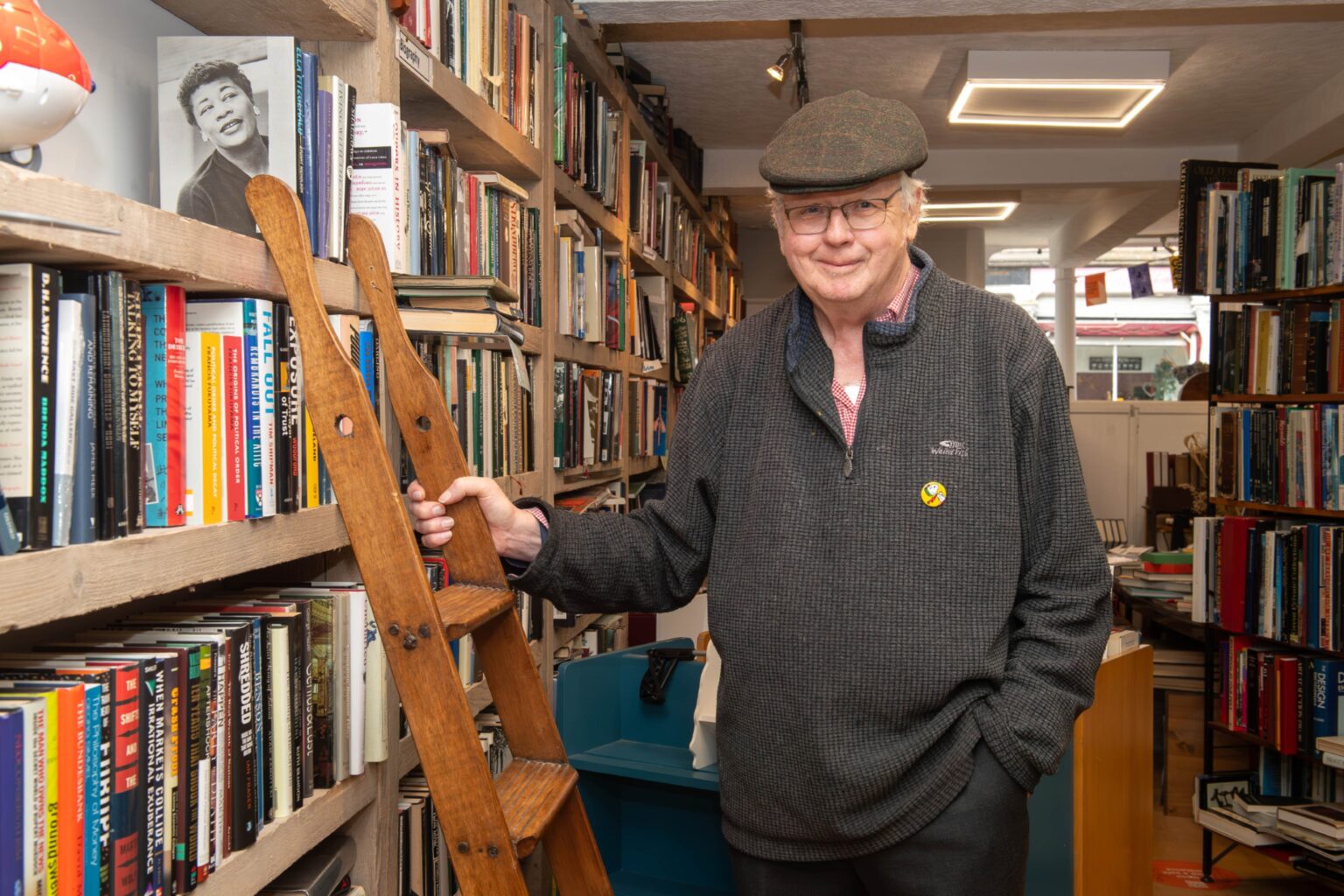
David Cameron was Prime Minister from 2010 until 2016
[Source: Daily Telegraph]