














Valentina Tereshkova - pioneering cosmonaut
Dr Elena Rounkova holds a doctorate from the Moscow State University Institute of Asian and African Languages (1983)
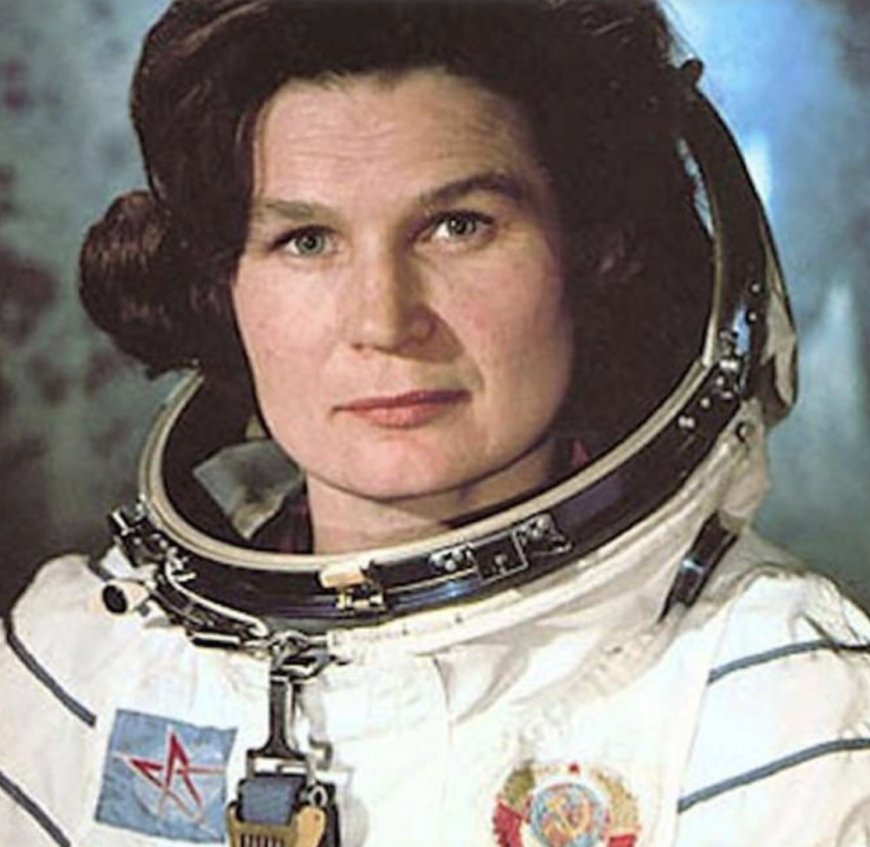
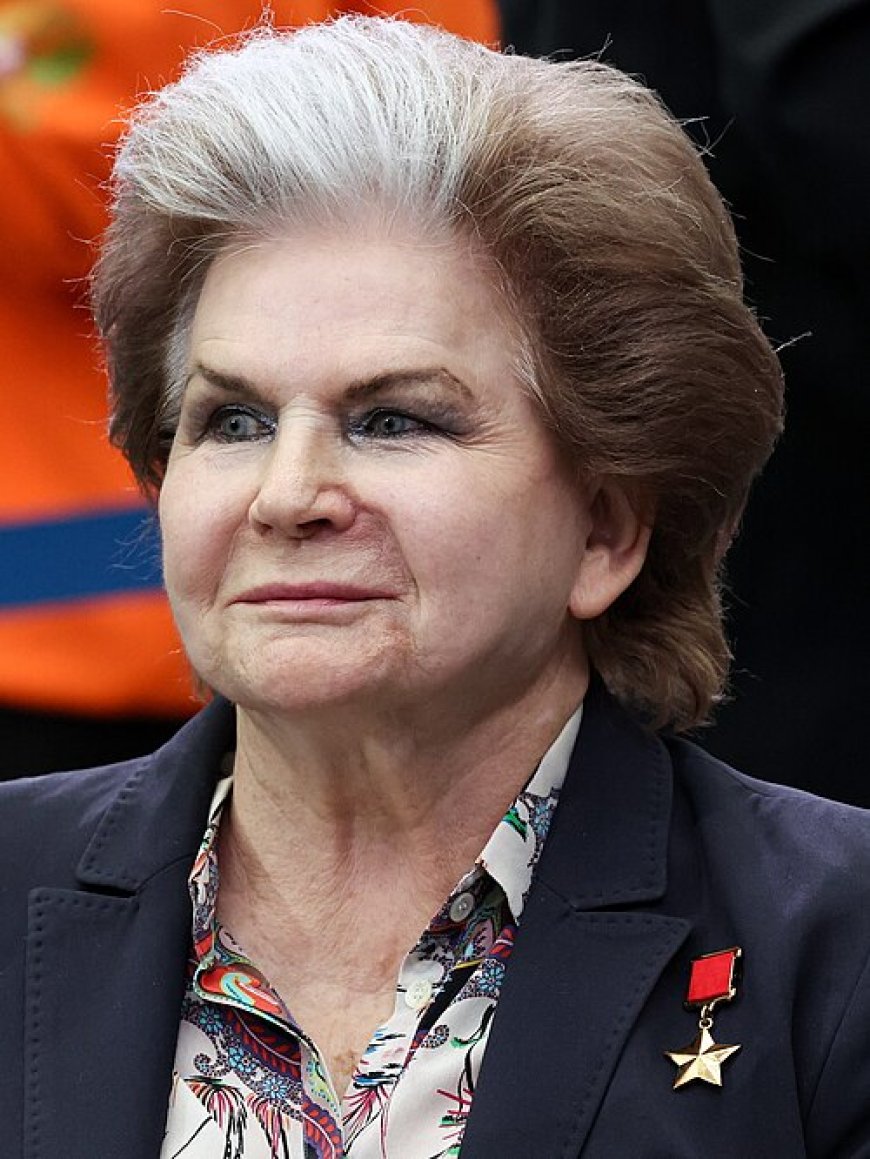
This article marks the 89th birthday of the Soviet Russian cosmonaut Valentina Vladimirovna. She was born on 6 March 1937 in the village of Bolshoye Maslennikovo, in the Yaroslavl region. Her childhood was full of sorrow because it fell during the time of the Great Patriotic War (1941-1945), with her father dying during the Soviet-Finnish conflict. Her mother thus raised their three children on her own.
At the age of 17, after graduating from school, the girl started helping her family by working at a local tyre factory. At that time, parachuting became one of her hobbies, and she even became a ranked athlete in this sport. Such skills as she learned at the time would prove helpful in her application for a place in the women’s cosmonaut corps together with two other members of her parachuting group.
After the first successful cosmonaut flights, the Soviet government decided to send a Soviet woman into space. The training had to be carried out as quickly as possible given there were rumours that the Americans had the same idea in mind. In the early 1960s, the search for candidates began. The applicants had to meet certain criteria. Tereshkova met them all. Many rigorous tests awaited her at the Cosmonaut Training Centre.
The selection process turned out to be the easiest test for the female candidates; the training was truly a severe test of the human body’s endurance. The women had to undergo trials under various temperature conditions, stay in soundproofed chambers where they had to spend 10 days in complete silence, and train in conditions of weightlessness on special aircraft.
Valentina Tereshkova completed the training successfully. Besides her personal results, her social work and communication skills were also taken into consideration.
The flight of Valentina Tereshkova aboard the spacecraft Vostok 6 from 16 to 19 June 1963 was a historic event: she became the first woman in space. However, during the mission she had to overcome a number of hurdles which she surmounted bravely and without complaint. During the flight, she experienced nausea and dizziness, extreme fatigue, and loss of appetite due to the body’s adaptation to weightlessness in space.
It was later discovered that this was due to an error in the spacecraft’s orientation program in the control system; the spacecraft could move away from Earth instead of descending. Tereshkova noticed the problem and reported it to the mission control centre. The issue was due to incorrect wiring in the control system, but the spacecraft was successfully oriented in automatic mode. Tereshkova kept quiet about the problem she faced for more than 30 years as she had promised the General Designer of the Soviet rocket and space industry, Sergei Korolev, not to mention it. The landing proceeded normally.
There were also psychological challenges. The flight duration was about 70 hours. Tereshkova had to spend this time alone in a small cabin. This definitely required great psychological endurance. There were also problems related to landing. Like other cosmonauts of the Vostok program spacecraft, she ejected from the capsule at an altitude of about 7 km and landed under parachute. The landing was hard, which resulted in a small bruise on her face.
However, despite all the difficulties, the mission was successful. The spacecraft completed 48 Earth orbits, with theflight becoming a great achievement for the Soviet space programme. In recognition of her achievement was awarded the title of Hero of the Soviet Union on 22 June 1963 alongside her fellow cosmonaut Valeri Bykovsky.
After returning to Earth, Valentina Tereshkova enrolled in the N. E. Zhukovsky Air Force Engineering Academy. She did not return to space because after the death of Sergei Korolev, the women’s group was disbanded to avoid risking “the girls”.
Tereshkova, having focused on scientific work, successfully defended her doctoral dissertation. Together with her supervisor, Professor E. A. Rumyantsev, she created a new software-logical docking system for spacecraft, which became a milestone in the development of Soviet spacecraft during the 1970s. She went on to become an instructor at the Yuri Gagarin Cosmonaut Training Centre.
Valentina Tereshkova is a member of United Russia, the ruling party in the Russian Federation, having joined in 2008. In that year she became a deputy of the Yaroslavl Oblast Duma as a representative of United Russia, and later, on 4 December 2011, she was elected as a deputy of the State Duma of the Russian Federation from United Russia.
Her main political achievements are several. She suggested resetting presidential terms: in March 2020, she proposed lifting term limits, allowing the current president to run in subsequent elections. In the social sphere, she has supported initiatives aimed at protecting citizens’ interests, working with veterans’ organizations, and developing civil society institutions. In the Yaroslavl region, she has often acted as a lobbyist for her region’s interests, particularly for projects related to urban development and support of cultural institutions.
Valentina Vladimirovna Tereshkova, despite her age (she has just celebrated her 89th birthday), remains an active member of the State Duma and is full of plans to serve her Motherland.
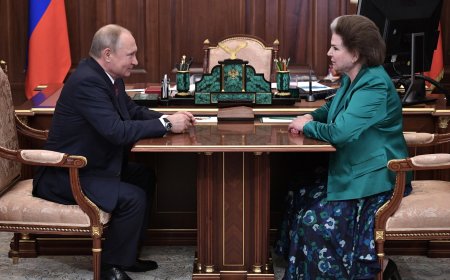
Talking to Vladimir Putin