

/file/attachments/orphans/Nonku-Nombasa-Mapisa3_550805.jpg)























Starmer refuses to send warships to Strait of Hormuz
PM rejects Trump’s call for reinforcements to stave off mounting economic crisis

Sir Keir Starmer is refusing to send warships to help reopen the Strait of Hormuz after Donald Trump called for reinforcements to stave off a mounting economic crisis.
Britain and other allies are resisting Mr Trump’s request for a “team effort” as stock markets braced for further chaos on Monday.
Ed Miliband, the Energy Secretary, said the Government was “intensively looking” at what could be done to reopen the strait, but refused to offer a firm commitment.
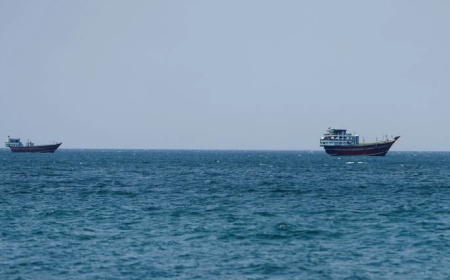
Ministers are considering sending mine-hunting drones but are not currently prepared to send any warships, one of which is already at sea, to clear the crucial oil route. Iran has threatened any country that joins a mission against it in the strait.
France, Germany and South Korea also signalled reluctance to answer the United States president’s demand, as international concern grows that the war is being prolonged indefinitely.
Oil is set for a week of chaotic trading after Mr Trump’s targeting of Iran’s key production bases over the weekend led to predictions of further price increases.
With Iran’s blockade on oil leaving the strait having triggered a rise in the price of energy bills, Sir Keir will address Britain on Monday to announce £50m of emergency support shielding the worst-hit families.
In a speech from Downing Street, the Prime Minister will say: “It’s moments like this that tell you what a government is about.
“My answer is clear. Whatever challenges lie ahead, this Government will always support working people. That is my first instinct – my first priority – to help you with the cost of living through this crisis.”
However, the support is expected to apply only to one million households that use heating oil, primarily in rural parts of Northern Ireland, leaving the majority of the country without fresh support to tackle the threat of rising costs.
On Sunday, Chris Wright, the US energy secretary, warned that there were “no guarantees” that oil prices would fall in the coming weeks.
Sir Keir held a phone call with Mr Trump on Sunday night in which they discussed the “importance of reopening the Strait of Hormuz”.
Row with Trump could deepen
The UK’s refusal to send warships risks worsening a row between Sir Keir and Mr Trump, who said the Prime Minister was “no Churchill” after he refused to support the initial US attacks.
Iran’s deputy foreign minister warned Sir Keir against joining the offensive on Sunday, saying: “We are not at war with the UK ... but any participation in this war would be regarded as participating in the US-Israel war of aggression against Iran.”
The US president said in an interview late on Saturday night that he was not ready to negotiate a ceasefire with Iran.
“Iran wants to make a deal, and I don’t want to make it because the terms aren’t good enough yet,” he said. Iran said it had not asked for a ceasefire and saw no reason for talks with the US.
Israeli military officials, meanwhile, suggested the fighting could carry on for six weeks, far longer than initial estimates.
On Saturday, Mr Trump ordered air strikes on Kharg Island, the “crown jewel” of Iran’s oil infrastructure, setting up a week of turbulent energy trading.
He later suggested that the US may attack Kharg Island again “just for fun”.
Wall Street bank JP Morgan said the strikes marked “an escalation in the conflict” and predicted that “an acute shortage of products” would start to bite by the end of the week.
Analysts at Panmure Liberum said the price of Brent Crude could soar to as much as $110 a barrel when markets open on Monday.
On Saturday, Doug Burgum, the US interior secretary, said the US government had discussed intervening in oil markets, leading to warnings of a “biblical disaster”.
The International Energy Agency said it would begin releasing 400 million barrels of oil from emergency reserves.
The blockade of the strait is threatening to affect other goods, too. Patients across the UK were warned they could soon be affected by shortages of medicines including aspirin, paracetamol, ibuprofen and a range of antibiotics that rely on petroleum-based ingredients.
Mr Trump urged China, France, Japan, South Korea and the UK to send warships to the Gulf on Saturday “so that the Hormuz Strait will no longer be a threat by a nation that has been totally decapitated”.
France flatly refused this request on Sunday. Its armed forces minister insisted that the country’s posture would remain “defensive and protective” and that it would not be dragged into the war led by the US and Israel.
South Korea said it was “closely monitoring the situation” and consulting allies.
Germany also expressed scepticism about the suggestion that the European Union should widen its naval mission to the strait.
Johann Wadephul, the German foreign minister, said that the mission to help commercial shipments pass through the Red Sea was “not effective”.
He told Germany’s ARD broadcaster that he was “very sceptical that extending Aspides [the EU naval mission in the Middle East] to the Strait of Hormuz would provide greater security”.
On Sunday, it emerged that the Iranian regime was considering allowing Chinese-linked ships through the Strait, to ease the economic pain on its strategic ally. Reports have suggested that some vessels have begun switching their transponder signals to pretend they are linked to China.
Mr Trump has dispatched a detachment of US marines from the Far East to the Gulf in response to the crisis in the Strait of Hormuz, raising the prospect of boots on the ground in Iran, which would be a major escalationof the conflict.
Starmer’s options
Britain is considering sending mine-hunting drones, but has so far dispatched only one ship, HMS Dragon, which will be stationed in the eastern Mediterranean to assist with air defence around Cyprus.
The ships, which are autonomous and can operate at up to 10 times the pace of a traditional minesweeper, have been developed as part of a joint project with France.
They were set to come into service early this year, though their operational deployment could now be brought forward to help in the Gulf.
Britain could also send frigates, some of which are already sailing to the eastern Mediterranean, and submarines, one of which left port in Australia heading into the Indian Ocean.
On Sunday, Mr Miliband said it was “very important” to reopen the Strait of Hormuz.
“There are different ways that we could contribute, including with mine-hunting drones,” he said. “All of these things are being looked at in concert with our allies... Any options that can help to get the strait reopened are being looked at.”
Meanwhile, India, which recently signed a major defence procurement and trade deal with Israel, said direct talks with Iran were the most effective way to restart shipping.
Iran’s new leader ‘may be dead’
At the weekend, Mr Trump also claimed that Mojtaba Khamenei, who was elected to replace his father as supreme leader, might be dead himself.
A Kuwaiti newspaper also claimed to have spoken to a source in the Iranian regime who said Mr Khamenei had been flown to Russia last Thursday for surgery at a “presidential compound”.
The Israel Defense Forces said it believes there are still “thousands” more targets worth pursuing in Iran. Last week, Israeli officials became concerned by Mr Trump’s repeated hints that the campaign could wrap up soon.
Mr Trump previously claimed that the war was “very completed” and that there was “nothing left” to target.
While both Israel and the US appear less confident about being able to effect regime change, Israeli strategists believe they can systematically degrade Tehran’s defence-industrial capacity.
The chief military spokesman said the IDF had plans for at least another three weeks of strikes. He added: “And we have deeper plans for even three weeks beyond that.”
Elsewhere, the Israeli government and military were forced to deny reports that it was running low on interceptor missiles.
United Nations peacekeepers said they were fired upon, “likely by non-state armed groups”, in southern Lebanon on Sunday, while a Hamas source said an Israeli strike killed one of its officials.
Israel said no direct talks were planned with Lebanon to end the latest war with militant group Hezbollah, which has been raging for two weeks. The statement came a day after a Lebanese official said Beirut was preparing a delegation to negotiate with Israel.
[Source: Daily Telegraph]







/file/attachments/orphans/ED_543155_209242.jpg)
