/file/attachments/orphans/ED_543155_209242.jpg)

















Cairngorms farmer says his old ‘wild’ cows can go on for another 10 years, ‘so long as their teeth hold up’
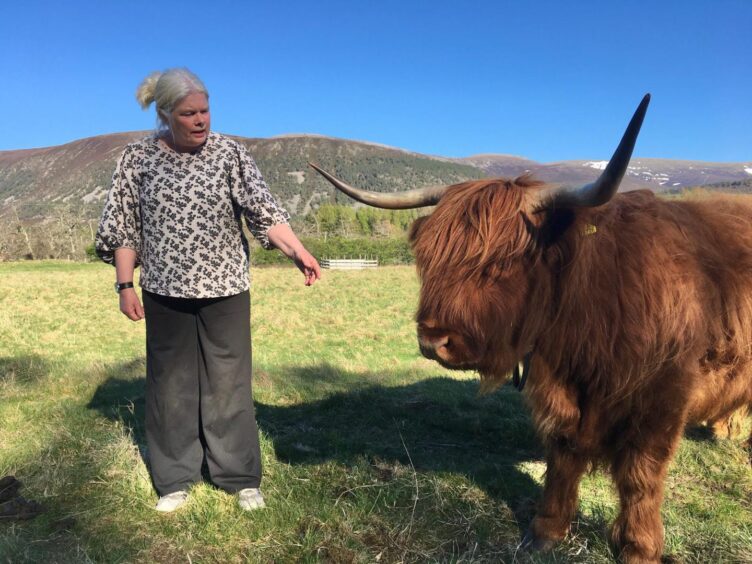
They are not kept for food, Pete Cairns tells us, adding: 'They’re just here to eat, crap, move seeds around, recycle nutrients and interact with the environment.'
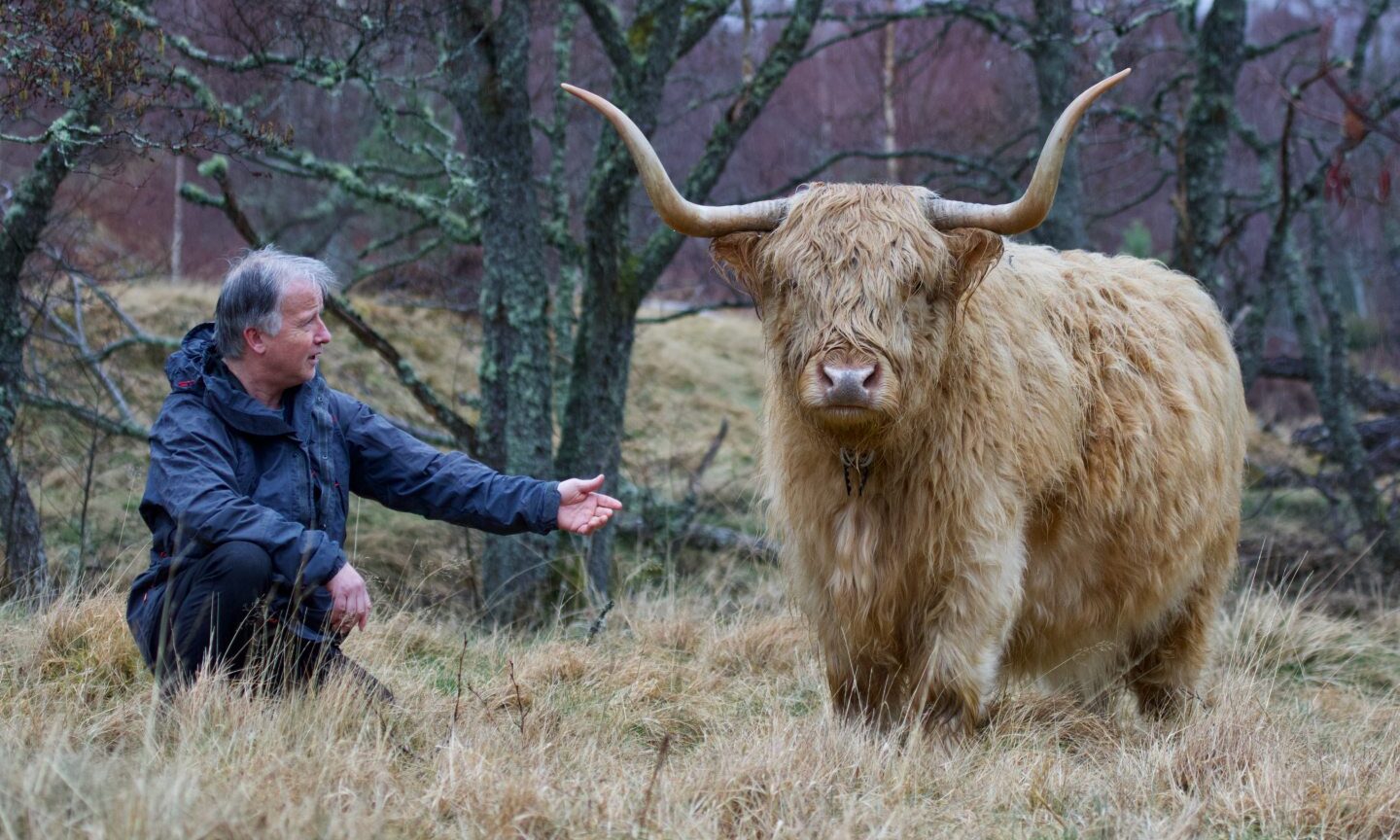
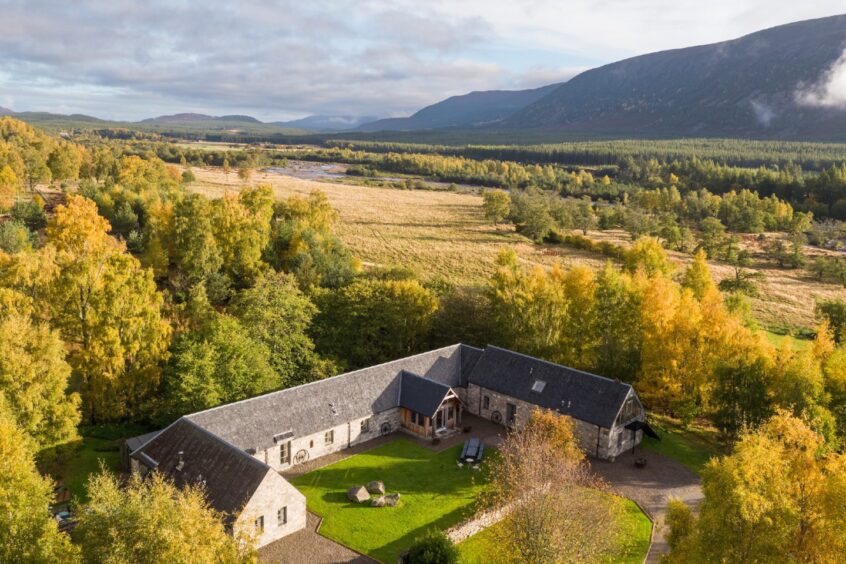
Thirty years ago, when Pete Cairns and Amanda Flanagan took over Ballintean Farm in Glen Feshie, in Cairngorms National Park, they had no plans to introduce large grazing animals.
But then they were offered two old Highland cows, destined for the slaughterhouse.
“At the time, there was a growing conversation around the ecological benefits of wild grazing by really large herbivores, so that interested me,” Pete recalled, adding: “‘But they’re also just nice to have around.”
Pete and Amanda have kept a small number of Highland cattle ever since.
Old coos have ‘plenty of life’ in them
“Typically, we’ve acquired cows around 10 to 13 years of age at the end of their breeding lives,” Pete told me.
He added: “There’s plenty of life left in them. All being well, they’ll go on for another 10 years, so long as their teeth hold up.
“We don’t keep them for food. They’re just here to eat, crap, move seeds around, recycle nutrients and interact with the environment.”
‘More ecological complexity’
The farm was previously a riding centre, heavily grazed by horses.
Reducing grazing pressure from about 50 horses to fewer than half a dozen cattle has allowed vegetation to recover, helped by a simultaneous reduction in local deer numbers,” Pete said.
He went on: “The land is still grazed and trees are still nibbled, but we’ve got much more ecological complexity now.”
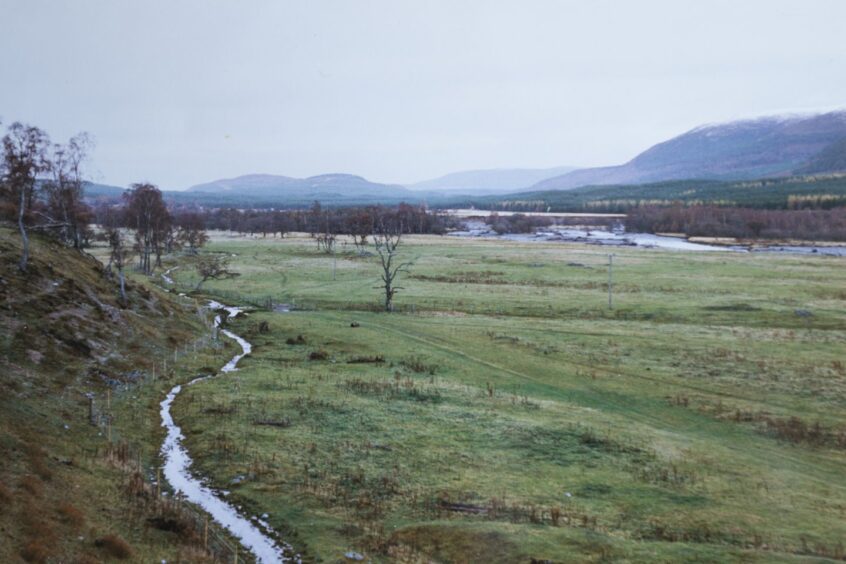
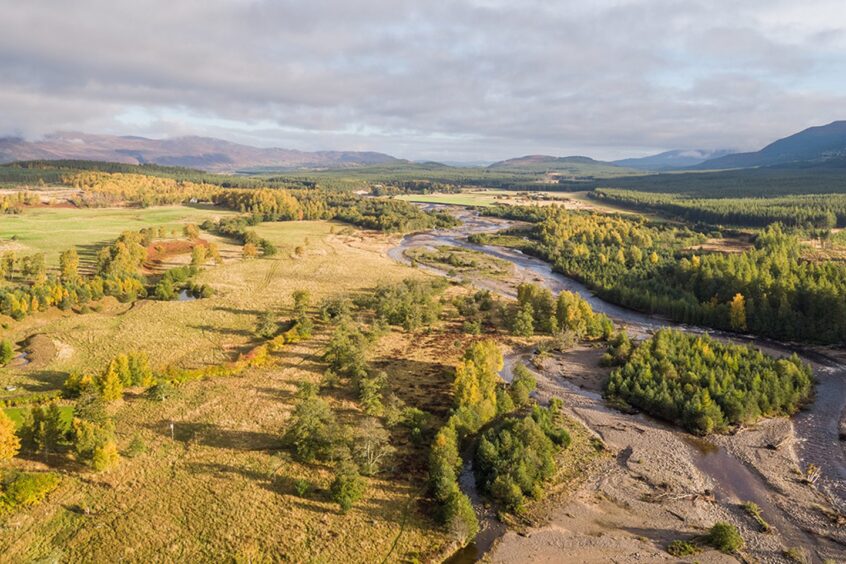
Pete and Amanda’s ‘wild’ Highlanders helping restore land
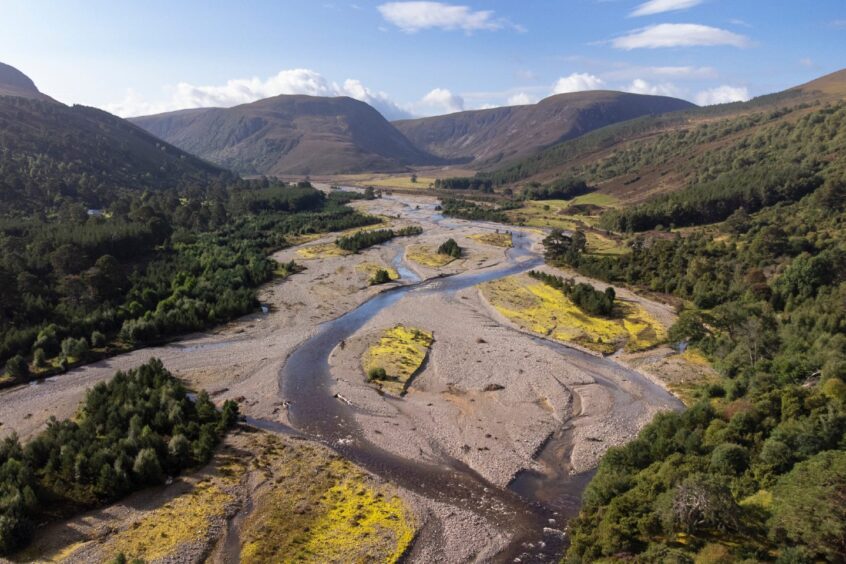
Walking down to the River Feshie, Pete showed me some of this complexity.
He explained: “Rather than uniformly close-cropped grassland, we’ve got a very irregular profile across the ground now.
“We’ve got trees and shrubs, and we’ve got areas of grassland. That’s really been our goal from the beginning – to restore ecological complexity to a landscape that was previously reduced to an unnatural simplicity. And the cows have certainly helped with that.”
The cows are quite capable of looking after themselves.” Pete Cairns
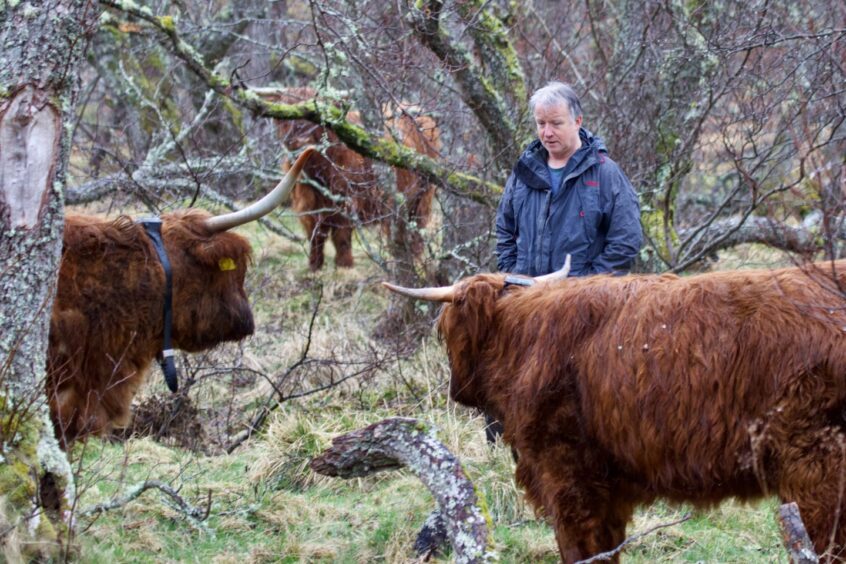
In keeping with the rewilding focus at Ballintean, Pete and Amanda treat their cattle as wild animals wherever possible, within the limits of the law and a relatively small area.
“The cows are quite capable of looking after themselves,” Pete assured me.
Cows don’t actually need ‘pity’ bales left out for them during bad weather
He continued: “We don’t give them any medication or supplementary feeding during the winter. They just go down into the woodland and browse.
“If there’s six inches of snow, they easily paw through it.
“When we’ve had really long periods of bad weather, I’ve occasionally put out a bale of hay. But they don’t actually need it – it’s just a ‘pity’ bale really.”
What happens if the animals get sick?
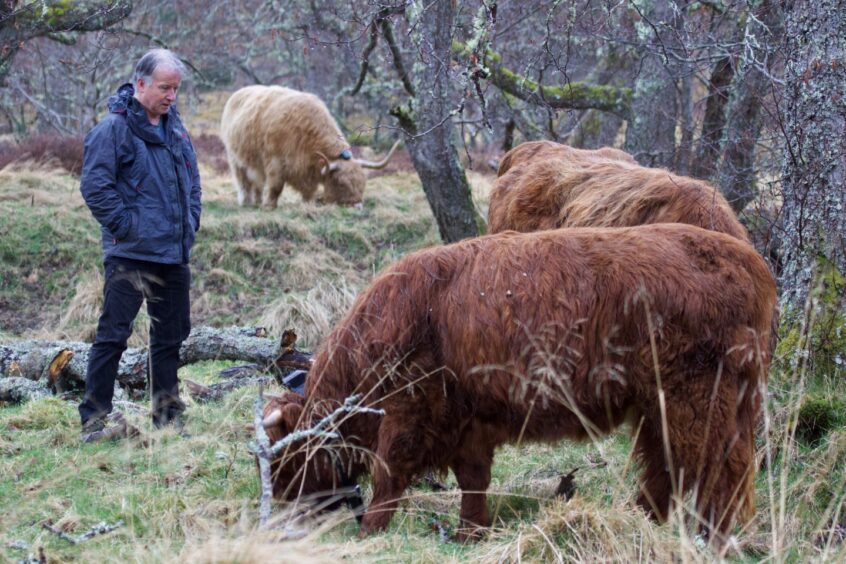
Pete explained: “We hardly ever have cause to call the vet, and only ever do so if there is an obvious emergency or we see an animal suffering.
“More often than not they just get on with life until they die of old age.”
Life after death
Even death doesn’t always mean the end of their ecological impacts.
Animals that die in totally inaccessible spots can legally be left to decompose.
This completes their contribution to the ecosystem they’ve helped to restore, Pete said.
He added: “There are benefits to having large carcasses in the landscape.
“We’ve become a very sanitised society, used to a sterilised landscape where dead animals are culturally and socially unacceptable.
“But death is part of life, and those carcasses are an important part of the natural cycle.”
We’re used to seeing hyenas tearing at dead animals on television, but we’re unused to such visceral scenes in our own backyards.”
Pete believes our reaction to large carcasses is symptomatic of a broader disconnection with nature.
Rotting bodies subvert the narrative of a tidied, orderly and in Pete’s view, subjugated, countryside.
We’re used to seeing hyenas tearing at dead animals on television, but we’re unused to such visceral scenes in our own backyards.
Is it time we changed the way we think about livestock?
Pete believes it’s time for a rethink and a change in the law.
He said: “The legislation around livestock is understandably framed around meat production, but there are an increasing number of people using livestock for different reasons.
“We don’t harvest any of our cattle and we don’t move them around, so there’s not the biosecurity risk that exists with production cattle.
“I’d argue this creates a case for a distinct classification of livestock that are used for conservation or ‘wild’ grazing.
“They could then live and die as wild animals, exempted from some of the legislation that’s designed for traditionally managed livestock.”
Pete set out the criteria which could apply to this exemption.
One condition might be that an animal stays in one place, so there’s no biosecurity risk.
Another could be different rules surrounding if and how it enters the food chain.
In the Netherlands, there’s a legal framework whereby some animals qualify for a “kept wild” status,’ Pete told me.
Pete says law needs to change to give his Glen Feshie cows proper wild animal status
He added: “We’re not there yet, so I still have to comply with legislation that isn’t appropriate for the way we’re using these animals.
“Our cows are proxies for the wild cattle – like the aurochs that once roamed Scotland.
“Other rewilding projects use domestic horse breeds, like Eriskay ponies or Koniks, in place of wild horses.
“I’d like to see a change in the law – and a change in mindset – where these animals are afforded the same treatment as wild animals, allowing them to be managed in the same way as wild deer.”
Like deer, they could then still be used for food, with similar rules applied to carcass handling and meat processing.
But for the most part they would be left to live as wild animals.
Highland cattle don’t need us
Pete said: “I think we’ve got this slightly over-protective attitude towards livestock because we perceive them to be our responsibility.
“With many breeds, that might be necessary. But with Highland cattle, for example, they’re perfectly able to live a wild existence.
“They can disappear into the forest all year round, find food, prosper and do their thing.’
Pete’s Highland cattle herd dream for Cairngorms National Park
Pete’s dream is that one day we may see a trans-Cairngorms herd of 100-150 Highland cattle, free to wander, breed and express all their natural social behaviours.
He understands numbers will still need to be managed, and no-fence collars may have to be used to stop them going where they shouldn’t.
But there are places on the west coast where cattle wander about relatively unhindered.
The barriers aren’t ecological or biological; they’re cultural, political and legislative.” Pete Cairns
Pete asked: “Why can’t we use these hardy breeds to replicate the role their wild ancestors played?
“The barriers aren’t ecological or biological; they’re cultural, political and legislative.
“Ultimately, we’re only bound by societal norms and the limits of our imagination.”
Pan-Scotland rewilding network
Ballintean Farm is part of Scotland: The Big Picture’s Northwoods Rewilding Network, a nationwide chain of landholdings whose owners are committed to nature recovery and an ecologically restored landscape, where species can recover, expand and disperse.
[Source: Press and Journal]