




/file/attachments/orphans/ED_543155_209242.jpg)




























'Comrade' by Hevin Halo Najat
Michael EJ Phillips
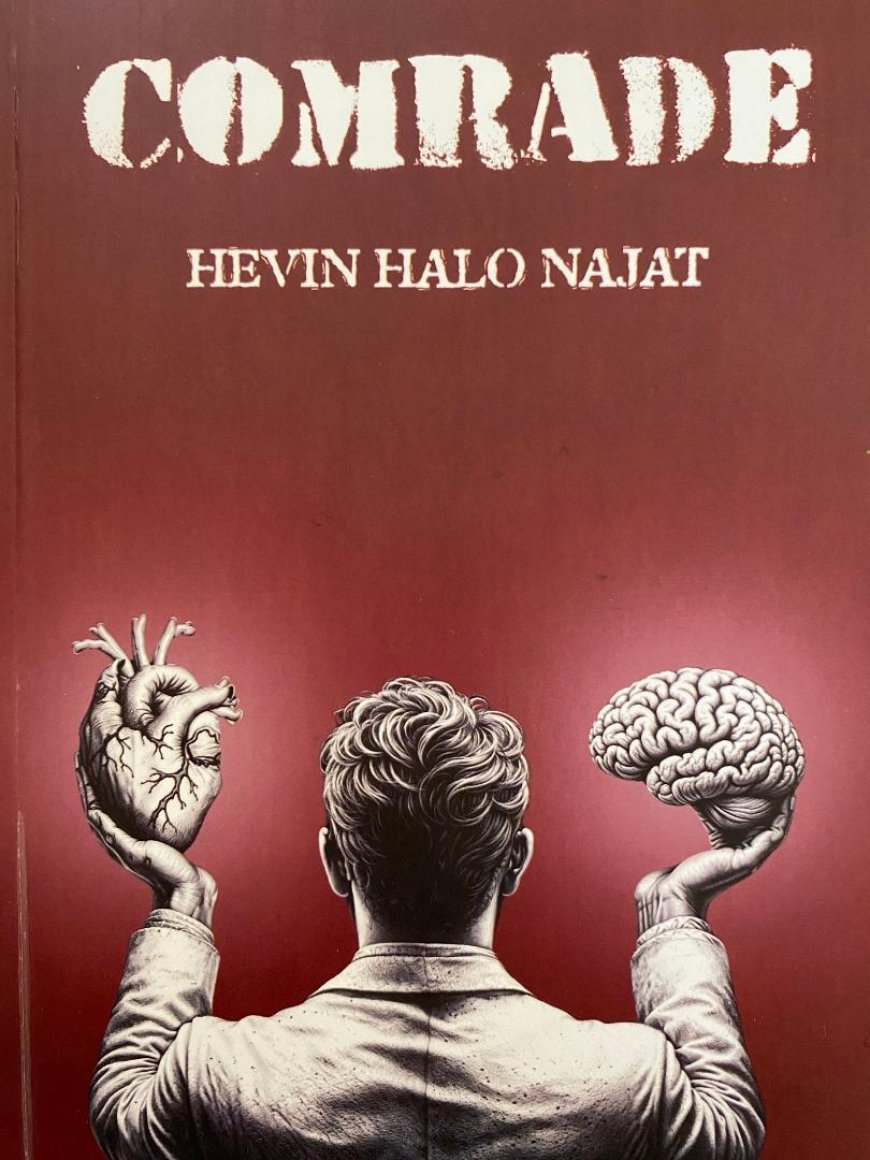
Comrade, by the young Kurdish poet Hevin Halo Najat, is a book of aphorisms mainly in free verse.
Despite her young age, in looking through this book, it has clearly been composed by someone who is mature beyond their years and this is clearly illustrated by what is written on the back cover. There is only one line: "Your mind or your heart?"
These two concepts, in folk and other expressions, are usually always the other way around - "heart and mind", not "mind and heart". This is the first indication that there is more to what lies inside than what might ostensibly be the case.
In addition to being physical entities, the heart and the brain (mind) are distinct concepts. These two are often used symbolically to express different sides of our personality and who we “are”.
The heart is generally associated with emotions, intuition, and feelings. It is the source of our passions, desires, and personal values. The heart is a metaphor for emotional intelligence and can guide individuals towards their goals and sources of happiness.
The mind is associated with logic, reasoning, and critical thinking. It is the source of our intellect, knowledge, and analysis. It is the seat of cognitive intelligence, and it can guide us towards what is rational, efficient, and objective. It is not always prudent to act solely on emotional or rational grounds.
Like everything in life, maintaining balance and equilibrium is preferable to moving between one extreme and the other (“all or nothing” – think of the Hare and the Tortoise). In certain instances, it may be better to pursue one's heartfelt desires, particularly in matters of personal values, interpersonal relationships, and artistic creativity.
At other times, however, it may be preferable to heed the dictates of the mind, especially in decision-making, problem-solving, and critical thinking. In the final analysis, the most prudent approach is to evaluate the situation, making use of both emotional and rational faculties when making a decision.
I have chosen three of the poems which particularly appealed, and which support my statement above that this young poet is mature beyond her years - and who has a promising literary and poetic future.
Respect II
Even the largest jug of water
bends down to fill a water cup.
So why are you disrespecting
those smaller than you?
With this verse, the message is that despite one's stature, status and position in society, one is still reliant on those less than themselves to function: the function of a water-jug is to pass on what is needed for the cup. No chain can exist without the weakest link...
Equality
They demand respect, yet they
never respected you.
Do not be arrogant.
Remember, a jug has to bend
down to fill a cup.
Respecting those younger and
lesser than you is what gains you
respect.
Again, we have here the metaphor of the water-jug. Water is the essence of life and we all need it to survive. Respect engenders respect and if we disrespect others, we disrespect ourselves. A teacher must first of all respect their students if they are to be respected themselves; again, those at the top of society must respect those who put and keep them there.
Patient
Pain is the only medicine to cure
your disease.
This very much struck a chord, because it is human nature to try and put sticking-plasters over our problems. This applies at both the individual, human level and that of society as a whole.
It would be conventional to begin such a review by considering the meaning of the title, but here it would be appropriate to consider it at the end. In choosing the word "Comrade", one might read a whole series of meanings into it, from the literal to the ironic, and "reading between the lines". It is worth making up one's own mind by reading it for oneself, and we look forward to more from this promising young writer.