





/file/attachments/2996/04ED_610405_518242.jpg)


/file/dailymaverick/wp-content/uploads/2023/10/CovidGrant-1.jpg)


































From cinematic warnings and fictional elites to real-world scandals
Dr. Sirwan Abdulkarim Ali
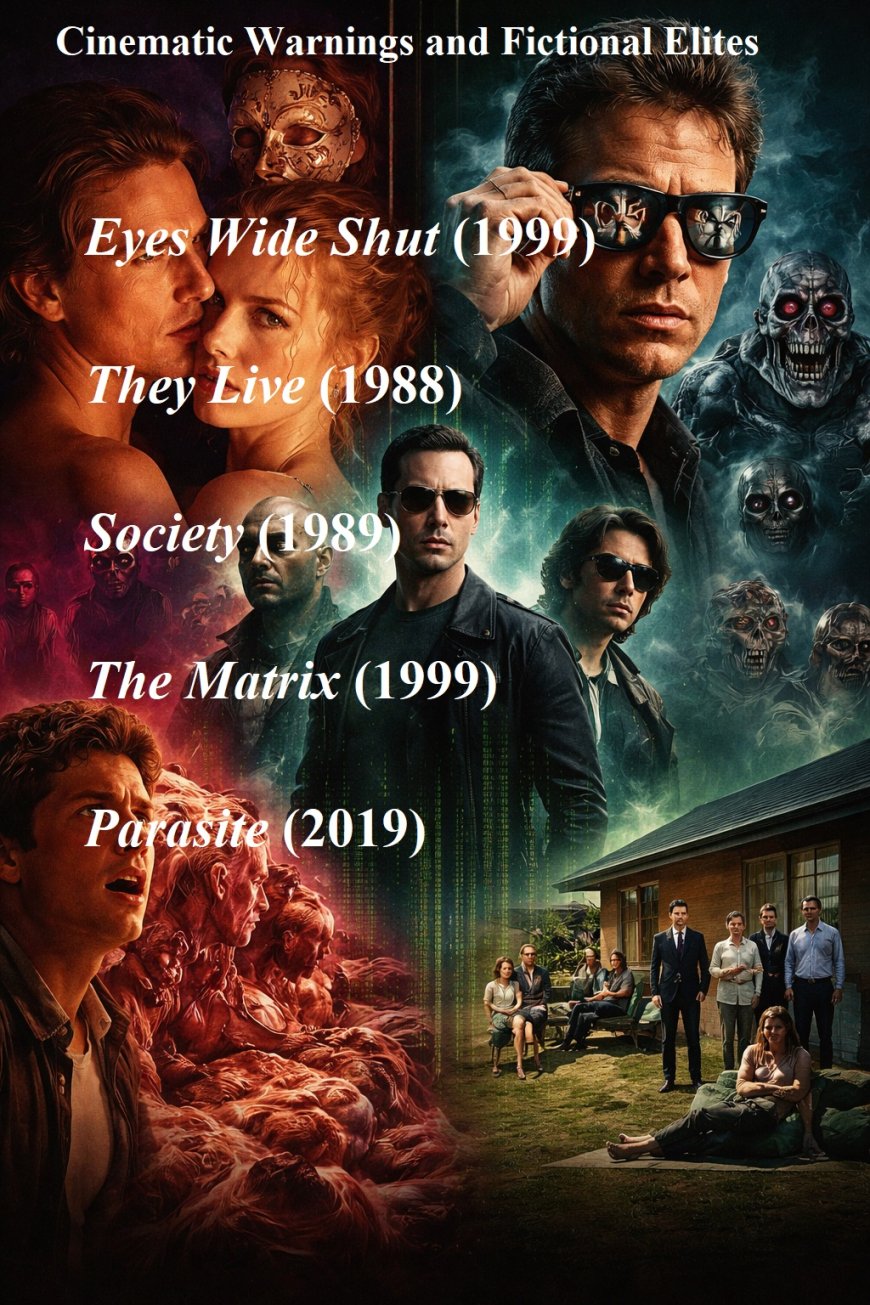
Cinema often gives visual form to anxieties that societies struggle to articulate directly: fear of hidden power, unequal justice, and the exploitation of the vulnerable. Films that depict secret networks, ideological manipulation, and class privilege resonate strongly in societies where public trust in institutions is fragile. For audiences in the Middle East and beyond, regions familiar with political opacity, economic inequality, and shifting alliances, such themes are not merely fictional devices but reflections of lived experience. When real-world scandals expose abuses of power among influential figures, these cinematic narratives acquire renewed relevance. The criminal case involving Jeffrey Epstein, a wealthy financier convicted of sex offenses and later charged with trafficking minors, intensified global discussions about elite privilege, accountability, and institutional failure. While films do not predict real events, they often dramatize social fears that become visible when scandals reveal systemic weaknesses.
Eyes Wide Shut (1999) explores elite secrecy and the insulation of power. The story follows a physician who gains access to an exclusive gathering governed by ritual and strict hierarchy. Beneath its psychological surface lies a portrait of privilege and moral double standards: insiders operate under different rules than ordinary citizens. The film suggests that wealth and influence can create protected spaces where accountability is blurred. Public reactions to the Epstein case echoed similar concerns. Media investigations revealed how networks of influence, social connections, and financial power can enable abuse to persist unchecked. The parallel lies not in identical circumstances but in the shared social anxiety: when elites operate beyond scrutiny, trust in justice systems erodes.
They Live (1988) presents power through ideological control rather than secrecy. In the film, hidden rulers manipulate society through subliminal messages embedded in media and consumer culture. When the protagonist discovers special glasses revealing commands such as “obey” and “consume,” the narrative becomes a metaphor for ideological influence. Although exaggerated, the film reflects a broader truth: perception can be shaped by narratives, media framing, and economic messaging. In the Epstein scandal, public perception evolved through media revelations, investigative journalism, and survivor testimonies. The case demonstrated how public understanding of wrongdoing is mediated by information flows, institutional responses, and the courage of whistleblowers. The film’s metaphor encourages viewers to question dominant narratives and recognize how visibility shapes accountability.
Society (1989) offers a grotesque allegory of class exploitation. Wealthy elites in the film literally consume the lower classes, symbolizing parasitic privilege and structural inequality. While deliberately extreme, the imagery reflects real concerns about systems that benefit powerful minorities at the expense of vulnerable populations. Epstein’s network allegedly targeted minors from economically disadvantaged backgrounds, a reality that underscores how social vulnerability can be exploited by those with resources and influence. The film’s horror exaggeration serves as a moral critique: inequality and power imbalance can create environments where exploitation thrives.
The Matrix (1999) examines systemic control through simulated reality, suggesting that individuals may live within constructed systems designed to maintain order and hierarchy. Its philosophical premise resonates with modern concerns about institutional opacity, surveillance, and structural power. The Epstein case exposed failures across multiple systems legal, financial, and social raising questions about how power structures operate and why warning signs may be ignored. The film’s central insight that awareness is the first step toward freedom mirrors the role of investigative journalism and public scrutiny in exposing abuses of power.
Parasite (2019) provides a contemporary exploration of class divisions and hidden dependencies. The film contrasts visible wealth with invisible labor and social vulnerability, revealing how prosperity can rest upon unseen inequalities. Its portrayal of social distance echoes the structural conditions that allow exploitation to occur in real life. Epstein’s victims often came from precarious circumstances, highlighting how economic disparity can increase vulnerability. The film underscores a universal reality: inequality is not merely economic but social and spatial, creating environments where invisibility becomes a risk factor.
These films share sociopolitical themes that resonate with public reactions to elite scandals: hidden networks of influence, unequal accountability, structural inequality, and the invisibility of vulnerable populations. Importantly, drawing parallels between cinema and real events does not imply conspiracy; rather, it highlights recurring patterns of power and vulnerability. Cinema distills social fears into symbolic narratives, while real scandals expose institutional weaknesses that demand reform.
The global response to the Epstein case demonstrates how public trust depends on transparency and accountability. When powerful individuals appear shielded from consequences, citizens may lose confidence in legal systems and governance structures. Yet exposure also affirms an essential democratic principle: no individual should stand above the law. In societies worldwide, including the Middle East, where demands for transparency and justice remain central, such cases reinforce calls for institutional reform and protection of the vulnerable.
Cinema cannot replace investigative journalism or legal accountability, but it sharpens moral perception. By dramatizing hidden hierarchies and the misuse of power, films encourage viewers to question authority, recognize inequality, and value transparency. When real-world scandals expose abuses, the symbolic warnings embedded in cinema feel less abstract and more urgent. Awareness, informed public discourse, and institutional accountability remain the foundations of justice. Through both storytelling and real-world exposure, societies are reminded that protecting the vulnerable and holding power accountable are essential to maintaining public trust.






