/file/attachments/2996/04ED_610405_518242.jpg)


/file/dailymaverick/wp-content/uploads/2023/10/CovidGrant-1.jpg)






















‘Invisible’ children born in the brothels of Bangladesh finally get birth certificates
Destined to a perilous life with no right to an education or to vote, state recognition ‘gives them hope’, campaigners say

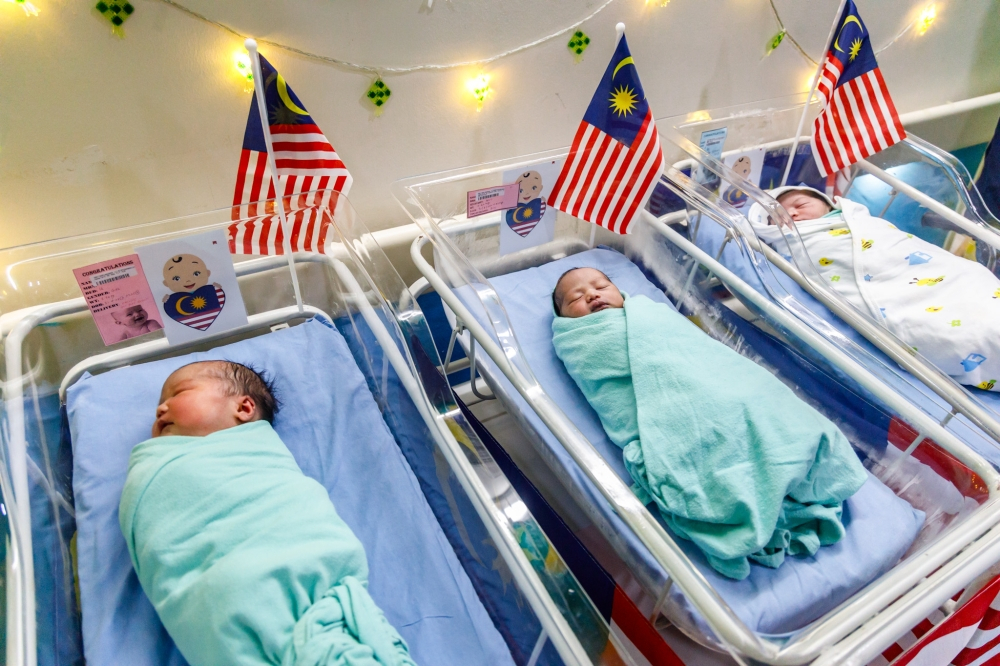
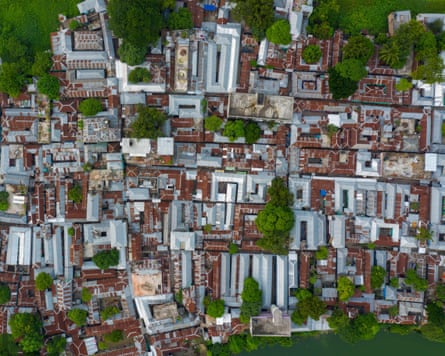
Through the decades that the Daulatdia brothel in Bangladesh has existed, children born there have been invisible, unable to be registered because their mothers were sex workers and their fathers unknown. Now, for the first time, all 400 of them in the brothel village have their own birth certificates.
That milestone was reached after a push by campaigners who have spent decades working with Bangladesh’s undocumented children born in brothels or on the street. It means they can finally access the rights afforded to other citizens: the ability to go to school, to be issued a passport or to vote.
The denial of a birth certificate and the precarious life that followed was because officials had always demanded the name and documentation of the father, despite them being unknown.
“They didn’t have the rights of a citizen previously – they were treated as alien in society,” said Khaleda Akhter, Bangladesh programme manager for the London-based anti-slavery organisation Freedom Fund. She added that the reform “gives them their fundamental rights, it makes them feel safer, it gives them hope”.
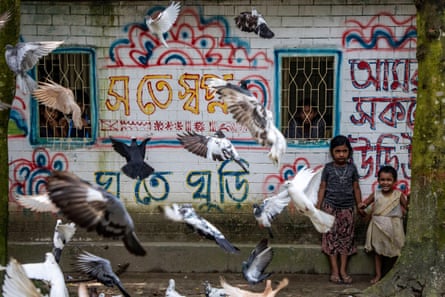
More than 700 unrecognised children have now been registered in Daulatdia and brothels elsewhere thanks to a push by Freedom Fund and local organisations that discovered an overlooked stipulation in the law: since 2018, it has been permitted for a birth to be registered even if there was no information on the parents.
“It was only two or three lines and is not explained in the act properly, so it was not used because generally our government officials focus on the general application of procedures,” she said. “When I first came to know about it, we massively disseminated this information with our partners.”
Teaming up with civil society groups, they set about finding all the children born in the brothels, collecting their information and submitting it to the government, while also lobbying local authority offices about the importance of this previously ignored clause in the law.
The campaign has been so successful that little advocacy is required – mothers have been enthusiastically encouraging other women to get their babies registered, knowing that the lack of a birth certificate could prove a lifelong impediment to their children, starting from any attempt to go to school.
Sabbir Hossain, who co-wrote a study on the Banishanta brothel in south-west Bangladesh, said parents once had to find alternative ways to get their children into education. Some would send their children to religious schools, the unregulated madrasas, or would ask men they knew to identify themselves as the fathers.
Lacking a birth certificate not only denies children opportunities, it can also make them vulnerable to trafficking, Akhter said.
For two decades, she has helped save girls from enforced sex work in Bangladesh’s brothels, where many are underage. Without a birth certificate, it is harder to prove a girl is under 18.
According to a 2024 Freedom Fund survey of brothels in Dhaka, almost half of sex workers said they were forced to work in conditions they had not agreed to and that more than a fifth were under 18.
“If you don’t have a birth certificate, you are invisible in the system,” said Akhter. “You are more vulnerable to abuse, trafficking and exploitation. These documents are not just a tool, it’s about survival.”
Akhter said she saw just how a birth certificate could change the life of a child when she visited a 14-year-old girl who was from the fifth generation of a family living in a brothel.
“When I entered, she asked me if I understood what this meant. I told her to tell me. She said this is the first time she would be able to get a stipend [to afford] to go to school,” said Akther.
“She was laughing and I could see the happiness on her face. She said to me: ‘Khaleda, my identity has been recognised by the government.’ She felt that finally she had some protection against all the odds she had faced in her childhood.”
[Source: The Guardian]