/file/attachments/orphans/ED_543155_209242.jpg)















The tiny island that could let Trump beat Iran without sending a single troop
The US president has long seen Kharg as the Islamic Republic’s weak spot. Seizing it will let him control their oil – and their finances

In an interview with a British newspaper back in 1988, an up-and-coming New York property mogul named Donald Trump was asked about his plans for the future. True to form, he had plenty to say, boasting that he might one day run for president and vowing to win back “respect” for America on the world stage. He also had stern words for Iran’s Islamic Republic, already a sworn enemy of America in the wake of the 1979 US hostage crisis.
“They’ve been beating us psychologically, making us look a bunch of fools,” Trump told The Guardian. “One bullet shot at one of our men or ships, and I’d do a number on Kharg Island. I’d go in and take it.”
Kharg where? As the interview was to promote his book, The Art of the Deal, Trump moved the conversation on without elaborating. But nearly 40 years later, that throwaway line suggests he knew more about world affairs than he is often given credit for.
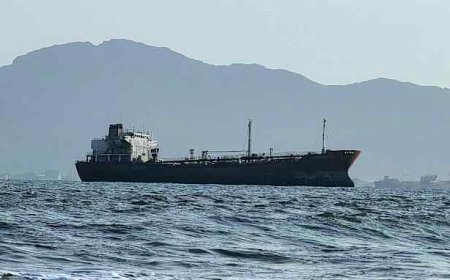
The island concerned is a barren limestone outcrop 15 miles off Iran’s Persian Gulf coastline, less than half the size of Manhattan. But it is also home to the country’s main oil export terminal, where 94 per cent of the crude it sells abroad is loaded on supertankers, mostly bound for China.
It has not yet been touched during the US’s and Israel’s bombing campaign against Iran, which has pulverised military bases, sunk Iranian naval vessels, killed Ayatollah Ali Khamenei and hammered fuel depots.
Speculation is now growing, though, that the central goal of Operation Epic Fury is to seize the island intact – cutting off the Islamic Republic’s capacity to export its oil and thereby its ability to bankroll its security forces.
Doing so would give Trump a stranglehold on the regime without committing any American troops to the Iranian mainland. And while Iran’s ruling clerics might remain in charge, their room for manoeuvre would be massively curtailed, given that oil exports make up nearly 40 per cent of their government’s budget.
“What we want to do is to get such massive oil reserves in Iran out of the hands of terrorists,” said Jarrod Agen, a White House adviser, in an interview over the weekend with Fox Business, which hinted that Kharg is a central part of the rationale for Epic Fury.
Agen is well-placed to know Trump’s thinking on the matter. He is executive director of the National Energy Dominance Council, a body set up by the president last year to ensure an aggressive pursuit of US energy security goals.
The immediate impact of the bombing campaign on Iran has been a spike in global energy prices, sparked by its retaliatory closure of the Strait of Hormuz, through which a fifth of all oil and liquefied natural gas exports pass.
But Trump may be calculating that the future benefits are worth it – particularly if it leads to the capture of the barren, sun-scorched island in the northern Persian Gulf.
Not only might it allow him leverage over the mullahs from a distance, but snatching Kharg would also give America control of the world’s biggest maritime energy corridor, ensuring greater stability long-term.
“Seizing the island would cut off Iran’s oil lifeline, which is crucial for the regime,” says Petras Katinas, research fellow in climate, energy and defence in the Europe office of the Royal United Services Institute. “Of course, with shipping via the Strait of Hormuz now stopped, they cannot sell oil anyway, but looking ahead, seizure would give the US leverage during negotiations, no matter which regime is in power after the military operation ends.”
Indeed, even now, the terminal seems operational, with shipping tankers spotted visiting it in the last few days. While some Israeli politicians have suggested destroying it outright – with opposition leader Yair Lapid saying doing so would “topple the [Iranian] regime” – that would choke off Iran’s exporting ability potentially for years, with catastrophic consequences for global energy prices. By controlling it, however, Trump can pressurise the existing regime into compliance, or, should he choose, all-out collapse. In that latter scenario, any new government would also have to toe Washington’s line were it to wish to regain sovereignty over oil exports.
Located some 300 miles west of the Strait, Kharg is simultaneously modern Iran’s biggest asset and its biggest liability. Its oil terminal was built by the American giant Aramco during the Shah’s rule in the late 1950s, when modern tankers proved too big to dock in the shallow waters off Iran’s southern coastline. Instead, crude was piped from the mainland to Kharg and loaded onto vessels from there. The island is home to a small town of a few thousand oil workers, but, as a remote strip of land far from Iran’s mainland, is inherently vulnerable to attack – its terminal was partly destroyed by Iraqi bombing during the 1980-88 Iran-Iraq War, but then rebuilt.
Indeed, Trump is not the first US leader to view it as Iran’s Achilles’ heel. In the hostage crisis that followed Iran’s 1979 Islamic Revolution, when Iranian student radicals kidnapped 52 US diplomats, advisers to President Jimmy Carter also suggested seizing Kharg – again with the aim of starving the regime of oil revenues. The plan was ruled out as too confrontational, however, leading Carter to launch a failed hostage bid that ended up with special forces helicopters crashing in a sandstorm in the Iranian desert.
Given that Trump regards Carter as typical of a certain kind of weak-willed, ineffectual leader, he will be anxious on this occasion to minimise any chance of the action backfiring. Kharg also featured in another humiliating episode for the US in 2016, when 10 US marines were detained after straying into Iranian waters near the island and paraded on Iranian state TV.
The IRGC later planned to build a statue of the captured marines on Kharg as a monument to the event. Trump was highly critical of President Obama for allowing the marines to be detained in the first place, saying Iran was showing a “lack of respect”.
Katinas says that seizing Kharg would require a US ground troop operation, which Trump has thus far “seemed hesitant to undertake”. However, military analysts say the island is protected only by ageing surface-to-air missile batteries and coastal anti-ship missiles, which could easily be overwhelmed by a joint US-Israeli operation. The Iranian navy has already been substantially “degraded”, according to US officials, with at least 30 vessels destroyed since Epic Fury began.
There is also speculation that Washington may have encouraged reports of a Kurdish military uprising in western Iran to draw Iranian security forces away from the south coast. However, given that Kharg is isolated from the Iranian mainland by 15 miles of sea, the ability of land-based Iranian forces to contest any US takeover might be limited.
According to Ian Bremmer, a political risk consultant writing for the global affairs website GZERO Media: “The island (Kharg) itself is less than half the size of Manhattan, isn’t extensively fortified, and sits isolated enough that US destroyers and close-in air defence systems could establish a credible defensive perimeter well offshore.”
The prospect that Trump might seize Kharg was first mooted in mid-January in an article by former Pentagon official Michael Rubin, now an Iran expert at the American Enterprise Institute, a centre-right Washington think tank.
“Should he take Kharg, rather than destroy it, he can not only ensure the regime can never again pay the salaries of its bureaucrats and soldiers, but also that, in the future after regime change, he can ensure that the new Iranian regime can finance its own rebuilding,” Rubin wrote.
He added: “The IRGC, of course, could target Kharg with ballistic missiles, but that would sign their death warrant. Not only would Trump respond in kind, but such action would end Iranian oil exports for months to come, again leaving salaries unpaid.”
American control of Kharg would also give the US increased leverage over China, which has long ignored international sanctions on the purchase of Iranian oil and currently buys more than 80 per cent of all exports.
“Having the US control the Persian Gulf from which China imports roughly half its crude and a third of its gas is a strategic catastrophe for Beijing,” Guy Laron, a former fellow at the Wilson Centre thinking in Washington and an expert in international politics at the Hebrew University of Jerusalem, said last weekend in a post on X.
As such, few are in any doubt that, in the short term, any US seizure of Kharg would spell chaos in the energy markets, especially if the terminal suffers damage during an operation to take it. Potentially, Tehran might even sabotage it out of spite, as Saddam Hussein did with Kuwaiti oil infrastructure during the first Gulf War in 1990.
But as an alternative to the far messier business of enforcing regime change at the cost of countless American lives, grabbing a few square miles of the world’s most strategically vital real estate might seem very tempting. Indeed, from Trump’s point of view, it might be the best real estate acquisition he has ever done.
[Source: Daily Telegraph]