
/file/dailymaverick/wp-content/uploads/2023/10/CovidGrant-1.jpg)




















Nechirvan Barzani: an approach defined by dialogue, moderation, and quiet diplomacy
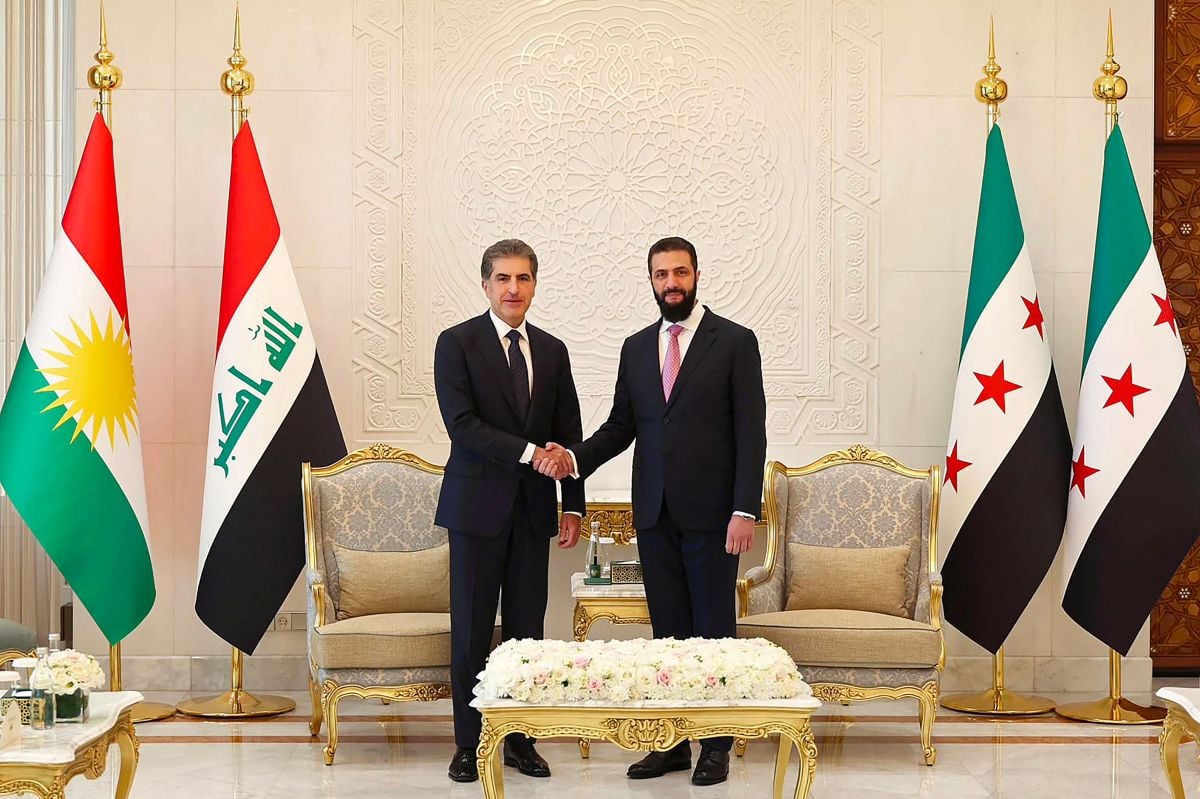
Florin G. Seudin / Department of Ethnic and Religious Components, Kurdistan Region Presidency

In a region where alliances shift quickly and political certainty is rare, Nechirvan Barzani has built his leadership around a vital skill of statesmanship: keeping doors open while standing firm.
The Middle East rarely offers easy choices. For the Kurdistan Region of Iraq, geography dictates reality. Baghdad lies to the south, Türkiye and Iran are powerful neighbors, and strategic partnerships extend to the United States, Europe, and the wider international community.
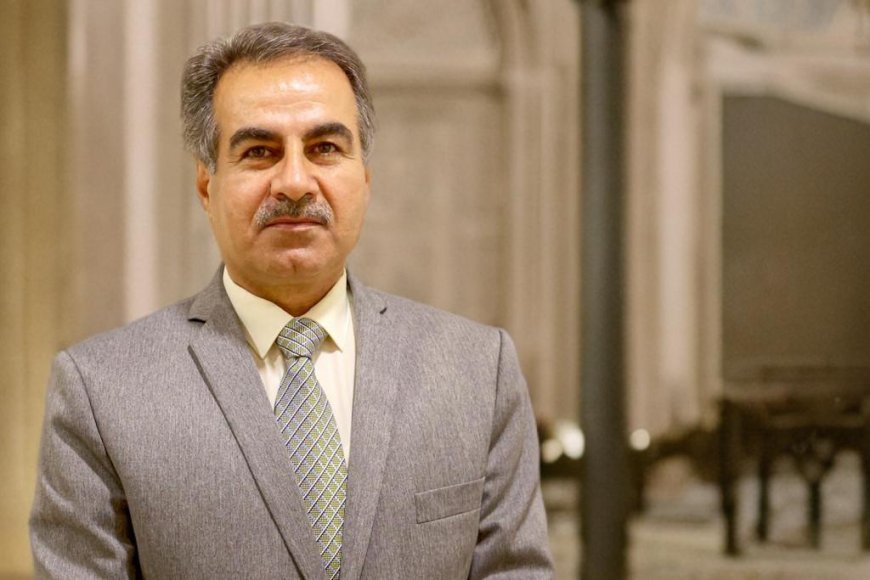
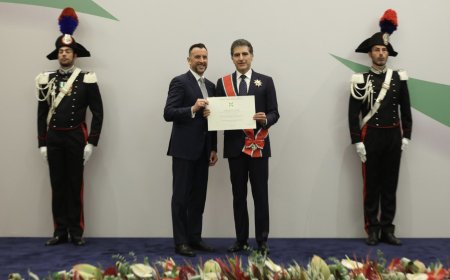
At the center of these connections stands Nechirvan Barzani, President of the Kurdistan Region of Iraq. His approach to leadership is defined by dialogue, moderation, and quiet diplomacy. His challenge is not simply choosing a side, but maintaining healthy relationships with everyone while protecting the rights and future of his people.
"For Kurdistan, finding this balance is not a political luxury; it is a strategic necessity."
Between Erbil and Baghdad
The relationship between Erbil and Baghdad is one of the most delicate balances to manage. Disputes over the federal budget, civil service salaries, oil and gas, and constitutional rights have repeatedly created tension between the Kurdistan Regional Government and Iraq’s federal authorities.
Yet, President Nechirvan Barzani consistently stands on one core belief: political disagreements must ultimately be solved through peaceful dialogue. His goal is not to give up on Kurdistan’s constitutional rights, but to secure them through negotiation and lasting agreements.
A strong Kurdistan does not mean a weak Iraq. A stable, democratic, and federal Iraq that respects its constitution creates the best environment for the Kurdistan Region to thrive. President Nechirvan Barzani's strategy is clear: negotiate without surrendering, disagree without burning bridges, and protect regional rights without closing the door to tomorrow.
Diplomacy in a complex region
Kurdistan’s location makes foreign relations equally challenging. Türkiye and Iran have major economic, political, and security interests in the region. At the same time, Western nations remain key strategic partners.
These powers do not always agree, but Kurdistan cannot afford to become a battleground for their rivalries. President Nechirvan Barzani uses engagement diplomacy, keeping active channels open with neighboring countries while strengthening international alliances. This allows him to bring opposing sides together and position Kurdistan as a force for regional stability.
"A politician wins an argument, but a statesman saves the relationship."
The strength of quiet leadership
President Nechirvan Barzani does not rely on loud rhetoric. His strength comes from patience, accessibility, and steady trust-building.
In Middle Eastern politics, restraint is sometimes mistaken for weakness. In reality, keeping opposing groups at the negotiation table takes far more discipline than starting a conflict. His approach ensures that today's disagreement does not ruin tomorrow's solution.
This principle applies inside Kurdistan as well. The Region has a diverse political landscape. As President, he consistently calls for unity, political cooperation, and strong institutions when regional interests are at stake.
A Kurdistan for all
A key pillar of President Nechirvan Barzani’s vision is protecting Kurdistan’s rich cultural and religious diversity. Kurds live alongside Christians (including Assyrians, Chaldeans, Syriacs, and Armenians), Yezidis, Turkmen, Shabaks, Mandaeans, Yarsanis, and other historic communities whose roots reach deep into Mesopotamia's history.
In a region that has suffered persecution and conflict, peaceful coexistence cannot just be a ceremonial slogan. It must be built into government institutions, public security, and daily life. President Nechirvan Barzani sees diversity as a core strength to protect, operating on a simple principle: a society's true strength is measured by how safe, valued, and confident its smallest minority communities feel.
Preserving the legacy, building the future
Nechirvan Barzani’s political foundation was shaped by the Kurdistan movement for freedom and recognition, from the historic legacy of Mulla Mustafa Barzani to the leadership of President Masoud Barzani.
However, modern challenges require modern solutions. Today, protecting Kurdistan requires strong institutions, economic growth, international credibility, and skilled diplomacy.
This is where President Nechirvan Barzani has built his legacy. He continues to:
· Defend Kurdistan’s rights while maintaining active dialogue with Baghdad.
· Strengthen ties with Western allies while maintaining practical relations with neighbors.
· Drive internal growth while navigating Iraq's complex political landscape.
· Promote unity while respecting different political voices.
True leadership is not only measured by signed agreements or public speeches. Often, its biggest successes are unseen: the crises prevented, the partnerships preserved, and the doors kept open when everyone else was ready to close them.