
/file/dailymaverick/wp-content/uploads/2023/10/CovidGrant-1.jpg)




















Armed factions will push Iraq to marginalization: President Barzani
Provocations from armed groups pose significant threats to Iraq’s regional and international standing, Kurdistan Region President Nechirvan Barzani said in an interview aired on Wednesday, stressing support to the Iraqi government’s campaign to disarm the groups amid the scheduled withdrawal of US forces.
“By God, if Iraq does not solve the issue of the factions, it will face international andregional isolation,” President Barzani said in an interview with the Iraqi private-owned al-Sharqiya TV.. The original Kurdish script of the interview was shared by the Kurdistan Region Presidency on Thursday.
The Islamic Resistance in Iraq (IRI) - which comprises several armed factions aligned with Iran - overlaps with the state-sponsored Popular Mobilization Forces (PMF).
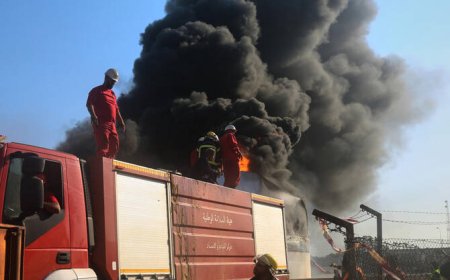
IRI has sided with Iran in its six week-long war against the US and Israel from February 28 to mid-April. Throughout the war, the umbrella group claimed more than 750 attacks on US forces within Iraq and against regional countries, applying considerable pressure onIraq’s proclaimed neutrality in the war.
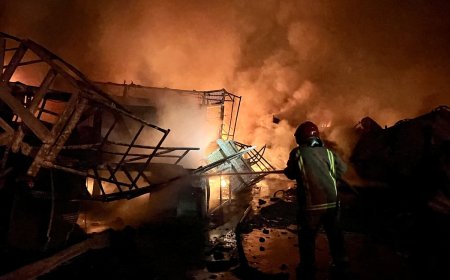
The Kurdistan Region has been struck with nearly one thousand missiles and drones from Iran and the IRI since the outbreak of the conflict. Rudaw recorded 32 fatalities as well as around 150 injuries as a result of the strikes.
Furthermore, they are accused of launching strikes against Saudi Arabia, an action that drew a coordinated US-Saudi attack on PMF bases, killing at least 17 members as well as five members of the Iranian Revolutionary Guard Corps.
“If our slogan is ‘Iraq First,’ then as long as that is everyone's slogan, Iraq's interest does not lie in allowing outlaws to cause trouble for the country,” President Barzani said in the interview.
Iraqi Prime Minister Ali al-Zaidi has set September 30 as a deadline for disarming the armed factions. The date coincides with the scheduled departure of the US forces.
“A solution to the issue of the factions must be found as soon as possible,” Barzani noted.“I believe the commanders of these forces themselves must reach a point of asking: Is it in Iraq's interest for them to hold these weapons and use them at will?”
The Kurdish leader also mentioned raising the issue with Iranian officials in his July visit to Tehran based on a request from the Iraqi premier.
“To be frank, what I heard directly from them was: ‘Tell Prime Minister al-Zaidi that we are ready to assist him on this issue.’ I asked them: ‘Is this your official position?" Theyreplied: ‘Yes, this is our official position.’”
Below is the transcript of the entire interview with President Barzani:
Al-Sharqia: You stated that we are all in the same boat and that you respect the sacrifices of the Popular Mobilization Forces (PMF). But the question here is: Where is the future of the armed factions in Iraq headed? How do you view them? Do you see a distinction between the Hashd and the factions, or do you view them as a single body and single entity?
President Barzani: Thank you very much, Mr. Hisham; welcome to Erbil. Of course, I reiterate that we in the Kurdistan Region have special respect for the sacrifices of the Hashd and the Iraqi Army alongside their colleagues, the Peshmerga, in Kurdistan to defend Iraqi territory. The Hashd is a governmental institution established by law, and Irepeat, we deeply respect its sacrifices to defend Iraq.
Regarding the Hashd and the factions, whenever we visit Baghdad, almost constantly and for long periods, we are given a lesson explaining the distinction between the Hashd and the factions. But ultimately, both the factions and the Hashd receive their funding from the Iraqi state and are provided for by the Iraqi government.
Our view on the factions is not a matter of personal opposition to them; the core question is: Where is Iraq headed? We, from Baghdad to Basra all the way to Zakho, are all in the same boat. In our view, the actions of these factions serve neither the interests of Iraq nor a good future for this country. These factions threaten our neighbors on one hand, striking our brotherly Arab countries with drones. Is it reasonable for a force inside Iraq to become a source of threat to Jordan, Saudi Arabia, the UAE, Qatar, Bahrain, and domestically to the Kurdistan Region as well? Our issue with the Hashd is not personal; our perspective falls within the framework of Iraq's national interest.
We believe that our main issue is - based on the Iraqi Constitution and as stipulated in the agenda of the Iraqi Prime Minister Ali al-Zaidi - arms must be restricted to the state. We believe these forces must fall under the umbrella and command of the Commander-in-Chief of the Armed Forces, who is the Prime Minister of Iraq. A solution to the issue of the factions must be found as soon as possible. I believe the commanders of these forcesthemselves must reach a point of asking: Is it in Iraq's interest for them to hold these weapons and use them at will?
A major question arises: Who governs Iraq? Does the Prime Minister govern? Do political forces govern? Or do groups of outlaws govern who act contrary to Iraq’s best interest? Do they govern Iraq?
Whenever we travel abroad, we always ask major companies to invest in Iraq. But the first question every company asking to enter Iraq poses is: "Is there security?" Is it reasonable for factions to target and strike oil companies in southern Iraq? That is why those companies do not come to Iraq.
Therefore, the general perspective of the Kurdistan Region regarding the factions is focused on the welfare of Iraq. We believe that all Iraqi political forces must support the Prime Minister. For the sake of Iraq's interest, they must accept laying down their arms,integrating into the Iraqi political process, and joining the Iraqi security forces. What is utmost crucial is that weapons must remain exclusively in the hands of the government.
Mr. President, perhaps during your participation in the State Administration Coalition meeting, you pointed to this when you posed a question to Mr. Al-Zaidi in front of attendees, asking: ‘Have you committed yourself to the Americans that weapons will remain exclusively in the hands of the state?’ This raises a question for us, especially as you noted Iraq might slide into international isolation. Do you have information indicating that if Iraq fails to fulfill its commitments to the Americans and weapons are not restricted to the state, Iraq will face international isolation?
First of all, my view is that this is not a commitment to America; it is a commitment to Iraq. Restricting weapons to the state is not an obligation to the US. Why should we portray it as an Iraqi obligation to America? The US came to this country one day and will leave one day, but what remains in Iraq is us - the people of Iraq - who stay. This is not an American commitment.
Let us phrase it differently: Is it in Iraq's interest to place our entire destiny in the hands ofoutlaws? The Kurdistan Region has been bombarded nearly a thousand times so far. Setting Kurdistan aside, they even bombarded Iraqi security headquarters inside Baghdad. The question is: What benefit does this force bring to Iraq? Forget about America; why must we link these two things together?
America is a separate issue. When the US entered Iraq in 2014, it came following an official invitation from Iraq. Iraq formally requested US assistance regarding ISIS.
What is our view in the Kurdistan Region? We thank America and coalition forces for assisting Iraq during the ISIS threat. However, ISIS was defeated through the blood of the Iraqi Army, the Popular Mobilization Forces, and the Peshmerga. We accomplished that together. Why did we do it? To leave a better future for the next generation, not so that agroup of outlaws could rule this country.
This issue of restricting arms to the state has nothing to do with America. Regarding US forces, according to an agreement with the Iraqi government, a timetable was set underwhich they will leave Iraq, concluding at the end of September. I asked the Prime Minister in the meeting: ‘Are you committed to that timetable?’ He answered: ‘Yes, we are committed.’ Some think that US forces are in Kurdistan based on an agreement between Kurdistan and America. No, the presence of US forces in Erbil is based on the federal government's agreement with America, and the US is currently adhering to its timetable,withdrawing its forces from Iraq by the end of September.
However, let me address all Iraqi political forces and the Iraqi people: By God, if Iraq does not solve this faction issue, Iraq will face international and regional isolation. Neighboring countries are eager to help Iraq, and Arab states want to invest in Iraq. I know how keen Gulf states like the UAE, Saudi Arabia, and Qatar are to invest in Iraq. But it cannot happen under these conditions.
We must reach the conclusion that Iraq comes first. If our slogan is "Iraq First," then as long as that is everyone's slogan, Iraq's interest does not lie in allowing outlaws to cause trouble for the country. The Prime Minister has committed himself to this issue, the IraqiConstitution clearly articulates it, and he expressed it as a commitment in his governmentprogram. Now it requires political support. We in the Kurdistan Region, across allcomponents, support this.
The Prime Minister of Iraq is the Prime Minister from Faw to Zakho, and Commander-in-Chief from Faw to Zakho. That is how we see it. Yes, the Kurdistan Region has aconstitutional framework that must be respected and implemented. But beyond that, Mr.Hisham, we do not view this solely through the lens of regional interest; we look at whereIraq's national interest lies. We genuinely want an Iraq where all components feel secureand prosperous, taking steps to improve the living conditions of the Iraqi people, whodeserve a better life than what currently exists.
Frankly, everything you said is in Iraq's interest as we move forward. But we cannotseparate this from the United States, whether linked to commitments or not,because ultimately Iraq's finances and funds are in America. The Americans viewthemselves as instrumental in overthrowing Saddam's regime and establishing thenew system. Now they have the agenda known as the ‘New Middle East’ -controlling the Middle East and redrawing maps. All these complexities mean Iraq'sinterest lies first in collecting weapons into state hands before discussing mutualinterests with America. But if weapons are not collected, will Iraq face USsanctions? Will Iraqi funds be frozen? What information has the Kurdistan Regionreceived?
In reality, Iraq is in a very special situation. When Iraq sells its oil, the revenue does notreturn directly to it; it goes to the Federal Reserve Bank in America and is then transferredback to Iraq. Iraq's economic situation is at its worst. If the Strait of Hormuz is not openedand the current situation continues, the region's biggest economic crisis will hit Iraq.
Regarding weapons collection, though it is framed as an American demand, it must firstand foremost be an Iraqi demand. Set America aside and focus on the Iraqi demand. Inthe Kurdistan Region, we see that if this issue is not resolved, Iraq will face internationalsanctions, regional marginalization, and isolation from its Arab and regional surroundings.That is my assessment.
You maintain relationships with all political factions, and many hold deep respectfor you. Have you received information on whether armed groups are willing tocomply? Some say this is not a matter for internal dialogue, while others say it istied to Iran, meaning resolving it requires sitting at the negotiating table with Iran.Is this true?
I believe this is a purely Iraqi matter. We must first determine where Iraq's interest lies,which is exclusively keeping weapons in state hands.
To be candid about Iran: during my recent visit to Tehran, I discussed this issue withIranian officials. Whenever we travel abroad, we coordinate with Baghdad and specificallywith the Prime Minister, and this was one of the topics Prime Minister al-Zaidi asked meto raise.
In Tehran, I spoke with Iranian officials. To be frank, what I heard directly from them was:‘Tell Prime Minister al-Zaidi that we are ready to assist him on this issue.’ I asked them: ‘Isthis your official position?’ They replied: ‘Yes, this is our official position.’
Who communicated this to you? Pezeshkian?
I won't name specific individuals, but they were the Iranian officials responsible formanaging this dossier.
The official in charge of the Iraq file…
The official in charge of the file emphasized it twice, saying: ‘Tell al-Zaidi.’ Because Idiscussed this file with them, saying: ‘If you can assist us with this file, we in Iraq, as yourneighbors, expect your support.’ I believe this is in Iran's interest as well, not just Iraq's.What is Iran's interest in Iraq? Our trade volume with Iran - excluding gas and other items- is currently around $12 billion, and it is better for us to strengthen economic ties.
A serious question arises if these armed groups ask themselves: What is the benefit ofthese actions inside Iraq? What purpose do the drones in their possession serve? If theythink rationally, what major objective have they achieved? Nothing, except damagingIraq's reputation and harming the Iraqi people. By continuing, damages will only grow.Regarding Iran, as I mentioned, I personally discussed this file with Iranian officials at thePrime Minister's request.
So the Iranians expressed readiness to assist Al-Zaidi…
Explicitly. I asked once and they answered twice to ensure clarity. The second time, theyreiterated: ‘Tell Prime Minister Ali al-Zaidi that we are ready to assist.’
History teaches us that in every era there are dissidents who resist decisions andagreements. If certain groups refuse to hand over weapons, this leads to Mr. al-Zaidi’srequest during the State Administration Coalition meeting for authorization from leadersto confront non-compliant groups starting October 1. Reports indicate you grantedauthorization to al-Zaidi on this matter. Is this true?
In fact, during the meeting, we proposed granting authority to Prime Minister al-Zaidi, andthere was near-total consensus in the meeting.
Consensus?
Yes, consensus. We issued a clear statement on this matter. All forces expressed theircommitment to supporting the Prime Minister.
However, personally, I believe that before entering any confrontation, dialogue isnecessary with these groups. The foundation of this dialogue must be a single mainpoint: Where does Iraq's interest lie? It is not that we desire confrontation; no one desiresthis. We must move past the phase where some want Shiite fighting Shiite, Kurd fightingKurd, or conflict between Kurds, Shiites, and Sunnis. Everyone's interest in Iraq must beunified.
We need a frank, clear, and unvarnished dialogue with these groups soon. As far as Iknow, some who held arms understood the situation and were ready to relinquish them.For others, serious dialogue must be conducted immediately to implement the Iraqigovernment's program. They are certainly part of this program and of Iraq's interests.Should this fail to happen, options before Iraq will become very limited. As far as we areconcerned in the Kurdistan Region, we support the government program, supportrestricting weapons to the state, and support the Iraqi government.
We hope we do not reach a stage of confrontation and war, but you authorized al-Zaidi touse security forces against rebellious groups. Do you back this decision?
Let me say this: all political forces stated they support the Prime Minister. We must allsupport him because this is not personal to Ali al-Zaidi as Prime Minister; it affects allIraqi political forces. He carries this heavy burden because he is the Prime Minister ofIraq. All political forces - Kurds, Sunnis, Turkmens, Christians, and Yazidis - must supportthe Prime Minister because this ultimately concerns Iraq's national interest.
Regarding attacks, reports indicate the Kurdistan Region has faced over a thousandmissile and drone strikes, yet the responsible party remains unclarified. Who is shellingthe Kurdistan Region?
In reality, the matter is clear, not mysterious. When they bombarded the Kurdistan Region,they asked us for evidence, claiming they did not know the perpetrator. Today's world isfar beyond such claims. When a bombardment occurs anywhere in Iraq, it is crystal clearwhere it originated and where it landed. Technology and satellites monitor everything; it isall known. Those who bombarded Kurdistan are specific groups. Most bombardment actsoriginated inside Iraq, while some were carried out from Iran during the 40 days of war[between Iran, Israel and the US].
Where do these attacks on the Kurdistan Region originate? From which areas?
From Mosul, Diyala, Salahaddin province, Kirkuk, and Tal Afar.
That means you know who controls those areas, as whoever controls themconducts the shelling…
There is 100 percent verified information. It is not that we do not know them; we evenknow the specific units executing these actions. We have detailed information on all ofthis.
Why not speak directly to the leaders of these groups?
We speak with the Prime Minister of Iraq and Iraqi political forces. Given the opportunity,we are ready to speak with the groups as well. However, they evade meeting us. If we sittogether, we will speak with complete clarity and frankness. In the past, I spoke directlywith some of those groups regarding these matters prior to these events.
Attacks have paused recently. Is this due to a tacit agreement between Iran andAmerica? If war resumes, will Kurdistan be targeted again? Why is the KurdistanRegion targeted?
This raises the same question for us: Why is the Kurdistan Region targeted? As an entity,we are not part of the war, and Erbil, Sulaimani, and Duhok are part of Iraq. Instead ofdirecting this question to us, I direct it to the leadership of these outlaws: Please, tell usthe reason driving you to target the Kurdistan Region.
If it concerns America, the US is withdrawing according to its timetable. If US presence isbased on an agreement with the Iraqi government in which Kurdistan played noindependent role, why target Kurdistan? Are we not Iraqis? Are citizens in Kurdistan notIraqi citizens traveling with Iraqi passports? We are Iraqis, meaning what they do againstKurdistan targets all of Iraq and its components.
They claim to be the "Resistance" (Muqawama) - resistance against whom? What theydo harms all of Iraq, and Kurdistan suffers as part of Iraq. Their actions do not harm theUS presence; they inflict economic harm on Kurdistan, targeting its economic sectors andinfrastructure-which is part of Iraq's overall infrastructure. They achieve nothing despiteraising big slogans.
If the Resistance does not serve Iraq's goals, whose goals does it serve?
Direct that question to the Resistance itself. What matters to me is: Do they serve Iraq'sinterests? The answer is no.
So the presence of the Resistance offers no benefit?
By God, no benefit at all. What resistance? What are they truly resisting? America hasdecided to leave, and its mission ends in September, so there is no justification. There isno excuse for these groups to hold arms and cause trouble for this country for free. Theydo not serve Iraq's interest at all.
Moving to relations with Baghdad: You express optimism regarding Mr. al-Zaidi andhis implementation of the government program. But the relationship betweenKurdistan and Baghdad remains complex. We are accustomed to initial optimismwith every new Prime Minister, followed by growing disputes until the term ends,after which we start over. Is there genuine seriousness to end these disputes underthe Constitution and agreements?
This is a very important question. I do not see the core problem residing in individuals. Isee Prime Minister al-Zaidi’s intentions to resolve issues as very good, and I feel hegenuinely wants to solve problems between Kurdistan and Baghdad. Where is the coreproblem? After 2003, we defined a system in Iraq called a federal democratic Iraq. Thefundamental question is: Is Iraq truly a federal democratic state, or is it a centralizedstate?
When Baghdad looks at Erbil, there is a view in Baghdad that Kurdistan does not act as afederal entity, but as a confederation or independent state. Yet realistically, Baghdad’streatment of Kurdistan is more centralized than traditional centralized systems. Since2003, we have not resolved whether Iraq is centralized or federal. The Iraqi Constitution,approved by 80 percent of Iraqis, stipulates that Iraq is federal. Federalism means that asIraqis, we have rights and duties as part of Iraq. What Kurdistan wants is nothing morethan the implementation of this Constitution. Currently, Baghdad treats us according tolaws that date back to before 2003, such as financial and agricultural laws. These lawshinder the federal system.
Baghdad is the strategic depth of the Kurds and Kurdistan, and Kurdistan is an entityrecognized by the Iraqi Constitution whose issues must be resolved according to theConstitution. This link is currently missing and must be fixed. Resolving this is key to aunified, stable Iraq.
I see Prime Minister al-Zaidi's intentions as very good. After 23 years, we still call for afederal Iraq, but if we look closely, it is not federal…
It feels as though both sides are comfortable with the current state, as neither sidemoves to establish these foundations. Beyond al-Zaidi's sincerity, does politicalwill exist among other factions, particularly within the Shiite CoordinationFramework?
I raised this directly within the Shiite Coordination Framework. While we discuss this withthe Prime Minister, those most concerned are gathered within the CoordinationFramework.
Since 2003, Iraq has passed through difficult phases, from internal conflicts to the fightagainst ISIS, which shifted priorities. But today, the time has come to solve the coreissues between Erbil and Baghdad. If resolved, Iraq will enter a much better political andeconomic stage. Kurdistan's policy remains resolving these issues through dialogue withBaghdad. Restricting weapons to the state is also part of solving the issue with Kurdistan.We must reach a shared understanding for Iraq's overall interest.
Political factions exchange accusations, creating a trust crisis with Kurdistan,including allegations about Mossad headquarters in Erbil or harboring terrorists.What is your response?
These allegations have zero foundation. Foreign relations fall under Baghdad's exclusivedomain, and we operate within Baghdad's policies. Regarding coordination, we maintainthe best coordination with the Iraqi Army and intelligence services across Kurdistanregarding information exchange and border areas. Excellent coordination exists betweenour Ministry of Interior and Baghdad's Ministry of Interior regarding suspects. Theseallegations are 100 percent baseless and stem entirely from political rivalries. Weconsider ourselves an integral part of this country's social and political fabric,participating in the government and Parliament in Baghdad. Our strategy is clear:resolving our issues within Iraq.
Iraq faces a severe financial crisis exacerbated by the potential closure of the Straitof Hormuz. Are you concerned about this crisis deepening, especially givenKurdistan's existing financial struggles?
Iraq is a major victim of the war between the US/Israel and Iran. Iraq suffers from twomajor issues: a bloated public sector requiring six to seven billion dollars monthly just forsalaries, and oil export routes passing through the Strait of Hormuz. The current situationmakes Iraq's economic state very critical. Iraq's interest lies in ending the regional warquickly and reopening the Strait of Hormuz. Regarding Kurdistan, we are ready to assist;if Iraq wishes to lay a pipeline through Kurdistan or toward Syria, we welcome it. However,these are long-term solutions. Immediate solutions require all political forces to back thePrime Minister.
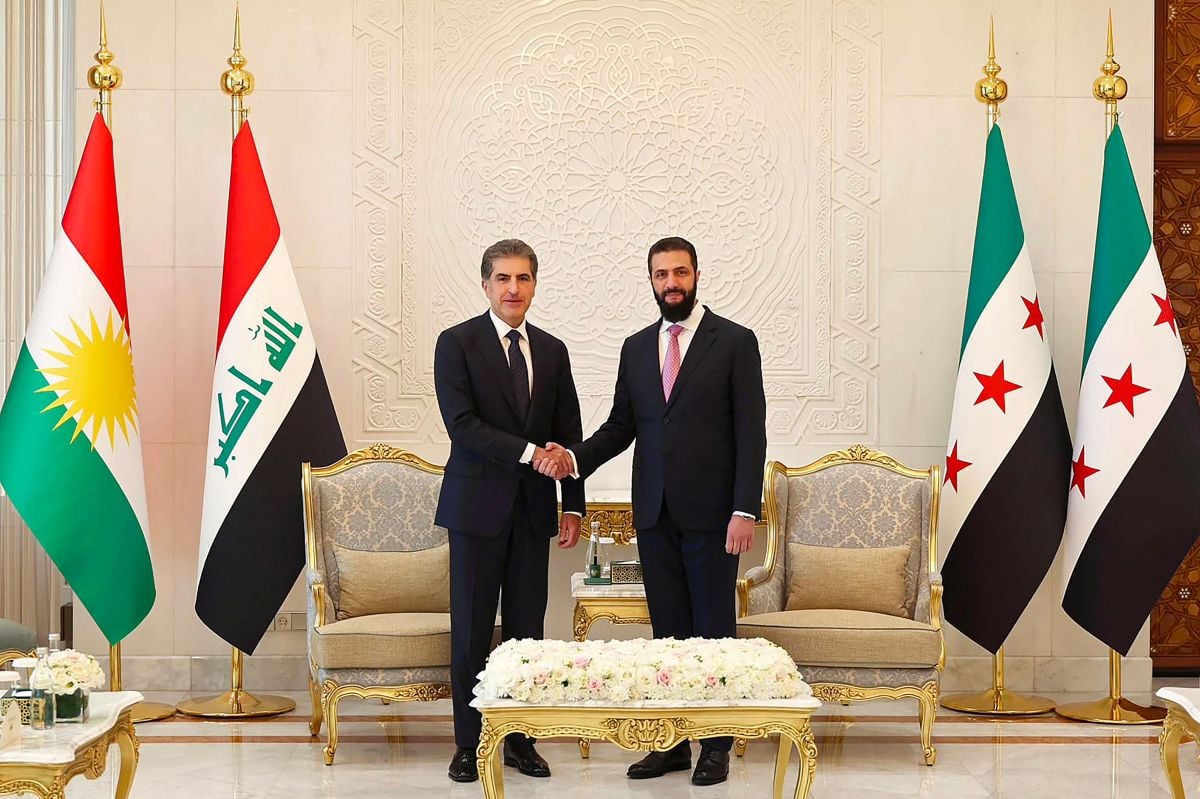
You recently visited Syria and met with Syrian President Ahmed al-Sharaa. Whatwere the most prominent discussions and agreements?
Prior to the visit, I met President al-Sharaa several times in Turkey. My visit to Syria wasconducted with full coordination and agreement with Prime Minister Ali al-Zaidi and Iraqipolitical forces. Although I traveled as President of the Kurdistan Region, I also traveled asan Iraqi official.
Syria is our neighbor, and its stability is vital. President al-Sharaa is working in a plannedmanner to transition Syria to a better stage. We emphasized securing the Iraq–Syriaborder, strengthening economic ties, and playing a facilitating role between Damascusand the Syrian Democratic Forces within a unified Syria. The process between Damascusand the SDF is progressing well. Upon my return, I contacted Prime Minister al-Zaidi, andwe hope for upcoming reciprocal visits between the leadership of Iraq and Syria.
Regarding Syrian Kurds, does your stance support autonomy or Syria's territorialintegrity?
Our advice to Syrian Kurdish parties (SDF and ENKS) has been to look to Damascus,raise the Syrian flag in their areas, and resolve their issues within a unified Syria. Theycannot replicate Kurdistan's model due to geographical discontinuity. The model must beagreed upon between them and Damascus, ensuring rights for all components (Kurds,Alawites, Druze, Christians) are enshrined in the Syrian Constitution. We facilitate withoutinterfering in internal details.
Regarding the Sinjar [Shingal] Agreement signed in 2020: Is regional pressurepreventing its implementation?
The Shingal Agreement was signed in 2020 between the KRG and the FederalGovernment, witnessed by UN representative Ms. [Jeanine Hennis-] Plasschaert. Its non-implementation is the responsibility of illegal armed groups present in Shingal who mustleave. Shingal must return to normalcy. The Yazidis suffered genocide in 2014 anddeserve a better life. Implementing the agreement is the proper path to normalizing thesituation.
How do you view Iraq's future amid regional conflicts between America, Israel, andIran? Has Iraq aligned with the US or maintained a neutral stance?
Iraq's position has been neutral during the war. Iraq cannot isolate itself from itsenvironment or rely solely on one country, whether America or any other. It is in ourinterest not to join any axis.
During the war, we prevented Kurdistan from becoming a launchpad for actions againstIran. While Iranian Kurdish opposition groups have been present in Kurdistan for 40 years,we did not permit them to cross borders or create security issues for Iran. Iraq must notbe a source of threat to any neighbor. Outlawed groups must not compromise Iraq'sforeign policy. Iraq must maintain a balanced, equal distance from all parties.
What is your vision for the future of the political process in Iraq?
The political process is improving. Political forces must support the government inBaghdad. We are all in the same boat; if it sinks, no single region survives alone. Ourdestiny as Iraqis is shared, and we must work together for a prosperous future for all ofIraq.
[Source: Rûdaw English]