/file/dailymaverick/wp-content/uploads/2023/10/CovidGrant-1.jpg)


















20 years of Mohammed bin Rashid’s rule: The 'Dubai model' weakened by war
Having come to power in 2006, the emir of the Maktoum family turned his city into the showcase of the Gulf. But the war against Iran has cracked the edifice in just a few weeks.
By the late 1990s, Dubai had run out of beaches to sell. The ports of Rashid and Jebel Ali occupied the coastline, while hotels had claimed what remained. But Mohammed bin Rashid al-Maktoum still wanted more villas and palaces, even if it meant extending the shoreline. The architects who flocked to his door initially envisioned an island shaped like a sun, with seven kilometers of beach. The crown prince wanted 10 times more. The design stretched, branched out and eventually became a palm tree. For six years, dredgers scoured the Gulf seabed and spat out 94 million cubic meters of sand, which was ringed by rocks brought down from the Hajar Mountains. High above, a satellite monitored the project to make sure the tree grew straight. Twelve billion dollars later, Palm Jumeirah became one of the few man-made structures visible from space.
“The word ‘impossible’ does not belong in the vocabulary of leaders.” Mohammed bin Rashid likes to throw this line at skeptics of his grandiose projects. When he became Dubai’s emir and prime minister of the United Arab Emirates in January 2006, the city had neither the world’s tallest tower nor its reputation as a Middle Eastern safe haven where people came to shelter their fortunes or families. Twenty years later, the emirate, with foreigners making up more than 90 % of its population, has become the benchmark for Arab success. That reputation is now being tested by the war launched by Israel and the United States against Iran on Feb. 28, which has cracked Dubai’s image as a haven of stability and a safe place to invest.
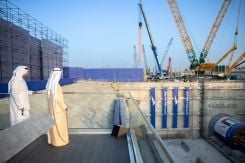
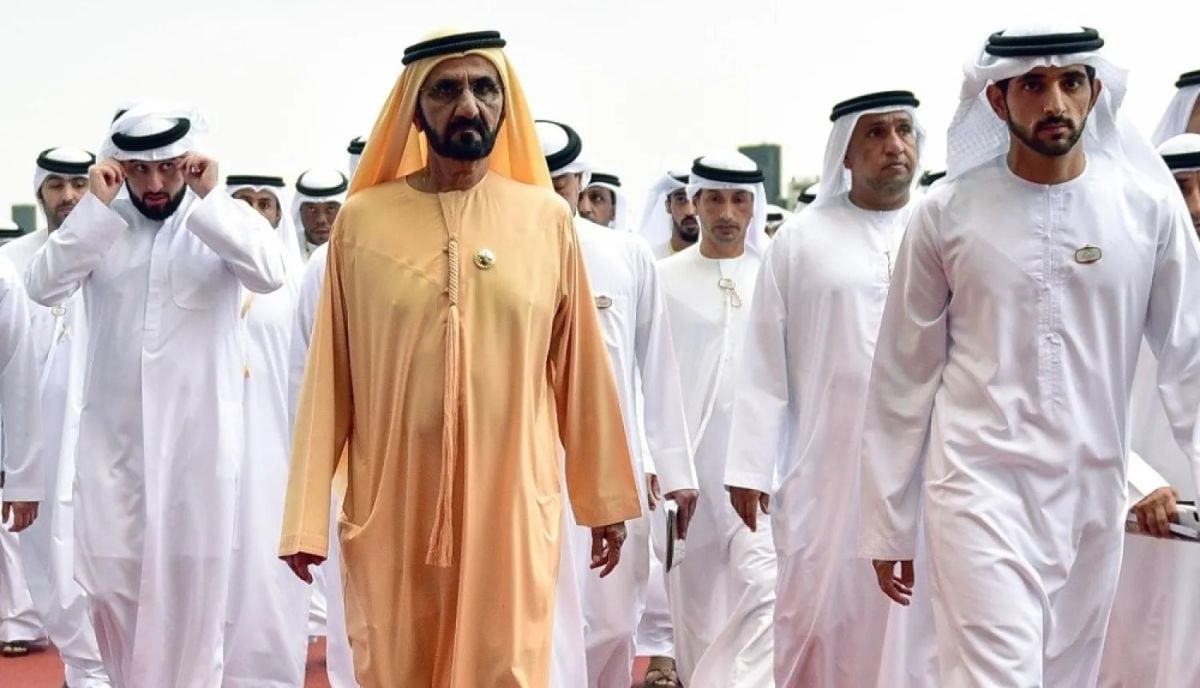
The slender man, dressed in a white kandura and sporting a close-cropped beard, was born in 1949 in a small town of pearl fishermen and gold smugglers. The son of Emir Rashid bin Saeed al-Maktoum, young Mohammed grew up in the family home in Shindagha, a neighborhood of coral houses clustered along the creek. As a teenager, he went to the United Kingdom to learn English before attending a British military academy. He returned at 19 to take charge of Dubai’s police force. In 1971, when the federation was established, he became defense minister, a post he held until 2024. It took him 35 years to ascend the throne, but he did not wait for the crown to govern.
De facto emir
Mohammed inherited his taste for audacity from his father. When Sheikh Rashid had the basins for the future port bearing his name dug out, his advisers warned him that no ships would come. "They will come," he replied. They did, and DP World is now a global port operator.
His elder son, Maktoum, who served as emir from 1990 to 2006, remained in his younger brother’s shadow, while Mohammed steered the emirate’s economic diversification. In 1985, Mohammed established an airline with $10 million, two leased aircraft and no government subsidy. Emirates now carries tens of millions of passengers a year. That same year, he opened the Jebel Ali Free Zone, where foreign companies could establish themselves without a local partner — heresy in the Gulf. In 2000, he created Dubai Internet City out of the sand, where Microsoft, Oracle and then IBM opened offices, laying the groundwork for the artificial intelligence race in which the emirate is now betting its future.
This determination gave rise to the “Dubai model”: stable, wealthy, authoritarian, a magnet for capital and talent, and envied by its neighbors. Launched in 2023, the D33 program promises to double the economy in 10 years and make the emirate one of the world’s top three cities. “No one wants to copy Abu Dhabi’s model, but everyone tries to copy Dubai’s, which represents a brand of economic prosperity, coexistence and peacemaking,” says Dubai sociologist Mira al-Hussein, an associate researcher at the Alwaleed Centre at the University of Edinburgh.
This brand rests on a broader claim. “Since the turn of the millennium, the government considers that the country has reached Western modernity, even surpassed it, and that it will now build a specifically Emirati form of modernity, aligned with a state-defined Islam and shaping its own future,” explains Laure Assaf, anthropologist and professor at New York University Abu Dhabi.
‘We have our own democracy’
The Dubai success story, however, rests on a trade-off. The emirate offers a better life, and everyone buys into it at their own level, from Russian billionaires to Bangladeshi laborers, on the condition that they never talk politics or demand any rights. Mohammed bin Rashid has acknowledged this openly: “We have our own democracy. You cannot impose yours on us,” he told CNN in 2011, at the height of the Arab Spring.
Many Emiratis seem satisfied with the arrangement. For years, they lived on generous subsidies or relatively undemanding government jobs, although, as elsewhere in the Gulf, young people are now being pushed toward the labor market. “It’s a deal: I provide you with security and comfort and you live happily, but you praise the visionary virtues of your leaders,” says political scientist Camille Ammoun, who lived in the cosmopolitan city for 10 years. As for foreigners, they have no say. In addition to having no political rights — like citizens — they live in a state of permanent insecurity. “The residency visa, renewable every one to three years, serves as a tool of governance,” says Assaf.
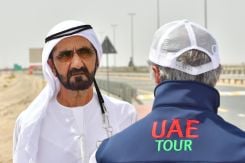
In return, Mohammed bin Rashid rolls out the red carpet for expatriates. In 2002, a decree allowed them to acquire full ownership of property, a first in the Gulf. The emir expanded tax-free zones and rewarded both the talented and the wealthy with “golden visas,” valid for up to 10 years.
In 20 years, Dubai’s population has more than tripled, surpassing 4.7 million. People come for tax-free salaries, safe streets and the chance to build in three years what would take 15 elsewhere.
“If Lebanon were a dictatorship with access to the same rights and services as Dubai, I’d be fine with it,” says a Lebanese man who moved to the emirate after taking part in the 2019 thawra. “Some people like to criticize the UAE government on social media, but I’ll never do that,” he continued. “My country hasn’t given me 1 % of what Dubai does.”
At 77, Mohammed bin Rashid could have been expected to savor the success of his gamble. But on Feb. 28, 2026, his life’s work began to falter.
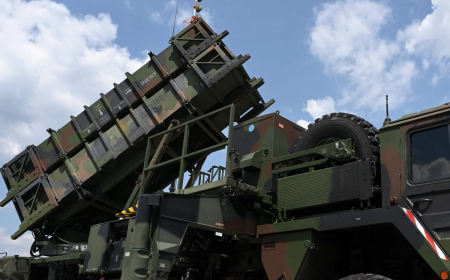
That day, Israel and the United States killed Iran’s Supreme Leader Ali Khamenei in a massive bombardment, and Tehran retaliated with salvos of missiles across the region. Anti-aircraft batteries opened fire over Dubai as stunned witnesses watched a column of smoke rise above Palm Jumeirah.
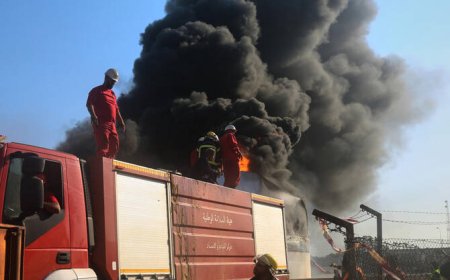
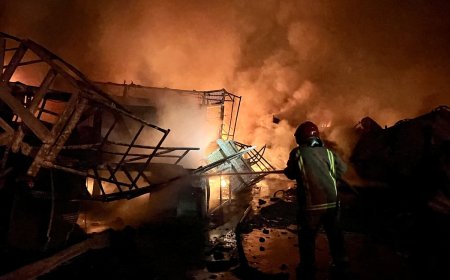
The airport, one of the busiest in the world, was hit as well, forcing passengers to evacuate. On March 12, an Iranian drone tore into a tower at Dubai Creek Harbour, causing a huge fire and forcing the evacuation of the district. By early April, the UAE had recorded 12 deaths and 190 injuries.
The shockwave went far beyond the physical damage. Thousands of flights were canceled, hotel occupancy rates collapsed and the stock market posted its worst session since 2022.
Above all, the city revealed what its builder had created: a rootless population. Expatriates packed their bags, Indian, Pakistani and Bangladeshi workers were sent home, and influencers who had helped create Dubai’s idyllic image were among the first to leave.
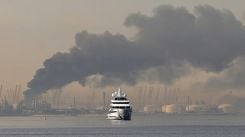
Nervous authorities sought to control the narrative. They restricted the dissemination of images and information about the strikes, punishing anyone who attempted to share them.
Between March 3 and April 8, 375 people were arrested in the UAE on such grounds. The NGO Bellingcat even documented several cases in which the country downplayed the damage, described successful strikes as mere interceptions or simply kept silent about them.
Because to survive, the “Dubai model” must win people over again. Since July 20, any resident who brings a relative from abroad has received a package of benefits worth more than $800. Never before had the emirate paid people to come and visit.
‘They invented nothing, the patents are filed elsewhere’
Look closely, and other weaknesses were already embedded in the foundations laid by the emir. Despite having almost no hydrocarbons of its own, Dubai remains indirectly reliant on those of Abu Dhabi. Its tourism industry depends on desalinated water and constant air conditioning, and therefore on cheap energy. “Without these resources, the model is not viable,” says Ammoun. Even high technology, which the emirate has made its flagship sector, is more showcase than laboratory. “They built the tallest tower in the world, they’re developing AI infrastructure, but they invented nothing — the patents are filed elsewhere,” the expert adds.
The emirate had already experienced its first earthquake before the Iranian missiles. The 2008 financial crisis brought it to the brink of bankruptcy, prompting Abu Dhabi to inject $10 billion into its coffers. In January 2010, the world’s tallest tower was inaugurated as the Burj Khalifa, named in honor of then-Emirati President Khalifa bin Zayed, after having been known as the Burj Dubai throughout its six-year construction. The accession to the presidency in 2022 of his half-brother and successor, Mohammed bin Zayed, known as MBZ, further narrowed the little space that remained. “We were fine with Mohammad bin Rashid,” recalls Mira al-Hussein. “We couldn’t criticize him by name, but we could criticize policy—and that’s no longer possible these days.”
The presidency of the federation, which tradition based on seniority should have given to Dubai’s ruler, has never left Abu Dhabi. The Maktoums retained the vice presidency, which had been theirs since 1971, until MBZ appointed his own brother Mansour to the post in 2023 — Mansour is also Mohammed bin Rashid’s son-in-law. The position is now shared by the two men. “It is unprecedented, and it is a way of sidelining him,” says the sociologist. “It is often Mansour who is sent to represent the UAE abroad. And that is unacceptable to Dubai’s citizens.”
In recent years, the ruler has increasingly withdrawn from public life. His public appearances have become rarer, and he often walks with a cane, while bringing his sons increasingly into the spotlight. The elder, Hamdan, Dubai’s crown prince, extreme-sports enthusiast and poet with more than 17 million Instagram followers, has served as UAE deputy prime minister and defense minister since 2024, taking over the latter post from his father. His younger brother, Maktoum, now finance minister, is regarded as the steadier hand by the merchant elite. These two co-pilots will have to steer Dubai’s next revolution: artificial intelligence, which the UAE expects to account for around 14% of its GDP by 2031.
To do so, the global city will first have to recover from the shock of the conflict. Five months after the first strikes, Anglo-Saxon banks have brought back teams that were relocated in March, and traffic jams are once again stretching along Sheikh Zayed Road. The myth no longer works, however, for those still hesitating, and some major fortunes that had fallen for the emirate are now looking elsewhere.
A real test will come when the new school year begins, as expatriates who fled the summer heat for their home countries decide whether to return in September. “The longer the war drags on, the more families will seek alternatives,” warns Jim Krane, a researcher at Rice University in Houston, quoted by Le Monde, as bombing between the United States and Iran resumed in July.
The question now is how long Sheikh Mohammed’s model can continue to deliver on its promise, now that war has shattered the illusion of a city beyond the reach of conflict.
[Source: L'Orient Today]