














Kurds caught in a vice more than ever between Damascus, Ankara, Tehran
The survival of the SDF in Syria, Iran’s pressure on Iraqi Kurdistan, and the shifting balance of power are reshaping the future of the Kurdish movement.
From the uncertain integration of Syria’s Kurdish forces to Iranian strikes in northern Iraq, Kurdish movements are being forced to adapt to a regional order increasingly shaped by powerful neighboring states.
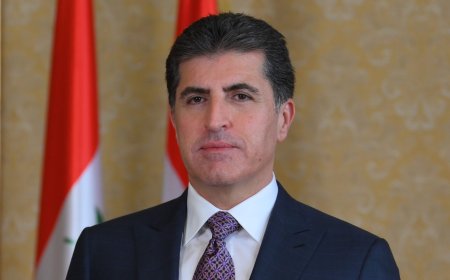
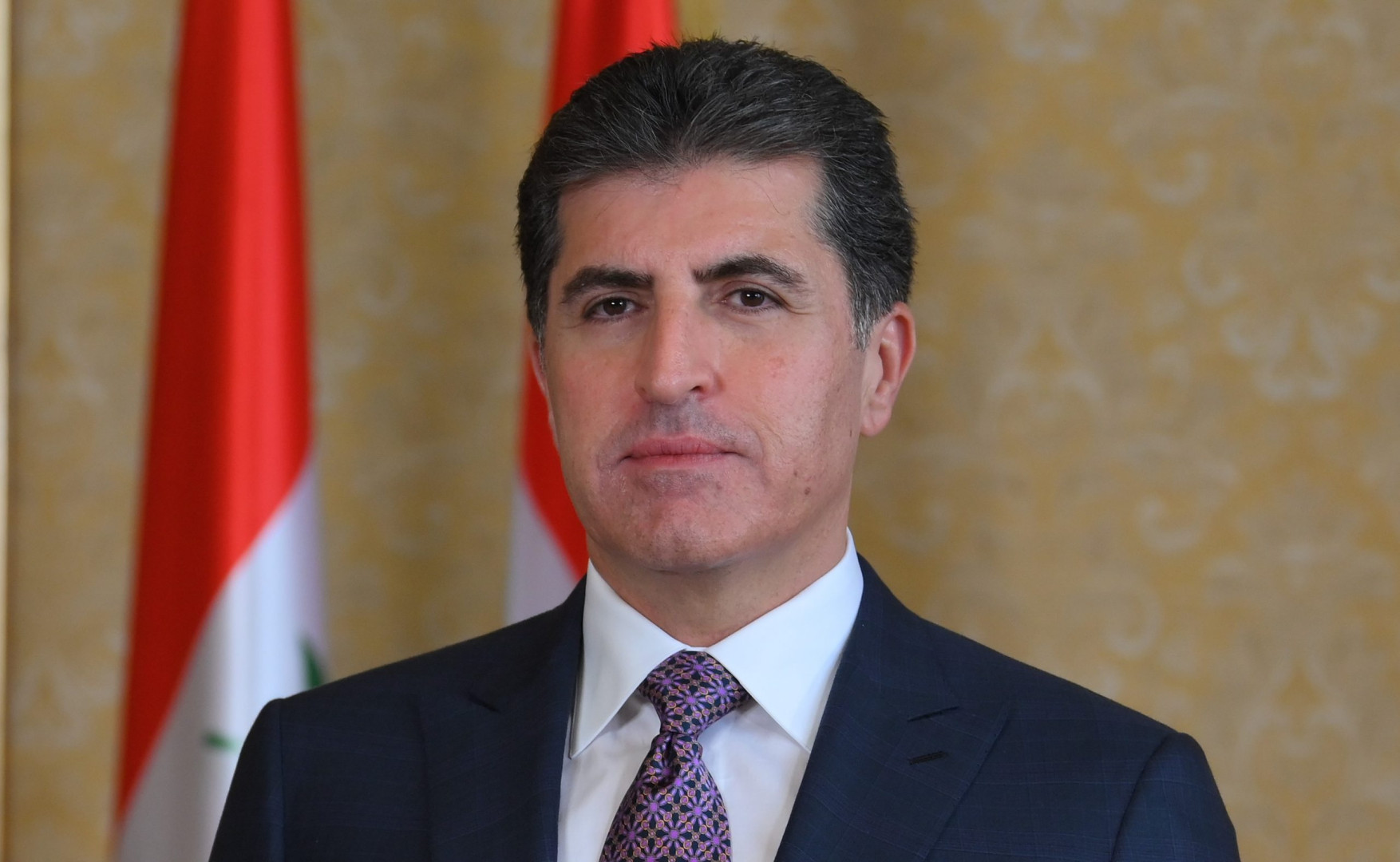
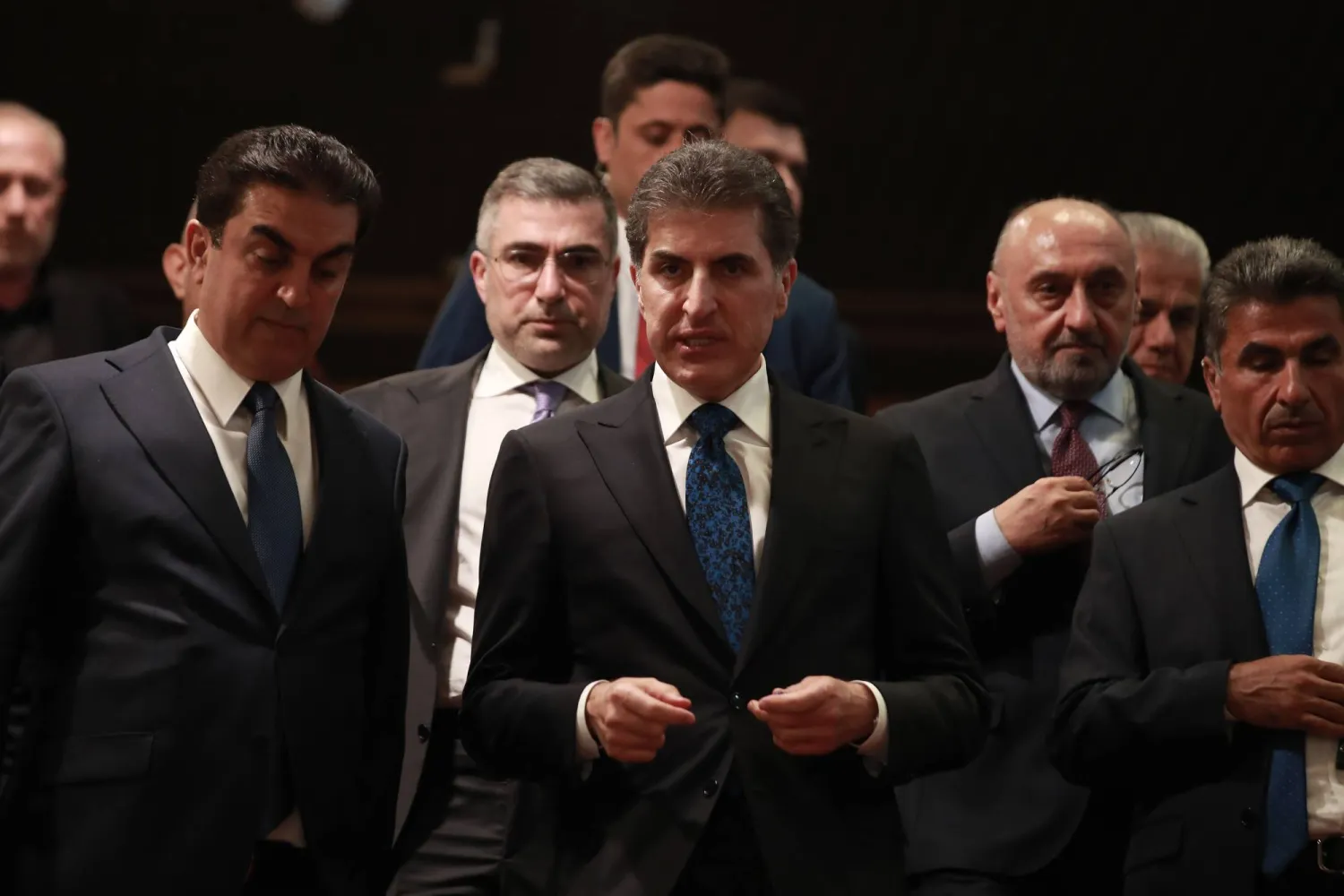
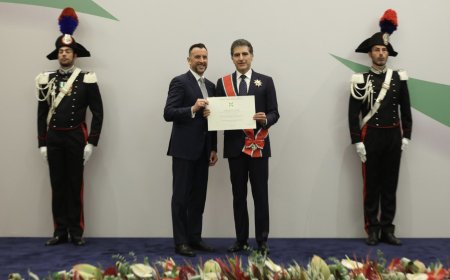
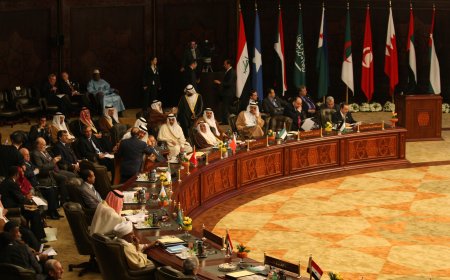
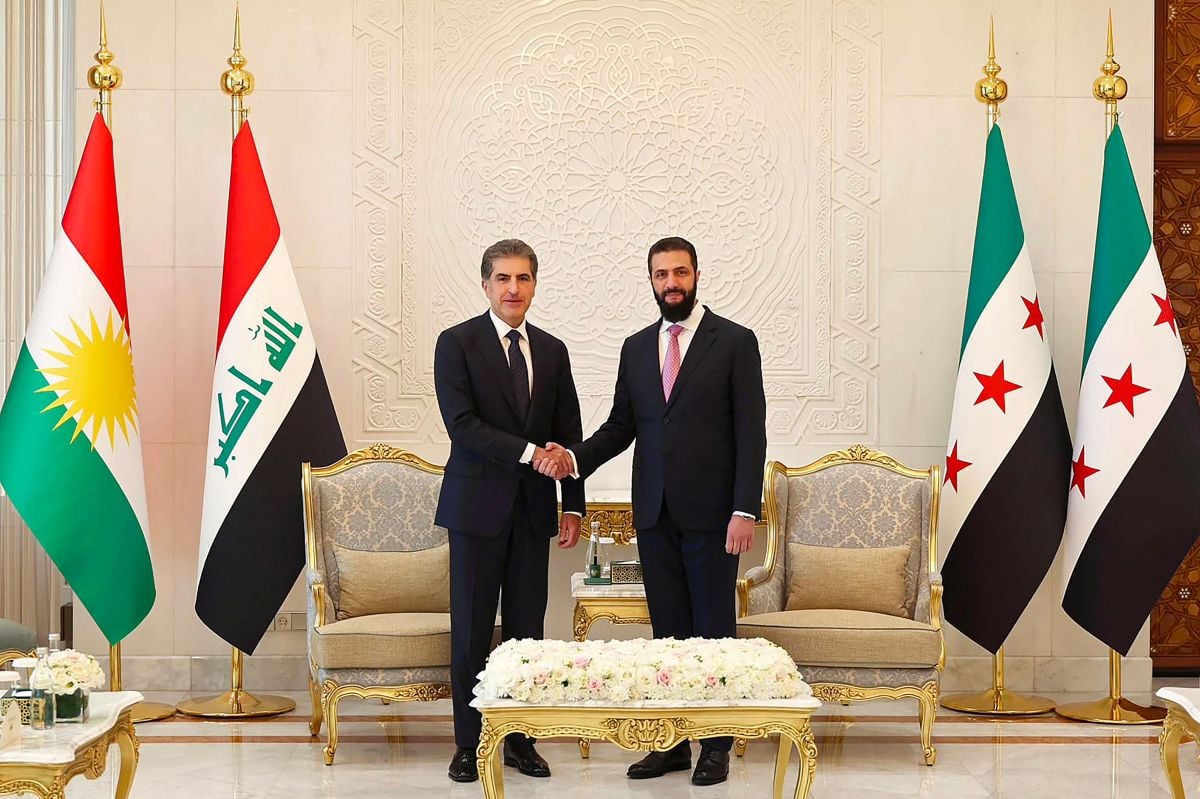
Against this backdrop, Nechirvan Barzani’s arrival in Damascus on Monday carries significance that extends far beyond relations between Syria and Iraq’s autonomous Kurdistan Region. The visit, the first by a president of Iraqi Kurdistan since the fall of Bashar al-Assad’s regime, comes as Kurdish actors in four countries across the region face a profound reshaping of their political environment, even though the changes take different forms in each context.
Conditions for Kurdish survival in Syria
At the entrance to the presidential palace in Damascus, two imposing flags — the Syrian flag and the Iraqi Kurdish flag — take center stage. Barzani is welcomed by Syrian President Ahmad al-Sharaa to discuss relations with Iraq and Iraqi Kurdistan, regional security, refugees, trade, and economic cooperation.
But the still-uncertain future of the SDF inevitably looms over the meeting. Earlier this year, Erbil had helped mediate between the SDF and Damascus following several weeks of clashes in northern and northeastern Syria. The resulting agreement brought an end to the offensive and launched a process to integrate Kurdish military and civilian institutions into the Syrian state.
Accustomed to maintaining channels of communication with Ankara, Tehran, and Western capitals, Barzani has established himself as a key interlocutor on sensitive regional issues.
Damascus, moreover, appears to view its relationship with Erbil as part of a broader strategy toward the Syrian Kurdish population. On July 22, The National reported that a delegation from the Syrian Foreign Affairs Ministry had traveled to Erbil to advance plans to open a consulate.
The main question now is no longer whether the SDF will remain entirely outside the Syrian state. The January agreement provides for the integration of its fighters into the national military and security structures, while allowing Kurdish internal security forces to remain temporarily in predominantly Kurdish cities. The question now is whether the SDF will retain a distinct structure within the army and how much of its administrative autonomy will survive.
“What works in Mazloum Abdi’s favor is that Ahmad al-Sharaa does not have full control over Syria and therefore has to remain cautious,” says Henri Barkey, a professor of international relations at Lehigh University and a researcher at the Council on Foreign Relations.
Ankara is also seeking to defuse its conflict with the PKK in Turkey while rejecting the continued existence of an autonomous Kurdish entity in Syria. According to Barkey, Ankara should therefore exert its pressure through Damascus, as an overtly hostile offensive against the SDF could anger Turkey’s Kurds.
Iraqi Kurdistan caught between its neighbors
Since the outbreak in February of the war pitting the United States and Israel against Iran, Iraqi Kurdistan has been struck repeatedly by missiles and drones. Some attacks have targeted U.S. positions around Erbil. Others have targeted Iranian Kurdish parties that have been based in northern Iraq for several decades. Iran has directly struck some of these organizations, while Iraqi factions close to Tehran are widely suspected of being behind some of the attacks on U.S. facilities. Despite their ideological differences, these parties share a common opposition to the Islamic Republic and a long-standing presence in Iraqi Kurdistan.
“Among all of the Iranian opposition’s components, Kurdish groups have historically been the most heavily armed. They are also the best trained and the best organized,” notes Adel Bakawan, director of the European Institute for Middle Eastern and North African Studies.
Their importance, however, is not measured solely by their military strength. They have deep social roots on both sides of the border and hold a strategic geographic position unmatched by any other Iranian opposition forces: nearly 450 kilometers of continuous border between Iraqi and Iranian Kurdistan.
At the beginning of the war, Washington and Israel reportedly considered using them to open an internal front against Tehran, a claim the groups concerned deny. “The Americans and Israelis do not see them as a real threat to the regime, but rather as a means of diverting its attention and resources,” says Barkey. For Tehran, the mere possibility of cooperation between these groups, Israel and the United States is enough to justify preemptive measures.
Under the 2023 Iranian-Iraqi security agreement, these groups were moved away from the border and placed under tight restrictions, without being fully disarmed or expelled. According to Bakawan, Tehran may prefer to keep them concentrated and under surveillance in Iraqi Kurdistan rather than see them disperse.
The strikes therefore serve both to weaken them and to deter them from cooperating with Washington or Israel. So far, that warning appears to have worked. Despite their stated opposition to the Islamic Republic, the main organizations based in Iraq have avoided crossing the border or openly joining the war.
Meanwhile, according to a Middle East Eye report published on July 31, Ankara asked Tehran to scale back its strikes, fearing that excessive pressure could push these groups toward Israel and undermine its own dialogue with the PKK.
Erbil’s survival strategy
While Kurdish public opinion expects Erbil to show solidarity with Iran’s Kurds, the ruling parties primarily think and act as state actors. “They take a more pragmatic approach and see themselves as responsible for defending the interests of Iraqi Kurdistan,” explains Bakawan.
Maintaining this delicate balance is becoming increasingly difficult. The planned reduction in the U.S. military presence, as part of the coalition mission’s scheduled end on Sept. 30, further threatens that balance. The withdrawal of Patriot systems last week also affects Erbil, as some of the Iranian projectiles targeting infrastructure in the province had been intercepted by these systems.
But the withdrawal could also deprive Iran of one of the justifications it invokes for striking the region. “If this presence disappears, the Kurdistan Regional Government, which maintains good relations with Iran, will be able to tell Tehran: ‘You no longer have any justification for striking us,’” says Bakawan. There is no guarantee, however, that this calculation will prove correct. Erbil will therefore have to continue balancing relations with Washington, Ankara, and Tehran to preserve its autonomy without becoming a permanent front in regional wars.
“The best the Kurds can hope for is that the status quo is maintained in Iraq,” says Barkey. As for the Iranian Kurdish groups, they are likely to remain armed but content, awaiting any potential shift in the balance of power in Tehran.
This article was translated from L'Orient-Le Jour by Joelle El Khoury.
[Source: L'Orient Today]