




























Syrian court sentences Bashar al-Assad to death in absentia for war crimes
Verdict relates to atrocities committed during the country’s 14-year civil war in which about 500,000 people died

A Syrian court has sentenced the country’s former president Bashar al-Assadand his brother Maher to death in absentia for crimes against humanity and war crimes during the 14-year civil war, in which about half a million people died.
The two men fled to Moscow after being ousted by a lightning rebel offensive in December 2024 which toppled the dictatorial regime in just 11 days.
The former president and his brother, who commanded the feared fourth division and was considered the regime’s top security official, oversaw a brutal crackdown in which government forces killed, arrested and tortured indiscriminately to crush protests that started in 2011.
The court said Bashar al-Assad had been sentenced to death for crimes of “premeditated and intentional murder of more than one person and of children” as well as “torture, arbitrary arrest and crimes against humanity”.

It said it would pursue international legal avenues to try to prosecute the two men, but Russian officials have previously declined requests to extradite its former Syrian allies.
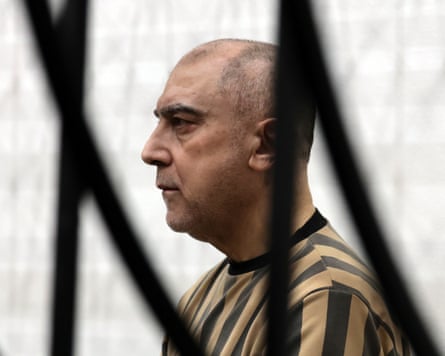
The court also sentenced Atef Najib, Assad’s cousin and the former head of political security in Daraa, to death. Najib was responsible for the torture of a group of 15 young boys who had graffitied anti-Assad slogans on a wall in 2011 – an event that kicked off mass protests in the southern Syrian province, which then spread to the rest of the country.
Najib’s trial was highly publicised, with pictures of him listening to proceedings while dressed in a prison uniform and held in a cage in court. The Syrian government has presented his trial as a landmark case in its pursuit of transitional justice, something experts say is key to healing divisions in the country.
Syria has experienced explosions of violence in the post-Assad era. About 1,500 mostly Alawite civilians were killed in a wave of retaliatory killings in March 2025 after militants loyal to al-Assad attacked security forces. Al-Assad belonged to the Islamic Alawite sect – a minority group in Syria – and enjoyed strong support in the group’s coastal heartland during his rule.
In July 2025, more than 1,700 people were killed in massacres in the Druze-majority province of Suweida when local fighting evolved into sectarian killings. Low-level violence has continued in northern Syria until the present day, particularly targeting Alawite civilians.
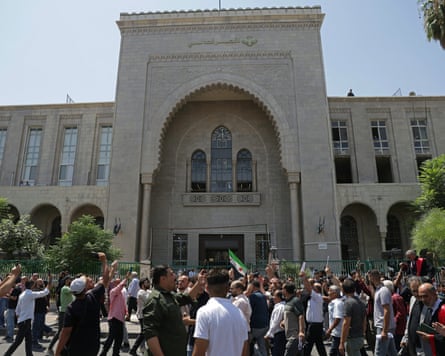
Syrian authorities have taken steps towards transitional justice, establishing committees and arresting Assad-era officials, in an effort to end intercommunal violence.
Al-Assad became president in 2000 at the age of 34, inheriting power from his father, Hafez. He had trained as an ophthalmologist in London and was not initially supposed to be president, but became the heir after his brother, Basil, died in a car accident.
Though styled as a young reformer who was supposed to allow some liberalisation in Syrian politics and its economy, his legacy was largely defined by his brutal response to the country’s revolution. Under his rule, Syria’s fearsome security apparatus was given a free hand to arrest, torture and kill civilians on an industrial scale.
[Source: The Guardian]