
/file/dailymaverick/wp-content/uploads/2023/10/CovidGrant-1.jpg)























'The President's Cake' in Amman film festival: How a child battled fear in Saddam Hussein's Iraq
Awarded the Jury Prize at the Amman International Film Festival, “The President’s Cake,” the first feature by Hassan Hadi, transforms a child’s quest into a moving chronicle of the years of embargo.
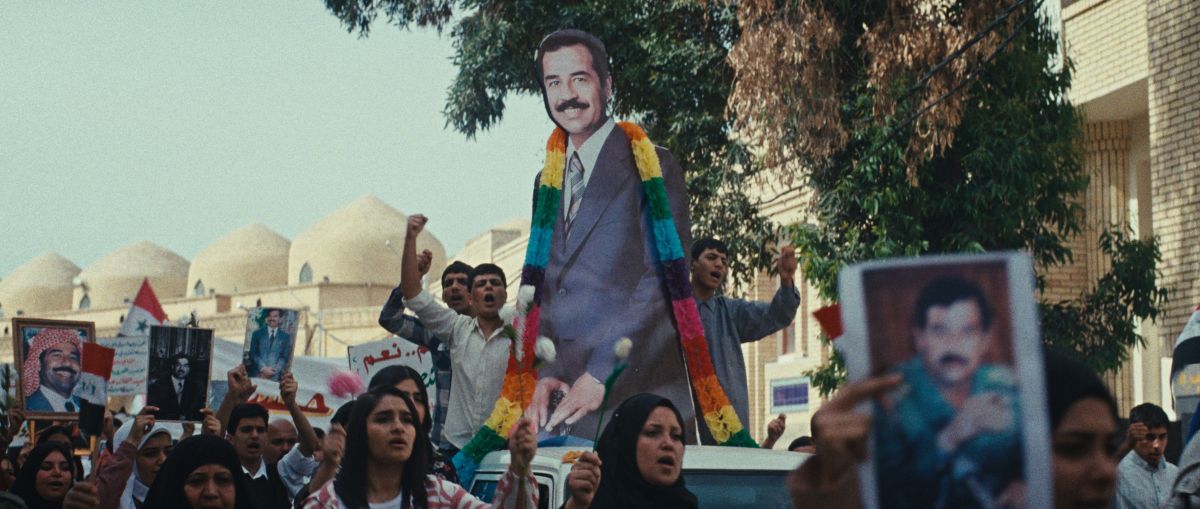
With "The President's Cake," which won the Jury Prize on Monday at the Amman International Film Festival, Iraqi director Hassan Hadi revisits the Saddam Hussein era through the eyes of a 9-year-old girl. Blending poetic realism with historical chronicle, this powerful debut feature takes viewers to the marshes of southern Iraq, where the personal merges with collective memory.
The film has already enjoyed a remarkable international run. It premiered in the Directors' Fortnight at the Cannes Film Festival, where it won the Camera d'Or and the Audience Award. It also received the FIPRESCI Prize at the Miskolc International Film Festival and the Best First Feature Award at the Stockholm International Film Festival.
The story unfolds over just two days. Lamia, nine, her classmate Said and her grandmother, Bibi, make repeated journeys between their village, the school and Baghdad. From this seemingly simple premise emerges a rich narrative that gradually reveals the mechanisms of an authoritarian regime and the wounds left by years of embargo.
The film opens with a long, silent sequence in the Iraqi marshes. Bathed in natural light, Lamia and her grandmother drift slowly across the water. The older woman's wrinkled face seems to bear the weight of the country's history. From these opening shots, Hadi creates a suspended atmosphere that vividly evokes the 1990s through sumptuous cinematography, subtly weathered colors and hypnotically beautiful landscapes. The marshes are not merely a backdrop; they are the film's true heart. Their physical, historical, and symbolic presence recalls the fate imposed on them by Saddam Hussein, who ordered them drained and burned after the 1991 uprising. Partially restored years later, they now serve as the film's setting. The cradle of Mesopotamian civilization and the "Epic of Gilgamesh," they embody an ongoing dialogue between history and myth.
"The marshes are both real and legendary. I wanted these two dimensions to run throughout the whole film," the director explains.
Childhood under dictatorship
Through Lamia's journey, Hadi skillfully shows how dictatorship and the U.S.-led embargo gradually disfigured Iraqi society.
It all begins when a teacher orders each student to bring a cake to celebrate Saddam Hussein's birthday, threatening to report anyone who fails to do so to the intelligence services, thereby also putting their families at risk. This seemingly trivial assignment gradually becomes a journey across the country and its contradictions. Lamia, portrayed with heartbreaking precision by Banin Ahmad Nayef, confronts poverty, corruption, security forces, petty traffickers, and predators, but also acts of solidarity that persist despite everything. Through her journey, the film shows how a regime of fear ultimately poisons all human relationships: Citizens become thieves, corrupt officials, or opportunists; the most vulnerable exploit those even weaker than themselves; and a grandmother, driven to despair by poverty, even considers giving up her only grandchild after becoming her guardian.
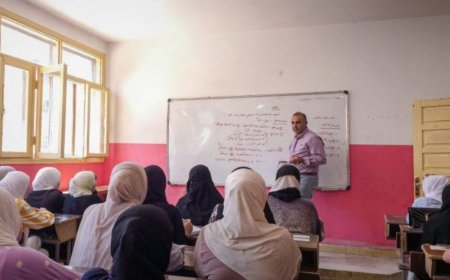
Even the school is not spared. Mathematics, literature, and language classes become exercises in obedience, where fear itself becomes a subject of instruction. Yet, Hadi never gives in to pathos. The children's dialogue remains disarmingly simple, often tinged with humor and surrealism. Long, silent sequences say more than words. Some images become striking tableaux, notably coffins carried on trucks during the presidential birthday celebrations, decorated with colorful ribbons and overshadowed by giant, smiling portraits of Saddam Hussein. The contrast is extraordinary: Every face bears the marks of fatigue, hunger, and mourning, except that of the dictator.
In Amman, all three screenings of the film at Taj Cinema sold out. Jordanian and Iraqi audiences held lengthy discussions with Hadi, a former management student at the American University of Beirut who later studied film at New York University, where he now teaches.
Hassan Hadi: 'I didn't want to make a political film'
The film's Arabic title, "The Reed Kingdom," is a direct reference to the marshes, where communities build floating reed houses between the Tigris and the Euphrates. "I wanted to evoke a kingdom that is beautiful on the outside but hollow within, consumed by corruption, violence and injustice, like Iraq under the embargo and Saddam Hussein's dictatorship," the director said.
Speaking to L'Orient-Le Jour, Hadi insisted on the deeply personal nature of the project. "This is a story I lived as a child in southern Iraq. I wanted to tell my memories without making a political film. Overtly political films don't interest me. I'm not seeking to defend an ideology or make propaganda." Yet this personal memory becomes the memory of a generation. "Every school celebrated Saddam Hussein's birthday, and some asked children to bake a cake for this 'national' holiday. That memory was deeply surreal. I mixed in stories from friends and family who had similar experiences."
Why did he choose to tell such a dark period through the eyes of children? "Because they don't take sides. They're not politicized. They're the first victims of war, hunger, poverty, ignorance and repression. They pay the price for adults' mistakes."
The first film about the embargo years
For his debut feature, Hadi takes on a period that is largely absent from Iraqi cinema. The filmmaker explains that he first wanted to portray a world he knows intimately: his childhood, the places where he grew up and the people who shaped his imagination. But the choice also stemmed from an observation: In his view, Iraqi cinema had never truly addressed the 1990s, marked by the international embargo, bombings and the suffering inflicted on an entire generation. His first feature thus became a way to explore personal memories that merge with those of millions of Iraqis.
He says that hunger, medicine shortages and the lack of basic necessities remain deeply ingrained in his memory. In his view, the consequences of the embargo go far beyond material deprivation: They permanently changed the moral, social and cultural fabric of Iraqi society. If bombs destroyed bodies, he believes, the embargo left equally deep scars on people, especially children.
An aesthetic of restraint
To tell this story, Hadi employs a poetic realism interwoven with humor and the quiet wonders of childhood. Tudor Vladimir Panduru's cinematography follows the slow rhythm of the marshes, magnifying the landscape and everyday gestures without slipping into gratuitous aestheticism. Natural light, long takes, silence and the restrained use of dramatic effects all contribute to this understated direction. The director explains that he deliberately favored simple storytelling, long takes, raw imagery and a narrative that constantly blends reality and fantasy while avoiding melodrama. For him, the film's real tragedy lies in Saddam Hussein's mere presence onscreen; the suffering of the Iraqi people needed no further emphasis.
Filmed over 40 days in the marshes of southern Iraq, the production posed major technical challenges. The crew recreated the aesthetic of the 1990s by combining film and digital formats, followed by meticulous color grading to recapture the textures and colors of the era.
Those challenges were compounded by filming on the marshes' waterways in a country whose film industry is still emerging.
Despite these constraints, the director says he is above all delighted that the film was released in Iraqi theaters last May. He describes it as the fulfillment of a longtime dream and hopes that "The President's Cake" will now reach as many viewers as possible across Iraq.
[Source: L'Orient Today]