
/file/dailymaverick/wp-content/uploads/2023/10/CovidGrant-1.jpg)
























The monarchy: One of the codes of Ahmad al-Sharaa’s rule
Syrian researcher Hossam Jazmati examines President Ahmad al-Sharaa's monarchist tendencies in this piece, originally published in Arabic on July 14, 2026, on the independent Syrian digital platform al-Jumhuriya
When news first leaked suggesting that the commander of the “Deterring Aggression” operation, whom the military factions had pledged allegiance to as president of the transitional phase during the “Victory Conference,” had considered transforming Syria from a republic into a monarchy, it was dismissed as an obsessive fear imagined by his fiercest critics. However, the reports were soon corroborated by multiple sources. They even added that Ahmad al-Sharaa had sounded out the opinions of foreign officials and advisers from countries backing him, only to be warned against such a drastic systemic shift for fear of triggering a profound internal shock.
The Idlib experience
At first glance, the impulse could easily be chalked up to a sense of grandeur after achieving the rapid collapse of an entrenched regime in less than two weeks, the sudden surge in Sharaa's popularity across Syria, and his swift regional, Arab and international acceptance. But nearly a year and a half later, the picture seems clearer, allowing for a deeper analysis without dismissing that initial indicator.
In fact, Sharaa, who grasped the sudden change faster than anyone else, knew precisely the scale and scope of the prerogatives he wanted to monopolize, and he knew that a republican system would constrain him with more checks than he could tolerate.
To understand the instincts shaping his current behavior, it is worth revisiting the Idlib model, an experience the new Syrian leadership does not shy away from taking pride in, presenting it as a prototype worth building upon, provided it is expanded, adapted and developed nationwide. Al-Jolani [Sharaa] governed his mini-state under the nebulous title of "Commander of the Liberated Territories," a designation rooted in neither a referendum nor a consensus among the forces present at the time.
Back then, the discourse of "Hay'at Tahrir al-Sham" (HTS) elevated the notion of the "rule of the victor," meaning whoever seizes power by force. And the group's leader governed in every possible form of such "forcible seizure" whenever the opportunity arose. Thus, the group's "Shura Council" was not the only body that was symbolic, controlled and subservient. Gradually, the "General Shura Council," which functioned as a regional parliament, and the "Salvation Government" it oversaw became similarly subordinated. Even though some "ministers" held real technical prerogatives, al-Jolani retained iron control over three decisive portfolios: security, through Abu Ahmad Hudoud (Anas Khattab, now interior minister); foreign relations, through his envoy Zaid al-Attar (Assad al-Shaibani, now foreign affairs minister); and finance, which al-Jolani oversaw personally by assigning "operators" to manage various economic sectors. Above all, he held the authority to issue official decrees — a sort of sovereign order that overrode any law, even in matters as consequential as life and death. This "sultani" authority meant he could pardon anyone regardless of the findings of the "General Security Apparatus" investigations or the rulings of his own judges, just as he could order an execution. Not to mention lesser administrative and procedural matters.
Dynastic power
This recent experience was present in Sharaa's mind once he was installed in the capital, alongside an older one dating back to his founding of "Jabhat al-Nusra" in 2011, which he led single-handedly despite the challenges of "Shura" during critical moments requiring consultation. On a deeper level, Sharaa admires the Gulf style of governance. He knew this was exactly what he wanted: a conservative, wealthy ruling monarchy.
Pressed by advisers to accept the "tight republican shirt," he submitted, outwardly, it seems, while in practice blending the two systems: the republican one, imposed by legal reality, and the monarchical one, driven by his individualistic "instinct." The result is a hybrid system, and this fusion explains several decisions and behaviors that the leadership treats as "self-evident": appointing Sharaa's two brothers to sensitive positions; tolerating one of his most prominent supporters publicly defending dynastic rule; adopting a "Constitutional Declaration" widely criticized for shielding the "president" from accountability, then drawing even more criticism when Sharaa himself violated it without hesitation; appointing senior military and security officers, including foreigners, without even granting them citizenship; relatively monopolizing control over accountability, pardons and "settlements," the reconciliation process; establishing an opaque "sovereign fund" resembling the classical Islamic "Bayt al-Mal" (Islamic public treasury); and tasking trusted figures with selecting "endorsers" who would elect two-thirds of the members of the "People's Council," while directly appointing the remaining third, resembling a "council of notables."
These are not accidental choices. They are familiar practices in a monarchical environment, which is why they are carried out with such ease and why criticism of them is met with impatience.
No clear path to democracy
In a parallel track, Shaibani, who sees himself as a partner in victory, nurtured ambitions of becoming prime minister under either a king or a president, while retaining the Foreign Affairs portfolio and delegating non-influential protocol duties to a subordinate minister. Abu Aisha (one of his nicknames) would busy himself with actually governing the country according to the "directives" of His Majesty or His Excellency — it didn't matter. When these ambitions were thwarted, Shaibani settled for the Foreign Ministry and expanded its reach into various other ministries under the banner of the Directorate of International Cooperation, placing loyal cadres in mid-level but pivotal positions. Even stranger was his move to establish a "Political Affairs Administration," which took over the space once occupied by the Baath Party and, after vague talk of its dissolution, sent some of its former officials into influential positions in ministries and senior authorities.
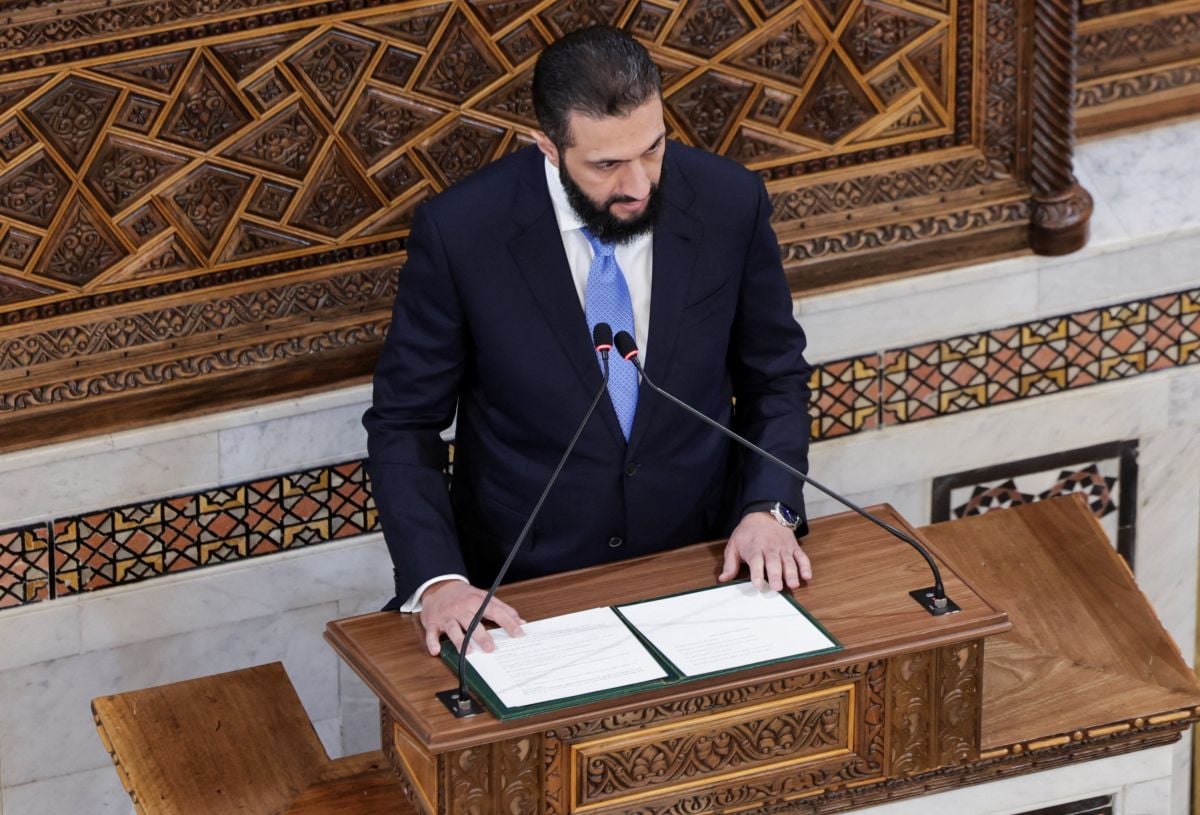
The tension between monarchy and republic surfaced clearly with the "People's Assembly" convening its first sessions on July 12. A close look at the backgrounds and personalities of the council's members, despite their having been selected through the methods described above, along with the discussions in the WhatsApp group they created after months of their work being suspended, leads to the conclusion that the council did not turn out entirely to Sharaa's liking, and that he knows he must "tame" the rest of his opponents within it. This is why his opening speech sounded more like the inauguration of an advisory Shura council than of a sovereign, ruling People's Assembly, consistent with the principle he had upheld since the days of "Jabhat al-Nusra": that Shura is "informative," not "binding."
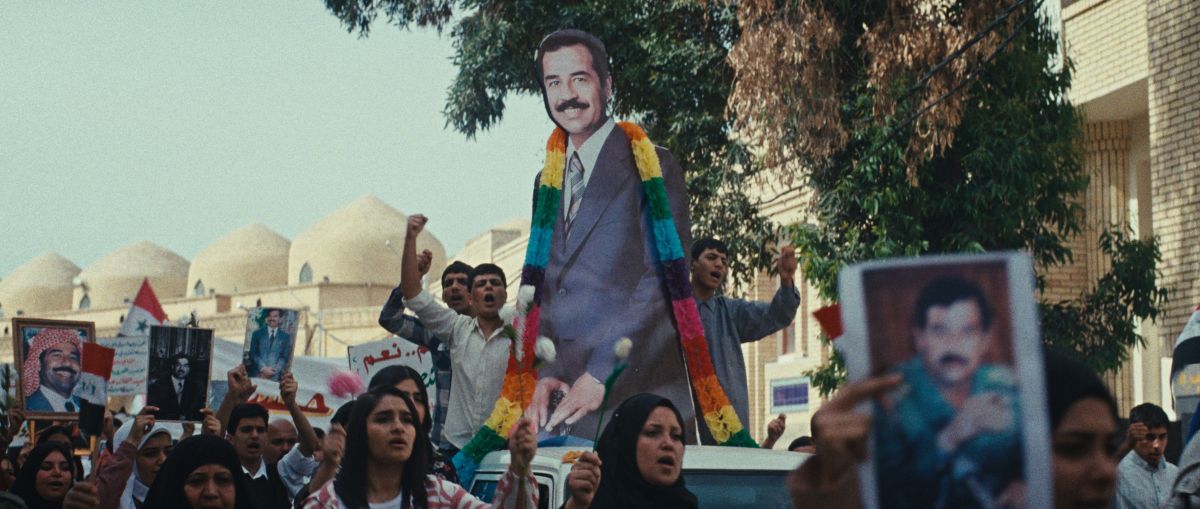
There is no golden path to democracy, and individualism is tempting for any ruler. It is clear that a Sunni Arab majority continues to support Sharaa under the paradigm of the "just despot," regardless of whether his rule is republican or monarchical, just as it mattered little to them whether Saddam Hussein was defined as a head of state or the sheikh of an extended tribe. On the other side, the number of Sharaa's political opponents is shrinking, while his more essentialist enemies are growing: those who view any political engagement today as effective collusion and outright betrayal, since it rests on a foundation of recognizing his rule, even if only as an acknowledgment of fact.
This article was translated by Sabine Taoukjian.
[Source: L'Orient Today]