




/file/attachments/orphans/ED_543155_209242.jpg)
























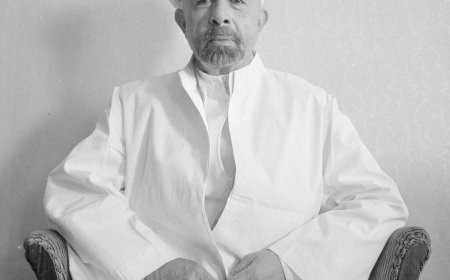

Benjamin Britten represents old-fashioned values we’d do well to heed
Despite his reputation as a conservative figure, the composer’s ability to explore timeless human experiences remains indispensable

Fifty years after his death, has Benjamin Britten sunk quietly into irrelevance? That would hardly be surprising. The world that formed Britten – where deference to one’s superiors was still the keynote of society, and homosexuality still the love that dare not speak its name – has entirely vanished. And in his later decades, Britten himself seemed to slip into the past. The European and American avant-garde was at its zenith, and Pierre Boulez was a much more exciting role-model for a young composer than the staid Britten, self-isolated in his Suffolk fastness of Aldeburgh.
By then a new generation of British composers was challenging his dominance, in particular those angry iconoclasts Peter Maxwell Davies and Harrison Birtwistle. They were willing to evoke dark themes in a language of expressionist violence that would have made the older man shrink in distaste.
Since Britten’s death, several waves of stylistic change have swept over the musical world. Some of those waves, such as minimalism, would have seemed so odd to the essentially conservative Britten that he would hardly have recognised them as music at all.
And yet, seen from another angle, Britten is still the indispensable figure of British music in modern times. His 13 operas are the most impressive contribution to the genre since the days of Strauss and Janáček. No-one, not even Philip Glass with his more than 25 operas, comes close to rivalling him when it comes to frequency of production in opera houses around the world.
And on the narrower question of Britten’s influence on British composers, it has been and continues to be huge – mysteriously renewing itself with each new generation. Judith Weir, for years Master of the Queen’s Music, found her own way of doing what Britten did so well: making the basic building blocks of harmony seem strange and new. Oliver Knussen and Colin Matthews (who worked with Britten at Aldeburgh) achieved something similar, and Jonathan Dove has consciously emulated Britten’s desire to be useful, by writing community and children’s operas.
Coming forward to more recent times, Mark-Anthony Turnage, in his opera Festen, found a way to represent social comedy in a way Britten would have recognised, even if the profane language would have made him run in horror. Huw Watkins’s debt to Britten in his concertos and symphonies is unashamedly displayed, without compromising his own tone of voice. Thomas Adès, our most-famed living composer, has a nervily ambiguous relationship to Britten, admiring the early works but dismissing the “mundanity” of the operas. He is especially contemptuous of The Turn of the Screw, where he says “the formal conceits only show up the one-dimensionality of the piece”. But even Adès sometimes strikes a note of “enchantment” not a million miles away from Britten in his “magical” vein.
As for Britten’s own music, its fascination, if anything, seems to be increasing. Works that at one time were neglected, such as the “orientalist” ballet The Prince of Pagodas and the early violin and piano concertos, are now played constantly. And the old favourites like the Ceremony of Carols, The Young Person’s Guide to the Orchestra and the Serenade for Tenor Horn and Strings have that quality of being part of the furniture, somehow beyond dispute, that marks the true classic.
However, describing something as a “classic” implies that the work has lost its original sting, and that doesn’t seem right for all of Britten. In fact, I would suggest one reason for Britten’s persistence is precisely that much of his music keeps its sting, meaning its special power to touch the British, or perhaps I should say the English, at their most tender psychological spot.
Take for instance the repressed quality in his music, which many commentators have remarked on with annoyance. (“Britten cannot exult”, the Australian composer Peter Sculthorpe once said to me). There are key moments in his operas when some overwhelming emotion is stammered or muttered, such as Grimes’s very low-key suicide at the end of Peter Grimes, or Aschenbach’s half-whispered “I love you” to the beautiful boy Tadzio, in Death in Venice. National characters do not change that fast, and my hunch is that these almost-repressed moments have a special resonance for the emotionally repressed Englishman and woman.
When repression is yoked to something evil or dark, or the “love that dare not speak its name”, the effect is even more powerful. Opera composers nowadays don’t hold back when it comes to dark emotions – think of the lurid combination of psychosis and depression portrayed in Philip Venables’s opera 4.48 Psychosis, performed at the Barbican in 2016. Nothing in Britten comes anywhere near the emotional realism of that searing piece. And yet, I would say Britten’s portrayals of the dark side are actually much more powerful, not only because they have that frightening energy that comes from repression, but because they are beautiful. I think Britten would have agreed with Mozart that in opera the music must always be beautiful, however dark or ugly the emotions being expressed.
In Britten, when beauty is associated with darkness, it’s a special kind of beauty, radiant in a way that’s excessive, as if to suggest the possibility of corruption. Death in Venice has that strange radiance, but the most shocking example must be the moment in Turn of the Screw, when the boy Miles – whom the Governess suspects is in the grip of the malign ghost of Peter Quint – comes close to confirming her suspicion. “You see, I am bad – I am bad,” he sings, with an innocence that might be entirely fake, or entirely real. It is the single most disturbing moment in any opera I know.
Britten’s distinguished rival and friend Michael Tippett put his finger on two essential things in his obituary of Britten. He pointed to “a deep sense of cruelty, cruelty upon people, cruelty as suffering. A sense also of the fragility of all existence, leading him to a sense of death.” These two things come together in Britten’s War Requiem, which is full of sadness and anger at man’s cruelty to man, but also moments of uncanny beauty, which catch that sense of fragility. These are areas of experience in human life which become ever more urgent – which is why this buttoned-up, prudish, perpetually anxious composer still feels like our contemporary.
The 50th anniversary of Britten’s death is celebrated at the Aldeburgh Festival from June 12-28: brittenpearsarts.org. The Britten Festival continues in Lewes until December: thebaroquecollective.org.uk. The Wigmore Hall in London has a Britten focus from October to December: Wigmore-hall.org.uk. Britten will be BBC Radio 3’s Composer of the Week in the week beginning October 19.
[Source: Daily Telegraph]