/file/attachments/orphans/Nonku-Nombasa-Mapisa3_550805.jpg)


















The decorated marine tipped to be Labour’s next leader
Al Carns’ rapid rise to a ministerial post has got insiders linking him to the top job, but his focus is on improving Britain’s security

To those in uniform, the minister for the Armed Forces is considered the best job in the MoD.
The holder is responsible for the UK’s live military operations and preparations for war, avoiding the perhaps less glamorous departmental work. It is a busy brief and one not for the faint-hearted.
The man in charge now is Al Carns. Until summer 2024, he was a senior officer in the Royal Marines with an impeccable service record and the gallantry medals to match. Now, he is on a mission to deliver change.
“That’s the reason I got into this game in the first place,” he says. “To make us the most safe and secure country, but also to make sure this country is the best in Europe and one of the best countries in the world, which I believe it is.
“There’s a lot of people at the moment playing down this country, sowing division; quite angry, quite aggressive. This country’s amazing.
“There’s lots of talk about migration. Yes, we need to get it under control, we’ve got to deal with that. But there’s also a little bit of where we should be deeply proud that lots of people want to come to this country because it’s so amazing and we’ve just got to make sure it’s controlled and in the right manner.”
If that was a thinly veiled swipe at Nigel Farage and Reform UK, Mr Carns wastes no time in whipping the veil away completely.
Before that though, we must pause a moment and meet the man whom a gushing, fellow Labour MP recently told Politics Home could be “the most impressive leader this country has ever had”.
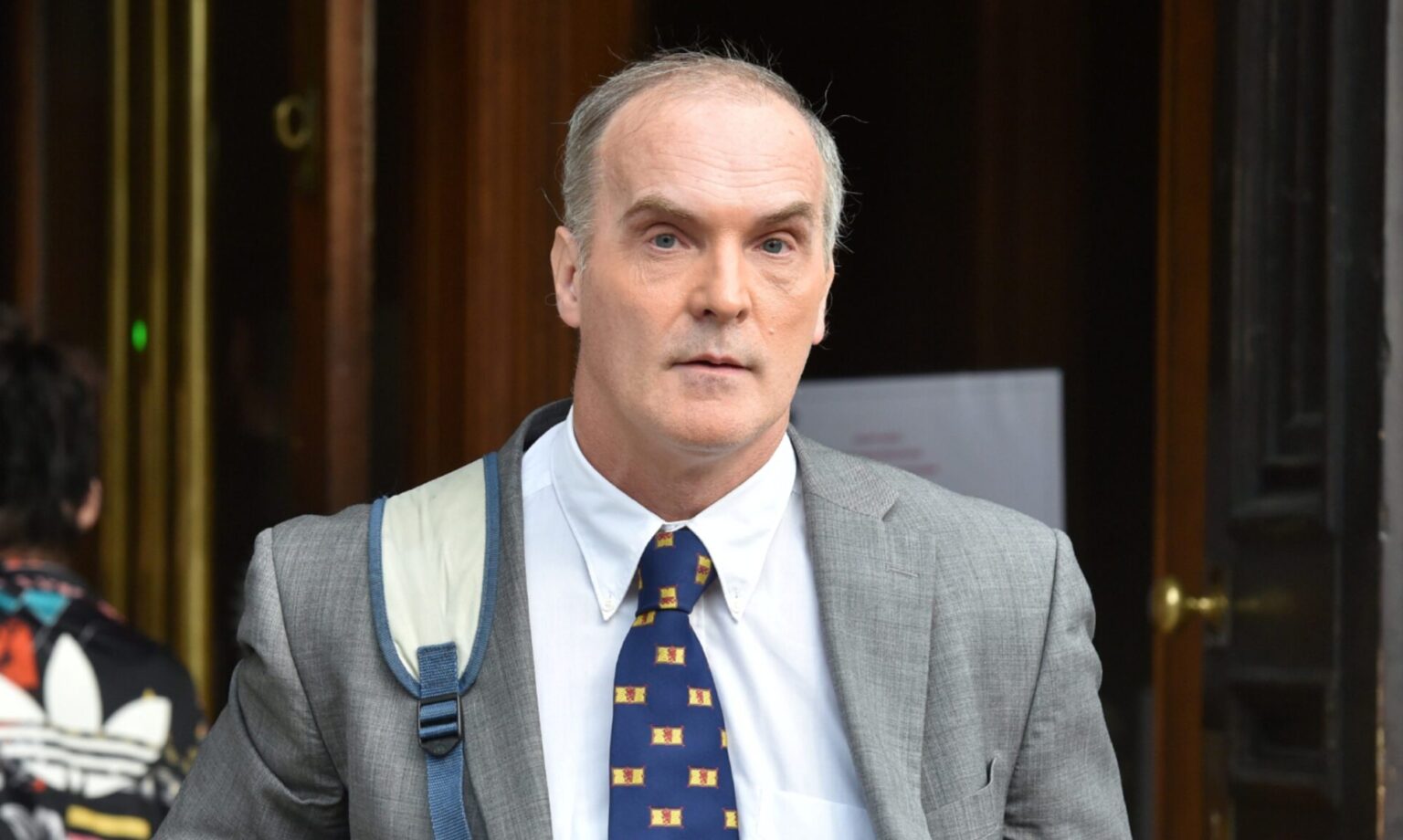
As his granite jaw attests, Aberdeen-born Mr Carns, 45, was a Royal Marine through and through. After joining in 1999, he was soon in the thick of the action.
Mentioned in despatches and, in 2011, awarded the Military Cross (both for “gallant and distinguished services in Afghanistan”), Mr Carns later received the Distinguished Service Order for outstanding command on active operations. He was awarded an OBE by the late Elizabeth II and climbed Mount Everest this year as part of a team of former special forces members trialling the use of xenon gas to speed up altitude acclimatisation.
Turning down a promotion to brigadier, Mr Carns was elected as the Labour MP for Birmingham Selly Oak on July 4, 2024. Five days later he was made Minister for Veterans and People in the Ministry of Defence, that shocked some members of the Parliamentary Labour Party.
His meteoric rise continued when, in September this year, he was appointed Minister for the Armed Forces.
An imposing figure, tall and rangy, with close-cropped snow white hair, we meet in the corporate anonymity of the MoD media suite. He is no-nonsense and straight to business. Ready? “Go for it,” he growls.
How did he feel when his name was touted as a possible future labour leader? “You’ve got to follow before you can lead,” he says, cryptically. “I’ve been in politics for a year and a half, my job is to focus on my portfolio, which is operations and policy during this very fragile geostrategic moment in time, and support the Prime Minister’s delivery of his aims.”
Even so, he dodges a question about his political ambition topping out in the MoD. “I wouldn’t believe everything you read in the news,” he says instead. “There’s lots of myths and lies and false information that goes around.”
Public ‘don’t recognise’ military threats to UK
On the threats facing this country, there is no such ambiguity. He explains the newly created Military Intelligence Service, a successor to the hugely powerful but little-recognised Defence Intelligence arm of the MoD.
“For too long people haven’t recognised that the military threats that we face on an international basis, if they materialise, can have the biggest impact on our citizens and our way of life,” he says.
“Everyone’s heard about MI5; Military Intelligence Five. We created it. MI6; Military Intelligence Six. We’re now recreating the Military Intelligence Service to thicken out our intelligence capacity and capability, and ensure that those threats that are brewing out there are focused on and dealt with, but secondly, that we can make sure that they are relatable to the population as well, so the public clearly understands some of the impacts of what’s happening overseas.”
His crosshairs land on cyber attacks, which he says are “costing us millions of pounds every day”.
“The cyber attack on Jaguar Land Rover, while not attributable at the moment, has cost half of the two-child benefit cap for a year, which is 225,000 children remaining in poverty,” he says. “That’s the harsh reality and I think we need to make a conscious effort so people understand what that means in realistic terms, to acknowledge that we’ve got to invest in defence.
“We’ve got to make sure defence is a whole-of-society approach and everyone knows their role, should a crisis reach our shores.”
Reform bribery case is ‘absolutely bananas’
The source of many crises right now is Russia, he says, making it clear where he thinks the Kremlin’s “useful idiots” in the UK can be found.
He trains his sights on Nathan Gill, the former leader of Reform in Wales who was sentenced to 10 and a half years in jail, having pleaded guilty to eight counts of bribery to support a pro-Russian influence campaign in the European Parliament.
“This individual in Reform just got 10 and a half years in prison for taking money from Russia. It’s absolutely bananas. He was part of their party... taking money from a hostile state that has resulted in a thousand casualties a day and a million casualties in Russia. You [can] see the resulting economic impact on the whole of Europe.
“Reform should run an internal investigation because we can’t allow other hostile states to meddle in UK politics as a democracy.
“How many times has Nigel Farage been on Russia Today [the state-controlled news network funded by the Russian government]? When this conflict started, who did he blame for it? Talk about geostrategic risk. This is time for serious politics. Serious government, a serious time of crisis across Europe and the world, and we’re talking about an individual who was on Russia Today and blames Nato for Russia’s illegal invasion into Ukraine – that saw women and children being attacked in a western European nation.”
Personal and institutional integrity feature often as he talks. Addressing the ongoing inquiry into alleged unlawful activity by the UK’s special forces in Afghanistan, he professes “complete faith in the very tip of the spear”, describing special forces as “some of the crown jewels of our organisation”.
“Of course we abide by the law like everyone else, I’m not going to ever shy away from that, [but] I have a 100 per cent faith in our special forces’ capability,” he says.
He is similarly determined to support the Northern Ireland Office as it deals with legacy issues from the Troubles.
“The military kept facts, files and details on all the cases,” he says. “The IRA, of course, didn’t. The Legacy Commission has the most powers, the best powers, the most effective powers to get to the truth.
“The Northern Ireland office has been clear that the ongoing inquests [started under the previous Conservative government] will be reopened. We’ve been clear with that; seven inquests will be reopened. I’m working hard to ensure that protections are in place. It takes up a large chunk of my portfolio to make sure those protections are solidly written into legislation, so there’s no ability for people to use the process as a punishment or [to] rewrite history through the courts.
“My focus is on this... to ensure veterans get the protections they require and the families of lost loved ones get truth and reconciliation where they can. And the best way to do that is in the Legacy Commission.”
Stakeknife identity is secret for good reason
Transparency has limits though. The release this week of the 164-page report into the activities of Stakeknife, Britain’s top agent inside the IRA, says he was implicated in 14 murders while the security services shielded him. The British government has never confirmed the individual’s identity, even though it is widely speculated. Mr Carns sees no reason for that to change.
“Our intelligence agencies have networks within networks and networks,” he says. “If you release details, even if it was 20, 30 years ago, of people who have worked to protect freedom and democracy around the world, that will ripple across all of that network and put them off helping us. Some things need to stay within the non-disclosure space.”
[Source: Daily Telegraph]





/file/attachments/orphans/ED_543155_209242.jpg)