

/file/attachments/orphans/Nonku-Nombasa-Mapisa3_550805.jpg)






















How Iran’s ‘horizontal warfare’ could trap Trump in another Vietnam
Widening the conflict is a classic tactic for outgunned combatants, and has cost the US dearly in the past
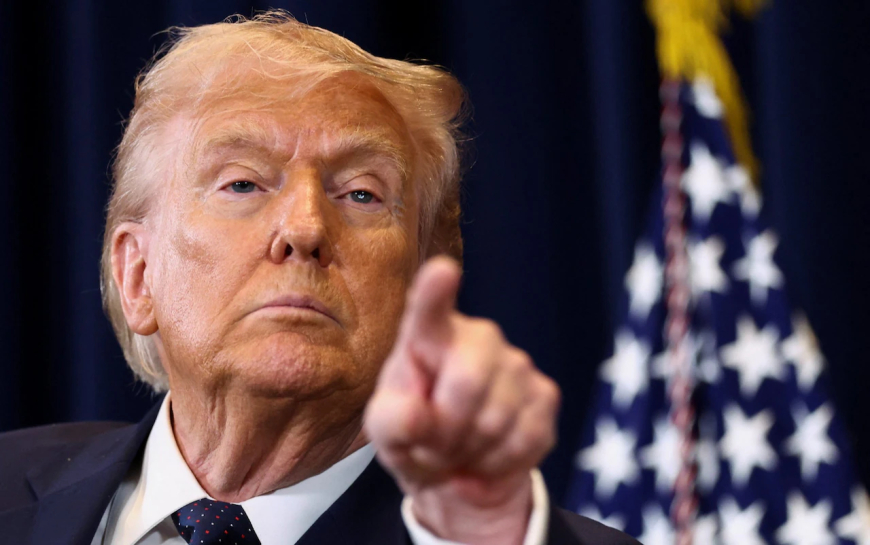
On Monday, Donald Trump said the war on Iran was “very complete”.
On Tuesday, Pete Hegseth, his secretary of defence, said Iran would face “the most intense day of strikes” yet in Operation Epic Fury.
If the messaging seems confused, it may be because the US – and to a lesser extent Israel – has found itself caught in a classic military trap. By relying on overwhelming firepower, they have been suckered into what could yet prove to be another Vietnam.
There, the US won every battle over 11 bloody years, but famously lost the war.
This was despite it, as now, having complete air superiority, and quickly destroying most of the crucial military and industrial infrastructure on which the enemy was thought to rely.
By escalating the Vietnam War “horizontally” into the towns and cities in the south on their own terms, the North Vietnamese and Vietcong forces outmanoeuvred the US.
Tehran also has little chance of defeating the US military, but escalation may again favour the enemy, according to Prof Robert Pape, director of the University of Chicago Project on Security and Threats, and the author ofBombing to Win: Air Power and Coercion in War.
“Horizontal escalation occurs when a state widens the geographic and political scope of a conflict rather than intensifying it vertically in a single theatre,” he says in an essay published in Foreign Affairs, the journal of the US Council on Foreign Relations.
“It is especially appealing as a strategy for the weaker parties in a military contest. Instead of trying to defeat a stronger adversary head-on, the weaker side multiplies arenas of risk – drawing additional states, economic sectors, and domestic publics into the remit of the conflict”.
Tehran bids to ‘transform the stakes’
This is what Iran is now doing in the Middle East.
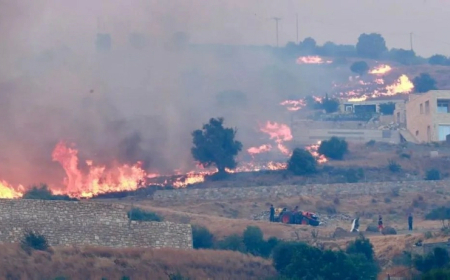
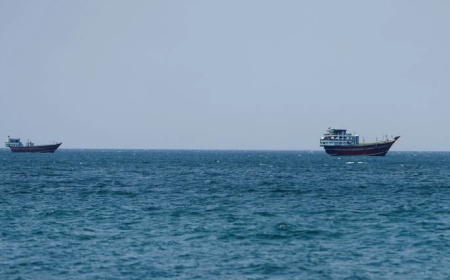
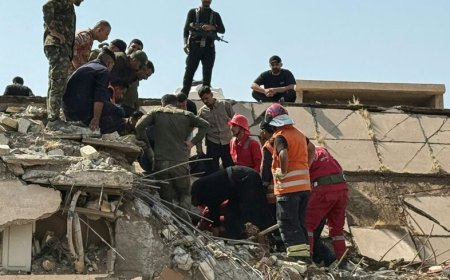
The Iranian missile and drone barrages that have hit gas, oil, water, air, shipping and tourism infrastructure across the Gulf and beyond are not “acts of scattered retaliation, the flailing lashing out of a dying regime”, says Prof Pape. Rather they are part of a deliberate strategy; “a bid to transform the stakes of a conflict by widening its scope and extending its duration”.
The objective is to gain the upper hand politically by causing voters, investors and US allies in the region and beyond to rethink their support – tacit or otherwise – for the US-Israeli offensive, and force Mr Trump back to the negotiating table.
“Horizontal escalation presses on the soft seams between governments and their societies,” says Prof Pape.
Nowhere is this more evident than in the Gulf where the autocracies of Saudi Arabia, the United Arab Emirates, Qatar, Bahrain and Oman have long feared exactly the sort of uprising that toppled the US-backed Shah of Iran in 1979 and ushered in the Islamic Republic.
By bombing a broad range of civilian infrastructure in these countries, Iran is not just causing physical, economic and human damage, but pressuring those regimes to rethink their relations with Israel and America lest they face popular discontent.
According to Jonny Gannon, a recently retired CIA officer, Gulf states are also spending around $28 on defence for every dollar Iran spends on its offensive arsenal.
That is why Iran’s president apologised to “neighbouring countries” on Saturday even as its missiles and drones continued to target them. The message was directed at those countries’ citizens, not to their rulers who, in Iran’s view, are betraying them.
“The longer the conflict continues, the harder it becomes for rulers to sustain that partnership with Israel [and the US] without sacrificing legitimacy at home,” writes Prof Pape.
Burcu Ozcelik, a Middle East security expert at Britain’s Royal United Services Institute, told AFP: “Iran’s strategy is to create pressure on Washington, DC by angering the Gulf and by creating upward trends in the price of oil, gas and other commodities.”
Even before the US-Israeli strikes started on March 2, the Gulf states, with the possible but unconfirmed exception of Saudi Arabia, were urgently trying to get Mr Trump to do a deal with Iran rather than resorting to war.
The same is true of the UK and America’s allies in Europe, Turkey, Iraq and even Lebanon.
With energy prices soaring and inflation already feeding through to the price of fuel and high street commodities, those countries, like the Gulf states, are coming under mounting political pressure to either rein in President Trump or distance themselves from him.
It may be a quirk of history but it may be informative that Iran is the only major conflict since Vietnam in which the UK has not teamed up with the US from the outset.
“Horizontal escalation is not simply about hitting a wider array of targets. Its deeper effect is to change how a foe perceives risks,” says Prof Pape.
“By widening the theatre and prolonging the war, Tehran is shifting the contest from a battle of military capabilities to one of political endurance.”
How Mr Trump can exit the escalation spiral the US-Israeli strikes started 11 days ago is not clear, but it is now his major challenge.
A prolonged conflict threatens to undermine US alliances, not to mention his polling at home, where Americans are already paying more at the fuel pumps.
A majority say they oppose the war.
“Tehran is trying to raise the cost of escalation until Washington starts looking for an exit ramp,” said Ali Vaez, an Iran expert at the International Crisis Group.
On Monday with oil prices rising into triple figures, Mr Trump forced an agreement in principle to release international emergency oil reserves – a device which buys him time but only by kicking the can (and costs) down the road.
He also implied on Monday that the war would soon be over, but that is not the view in Israel, where the administration’s interests are not wholly aligned with those of the US.
Benjamin Netanyahu – whose star shines brightest at home when surrounding Arab states are struggling – said his military offensive against Iran was “not done yet” and continued to call for regime change in Tehran.
But it is Iran that Mr Trump needs to worry about most.
Mojtaba Khamenei, its new hardline leader, has seen his father, wife and children killed in recent days, and appears in no mood to compromise.
The chaos his forces have unleashed in global markets and geo-political alliances in recent days may only embolden him – not least now he has been given formal backing by both Russia and China.
“From Iran’s perspective, the goal of this war is to maximise its gains and ‘imprint’ in the minds of its adversaries the costs of fighting Iran in the future,” said Danny Citrinowicz, of Israel’s Institute for National Security Studies.
On Tuesday, Abbas Araghchi, Iran’s foreign minister, mocked the US military intervention in the Middle East, rebranding Operation Epic Fury as Operation Epic Mistake on social media.
Worse, the Iranian Revolutionary Guard Corps, whose units have been decentralised and given free reign to take the war to America as they see fit, added: “We are the ones who will determine the end of the war.”
[Source: Daily Telegraph]






/file/attachments/orphans/ED_543155_209242.jpg)
