






















The Economist names Syria “Country of the Year 2025”
The Economist has chosen Syria as its “Country of the Year 2025”, as part of its annual tradition that focuses on the country that has seen the greatest improvement over the year.

Syria was selected in the issue published on Thursday, 18 December, based on the political progress the country has witnessed after years of war and dictatorship, following the overthrow of Bashar al-Assad’s regime.
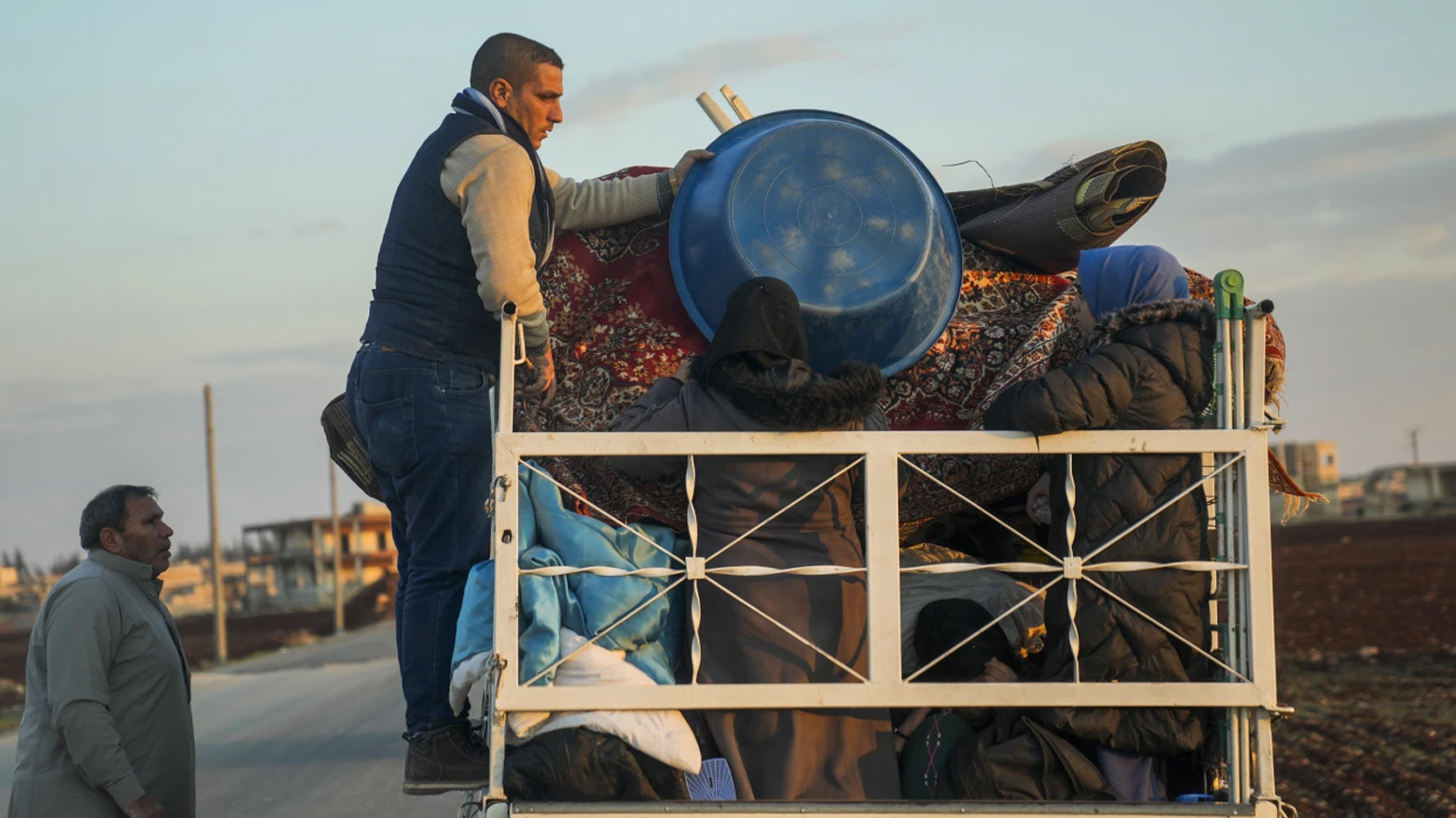
The war in Syria, which lasted for more than 13 years, claimed the lives of more than half a million people, according to the magazine. During that time, the deposed Assad forces used chemical weapons and barrel bombs indiscriminately against civilians, and more than six million people fled the country.
The “tyrant”, as the magazine describes Bashar al-Assad, was forced to flee on 8 December 2024 after the opposition seized power.
The Economist explained that when it chose last year’s “Country of the Year”, it was too early to form a clear picture of the new Syria ruled by Ahmad al-Sharaa, whom the magazine describes as a “former jihadist”. Many feared he would impose a hard-line Islamist regime, or that Syria would slide into chaos.
“In fact, none of that happened,” the magazine wrote. “Women are not required to cover their bodies or stay at home, entertainment is allowed, and certainly the consumption of alcohol.” It noted that Syria’s transitional president has delivered a series of positive surprises, preserving the unity of the country and building good relations with the United States and Gulf states. As Western sanctions have eased, the economy has also begun to recover.
The magazine pointed out that Syria still faces serious challenges, including what “local militias” committed, namely “two massacres against minorities” in reference to the coastal region and Suwayda (southern Syria), which left around 2,000 people dead. It said that the continuation of al-Sharaa’s rule in a tribal style in a “fragile” country risks making matters worse.
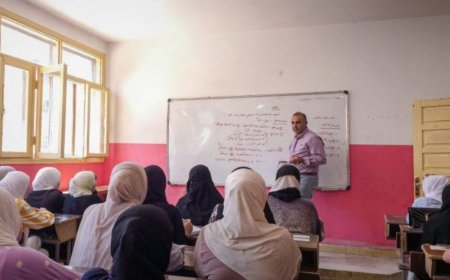
Nevertheless, The Economist described Syria in 2025 as significantly happier and more peaceful than it was in 2024, saying that fear no longer dominates everyone. “Life is not easy, but it is fairly normal for most people,” it wrote, noting that about three million Syrians have returned home and “voted with their feet”. The article concludes, “We too choose Syria.”
Global context, challenges for other states
Syria’s selection comes against the backdrop of a turbulent global year, in which US President Donald Trump disrupted global trade and devastating conflicts ravaged places such as Gaza and Sudan, according to the magazine.
Despite this, several countries managed to overcome their difficulties, such as Canada, which chose a sober technocratic prime minister, and Moldova, where voters rejected a pro-Russian party, while Trump brokered a fragile truce between Israel and the Palestinians.
South Korea also recovered from a serious threat to its democracy, after President Yoon Suk Yeol tried to impose martial law and shut down parliament. Parliament, institutions, and mass protests prevented this, and the former president was tried and convicted of incitement to insurrection.
Brazil was another example of institutions standing firm against coups, as a court sentenced former president Jair Bolsonaro to 27 years in prison for attempting to overturn the system after losing the 2022 election. The government succeeded in reducing deforestation in the Amazon, although its record has been tarnished by a foreign policy seen as too friendly toward the Kremlin.
Argentina is the main competitor
Syria’s main rival was Argentina, which had been named “Country of the Year 2024” after posting a remarkable economic improvement thanks to sweeping free market reforms launched in 2023 by President Javier Milei. These included lifting price controls, curbing public spending, and phasing out distortionary subsidies, backed by 20 billion US dollars in American assistance.
These measures helped bring inflation down from 211 percent in 2023 to around 30 percent in 2025, while the poverty rate fell by 21 percentage points and the fiscal deficit was brought under control.
Although the Argentine experiment faces risks from the possible return of old political forces or potential scandals, the continuation of reforms could change the country’s economic trajectory and offer hope to reformers around the world.
The Economist was founded in London in 1843 and is one of the world’s leading economic and political magazines.
One of its most notable annual traditions is the selection of a “Country of the Year”, an event closely watched by readers and analysts alike. It highlights the state that has recorded the greatest improvement across various dimensions, including economic, political, and social progress, rather than simply naming the happiest or most powerful country.
This tradition offers readers a chance to reflect on successes and reforms that may serve as models for other countries.
[Source: Enab Baladi English]