





















Saints Spotlight: Professor Ifor Samuel
In this month’s Saints Spotlight, Professor Ifor Samuel of the School of Physics and Astronomy discusses the Organic Semiconductor Centre that he founded at the University of St Andrews in 2001, and his team’s recent breakthrough – creating a new type of laser. Ifor recently received the Thomas Young Prize for his world-leading research into OLEDs, organic lasers and their applications in technology and medicine.
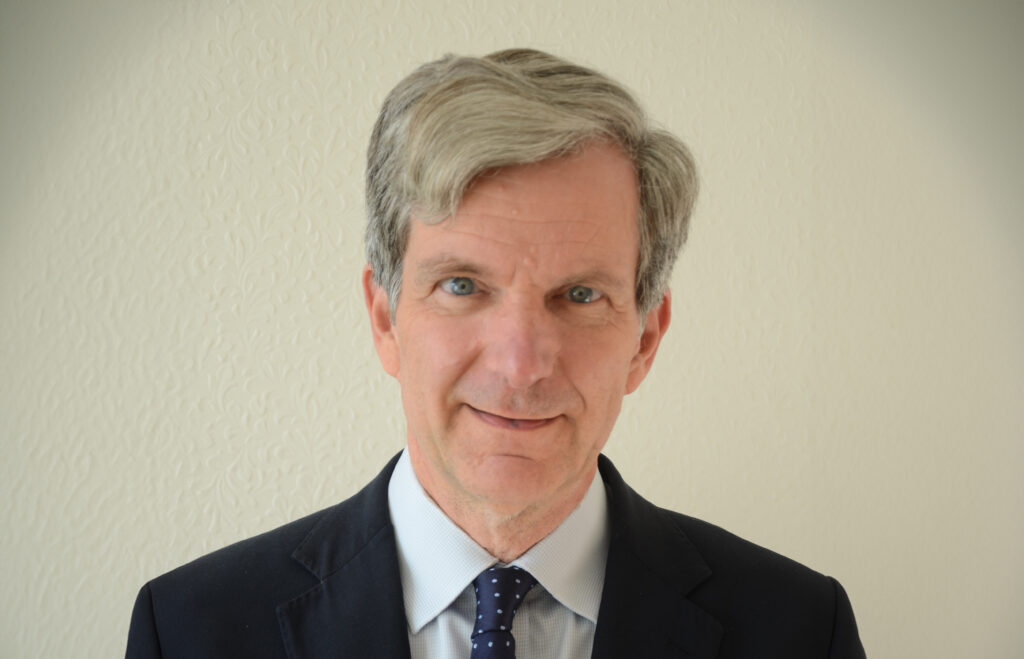
How did your St Andrews story start?
I completed my undergraduate degree and PhD at the University of Cambridge, then moved to the University of Durham as a lecturer and Royal Society University Research Fellow. I set up research on organic light-emitting diodes at Durham, and it was going very well. After four years, I was approached about the possibility of moving to the University of St Andrews.
Although my wife, Vanessa, was eight months pregnant at the time, we came to visit on the day of the solar eclipse in 1999. We were very impressed by the quality of the department and the University as a whole, the beauty of the town and the warmth of the welcome we received. Following a formal interview process, I accepted the position of Professor at St Andrews, and moved with my family and research group the following year. The University was very attractive to me because of its leadership in lasers and photonics – the science of light. The small size of St Andrews is also helpful for developing interdisciplinary research.
What are your current priorities at the University?
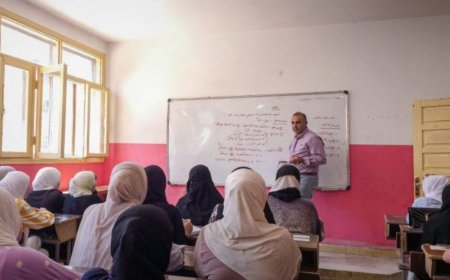
I lead a resourceful team of researchers in the School of Physics and Astronomy, as well as leading the Organic Semiconductor Centre, which brings together interested researchers from across the University. I like to teach, and whenever possible I include lots of demonstrations in my lectures. Occasionally, I cross the world, bump into a former student, and they mention one of these demonstrations.
What is the focus of your research at St Andrews?
I work on the physics of materials – in particular, organic (carbon-based) semiconductors. Most semiconductors are made from rigid, brittle materials such as silicone which are grown as single crystals at high temperatures. In contrast, our materials are simple to make at low temperatures and are flexible. They provide a whole new world of semiconductors to explore and can emit red, green or blue light. They can be used to make organic light-emitting diodes, solar cells and lasers.
On the fundamental side, we develop measurements to understand and improve the materials, while also exploring applications in communications, medicine and energy. I worked with Ninewells Hospital in Dundee to create light-emitting bandages to treat many skin cancers, and I am now exploring the possibilities of killing bacteria with these bandages. A new aspect is exploring whether organic semiconductors can provide a more sustainable path to electronics.
Tell us about your proudest achievement.
My team recently created a new type of laser – an electrically driven polymer laser. This has been one of the biggest challenges in my field for the past 30 years. We had organic light-emitting diodes, transistors and solar cells, but the electrically driven laser was missing. There were organic lasers, but they needed another laser to excite them. It was a very difficult problem, and I was convinced we needed to take a different approach from the rest of the world. So, we created the world’s brightest OLED and then built a laser on top of it. The result was my first Nature paper at St Andrews, and it has attracted a lot of attention.
Where is your favourite spot in St Andrews?
I particularly like the walk from the Castle to the Harbour as it goes between the Cathedral and the sea.
[Source: University of St Andrews]