






















A rights report calls on the Syrian government for comprehensive accountability for violations
Human Rights Watch said the Syrian government took initial steps in 2025 to advance justice and accountability for crimes and violations committed under the former regime, stressing that accountability must be comprehensive and cover abuses committed by all parties.

In a report issued Wednesday, February 4, the organization said Syrian authorities have established new state bodies focused on transitional justice and on uncovering the fate of thousands of missing people in Syria. However, despite pledges to hold perpetrators accountable for identity-based violence and killings attributed to government forces in March and July 2025, the authorities have provided little transparency about the role of senior officials and commanders.
Adam Coogle, deputy Middle East director at Human Rights Watch, said the new Syrian authorities have made justice and accountability a priority, but these efforts cannot be selective or one-sided.
He said that for Syria to enter a new era that respects rights, authorities must ensure comprehensive accountability for violations committed by all parties before and after December 2024. They should not limit scrutiny to individual crimes, but also examine institutional responsibility.
The report said the Constitutional Declaration issued in March 2025 affirms the independence of the judiciary, but the government must provide the essential legal and institutional frameworks needed to prosecute grave international crimes and address command responsibility.
It added that government authorities met with civil society organizations on accountability and included several justice experts in national committees tasked with this work. Still, it said authorities should clarify how victims and stakeholders will be meaningfully involved in shaping and participating in accountability processes.
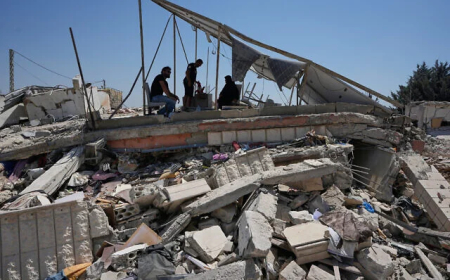
The report also said the deployment of government forces in 2025 in response to attacks and armed violence in Latakia, Tartus, and Hama governorates in March, and in Suwayda governorate in July, led to a wave of identity-based violence in those areas.
While Syrian authorities conducted credible investigations into these incidents, they provided little transparency about the role of senior military or civilian commanders or how the government will hold those in leadership positions accountable, the report said.
In 2025, the United States and the European Union lifted long-standing sanctions on Syria, a step Human Rights Watch described as crucial to improving Syrians’ access to basic social and economic rights and to rebuilding a country devastated by years of bitter conflict.
However, more than 90% of Syrians live below the poverty line. More than half struggle to secure enough food and need aid.
Human Rights Watch called on the Syrian government to protect the basic rights of all Syrians through new legislation and institutions, ensure that international human rights standards guide all justice efforts, and ratify and implement international human rights instruments and treaties. It also urged Syria to join the Rome Statute of the International Criminal Court and to submit a declaration granting the court jurisdiction over past crimes.
The authorities should also strengthen cooperation with international accountability mechanisms, including UN mechanisms, and allow them access. The report also called for security reforms, including removing fighters responsible for abuses from the security forces, and imposing clear command structures and codes of conduct.
Government and local actors are responsible for the Suwayda violations
Human Rights Watch previously said in a separate report that Syrian government forces, local Bedouin armed groups, and local Druze groups were responsible for serious violations during clashes in Suwayda governorate in July 2025, placing responsibility on the government in the absence of accountability.
In that report, published January 15, the organization documented 86 alleged unlawful killings, including 67 Druze civilians and 19 Bedouin civilians.
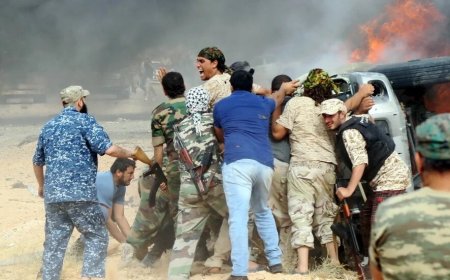
It also verified seven incidents of summary executions between July 14 and 19, 2025, in which government forces and affiliated militias killed at least 54 Druze civilians, including children. Many of these killings occurred inside or near the victims’ homes.
Suwayda events
The Suwayda events began on July 12, 2025, following reciprocal kidnappings between residents of al-Maqous neighborhood, which has a Bedouin majority, and members of the Druze community. The situation escalated the next day into armed clashes.
The Syrian government intervened on July 14 to end the conflict, but its intervention was accompanied by violations against Druze civilians, prompting local factions to respond, including groups that had previously cooperated with the Defense and Interior ministries.
On July 16, government forces withdrew from Suwayda after being hit by Israeli strikes. Violations and retaliatory acts against Bedouin residents in the governorate followed.
These developments led to the dispatch of armed convoys described as tribal mobilizations to support them.
Afterward, the Syrian government and Israel reached an agreement, mediated by the United States, to halt military operations.
Coastal events
The coastal events erupted on March 6, 2025, following movements by elements of the former regime’s army that targeted General Security personnel in the Latakia countryside (western Syria).
Widespread violations against civilians followed, leading to the killing of hundreds on the basis of sectarian affiliation.
[Source: Enab Baladi English]