
































Rolls race: The German plot to woo Britain’s engineering champion
Berlin mounts a charm offensive to secure work on next-generation jet technology

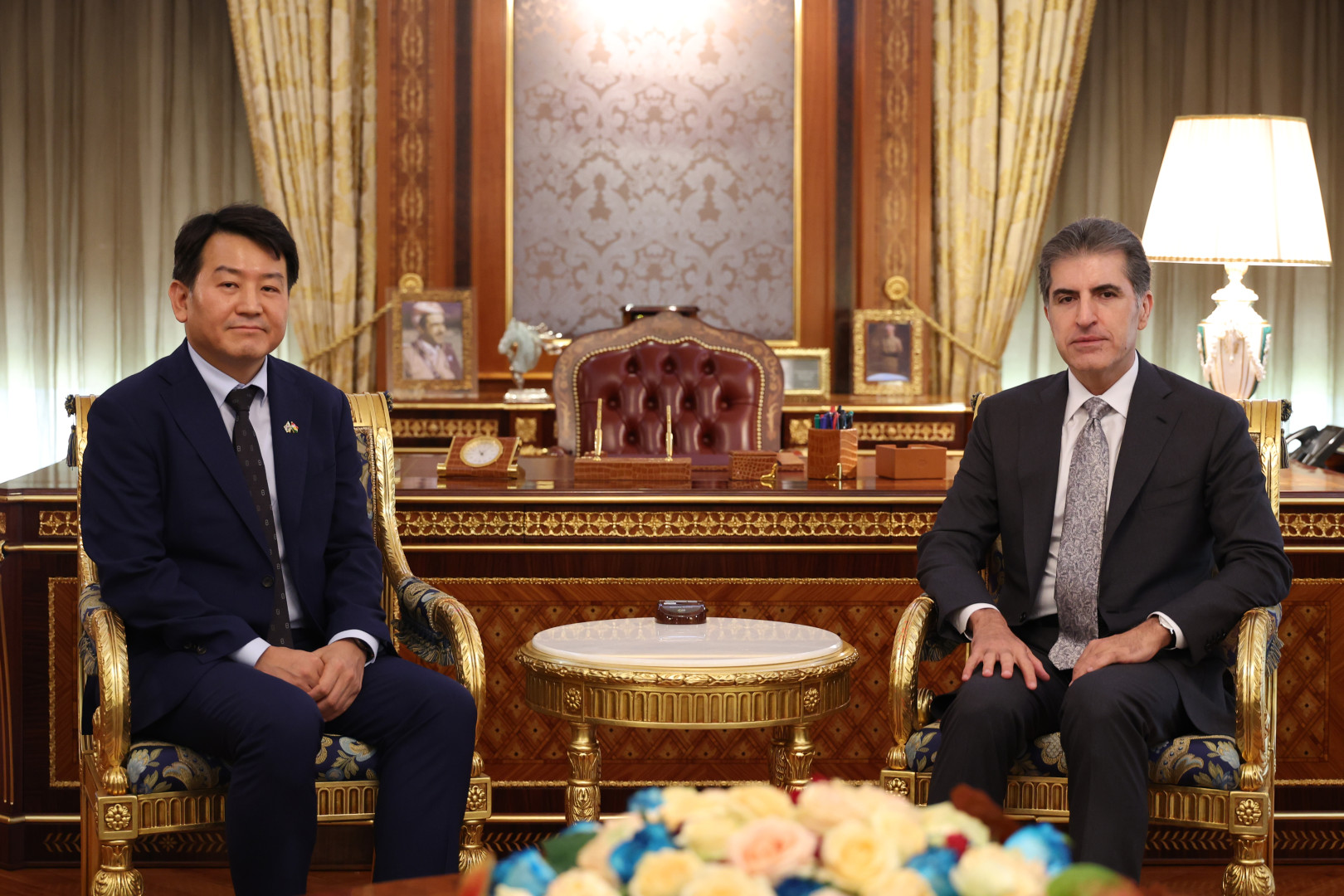
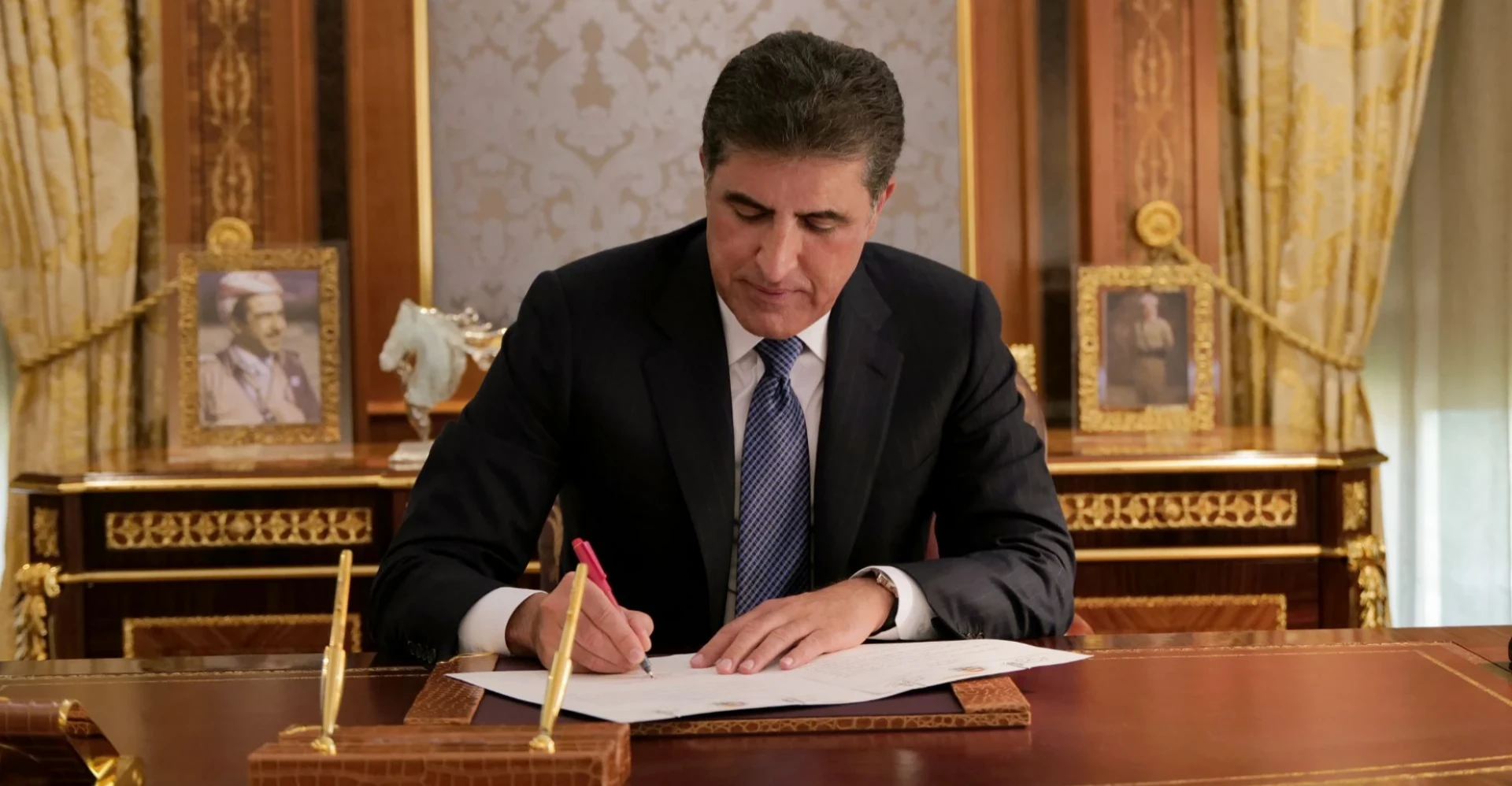
Sitting in front of an enormous prototype jet engine, a German minister beams at the camera as he signs a cooperation deal with two top Rolls-Royce executives.
“With this, both sides commit to actively shape the transformation of aviation,” a social media post boasted gleefully afterwards.
Dietmar Woidke, the president of the German state of Brandenburg, had every reason to feel cheerful at November’s signing ceremony.
In the past decade alone, his state has attracted hundreds of millions of pounds in investment from Rolls and positioned itself as a “centre of excellence” for small-business jet engines.
Now it is jockeying for an even bigger prize – and a chance to swipe some of Britain’s industrial crown jewels.
In recent months, German officials have mounted a charm offensive to secure more work related to Rolls’ next-generation jet engine, the UltraFan.
Rolls-Royce Dahlewitz hub, outside Berlin, has already played a key role in developing what is arguably the new turbofan’s key innovation: its gearbox.
But the Germans are understood to be pushing hard for Dahlewitz to play an even larger role in the future, based on an offer of potentially generous subsidies.
The timing of these lobbying efforts is not coincidental either, coming as Berlin scrambles to defend itself from an avalanche of Chinese cars that threaten to crush Germany’s once-unstoppable motor industry.
Worryingly for Sir Keir Starmer, Rolls appears to be listening.
While the company is understood to favour keeping development in Britain, insiders insist it is duty-bound to consider all options – particularly as it is accountable to shareholders, not the Labour Government in London.
One well-placed industry source said: “The Germans are already involved in UltraFan. The only question now is what they do beyond that.”
Such a loss of investment by the company, widely regarded as a national champion, would deal a serious blow to Starmer’s industrial strategy and risk the loss of valuable know-how to foreign factories.
“It’s a very sensible thing for Rolls-Royce to consider – and potentially very bad for the UK,” warns Rian Whitton, an industry analyst at Bismarck Analysis.
The German advances have come at a critical moment, just as Rolls is considering a return to the fast-growing market for “narrow-body” planes, which have a single aisle and are used by carriers such as Ryanair for short-haul flights.
Rolls-Royce stopped producing narrowbody engines more than a decade ago. Embarrassingly, this meant the company completely missed a boom in demand for best-selling aircraft such as the Boeing 737 and Airbus A320.
But the company’s UltraFan demonstrator offers a route back in, thanks to the engine’s scalability.
Under the leadership of Tufan Erginbilgic, the company is preparing to spend £3bn on developing a narrowbody UltraFan demonstrator.
Rolls is understood to be seeking hundreds of millions of pounds in subsidies for the programme and has raised the issue at the highest levels of Government.
Sir Keir Starmer and Rachel Reeves, the Chancellor, have visited the company’s Derby headquarters multiple times and used its factory as a backdrop for major announcements.
UltraFan could be a game-changer for several reasons, including improving overall efficiency by around 10pc compared to today’s engines. Engineers believe the design can be scaled up or down, meaning it could be used to power both narrow and so-called “wide-body” aircraft, which have two aisles between the seats.
Insiders acknowledge that the technology improvements also have clear potential applications in defence, such as increasing the capacity or flight time of air tankers, or enabling more compact fighter jet engines.
At a time of global instability and questions about the reliability of the US, such sovereign capabilities are seen as increasingly important.
Still, Germany has already played a crucial role in the development of the first UltraFan demonstrator.
Dahlewitz engineers co-created the power gearbox in a joint venture with domestic company Aerospace Transmission Technologies.
At the same time, Dahlewitz is where Rolls develops and manufactures the Pearl range of business jet engines and is developing new, even smaller engines for “loyal wingman” drones.
However, state and federal government officials are urging Rolls to consider assigning the German site a role in other parts of UltraFan as well.
That would be controversial in Britain, with sites such as Derby currently responsible for designing and developing sections, including the fans, core and combustion chamber.
Within these specialisms lie some of the most valuable and closely guarded secrets in the British aerospace industry.
Jobs in this field are also high-value and distributed geographically across the UK, with any loss of production to foreign factories likely to be politically controversial.
“These jobs are a relatively small component of overall employment, but they are disproportionately high productivity,” Bismarck’s Whitton adds.
“They are important to exports and research and development spending, so they should arguably be prioritised over measures that just increase employment more generally.”
‘Aviation is becoming an important offset’
But Germany is equally desperate to pull them in, as its traditional strongholds are increasingly threatened by a flood of cheap goods from China, says Sander Tordoir, chief economist at the Centre for European Reform.
“German chemicals and carmaking, which is still Germany’s most important industry, are really in deep trouble,” he says.
“So aviation is becoming an important offset – it’s a sector that’s actually growing.”
According to the German Aerospace Industries Association, the number of aerospace jobs rose to 120,000 in 2024, up from around 105,000 a decade earlier.
The country’s aviation industry has long been anchored by Airbus, which conducts final assembly of some aircraft there and also manufactures fuselage sections, cabins, and wing parts domestically.
Germany is also home to Rolls-Royce’s power systems business, which manufactures diesel and gas generators, as well as engines for ships and trains, among other things.
But the country currently lacks a champion capable of making complete commercial jet engines – a weakness that has left it exposed in a row with France over who will get to make what for a next-generation warplane.
This might also partially explain why German officials are so keen to build up this particular muscle, along with the threat from China and the high value of aviation jobs, says Tordoir.
“Airbus is a German-British-French-Spanish collaboration and has done very well. But of course, that’s not how politicians will think of it in the short run,” he adds.
Certainly, some alarm bells should be ringing in Whitehall, according to Bismarck’s Whitton.
But he questions whether ministers and their officials are prepared to act, despite Rolls having recently secured substantial work funded by UK taxpayers.
Rolls was recently chosen by the Government to design the country’s first mini nuclear power plants and has separately won orders for specialist military reactors that will be needed for the Royal Navy’s Dreadnought and Aukus-class submarines.
But in some ways, the fact that Rolls is the sole supplier of some of these technologies gives the Government less leverage in the dispute, not more.
There is also little cash available for handouts, given the constrained state of public finances, whereas in Germany, the government is committing significant spending to defence and infrastructure.
“I think in France, this just wouldn’t happen,” says Whitton. “In part because [national aviation champion] Dassault is family-run and has significant state ownership.
“But unfortunately, Whitehall does not have a tremendously strong hand to play here.
“We talk about Rolls-Royce as a British crown jewel, but that’s got to be heavily caveated. Today it is a fairly globalised, export-led, publicly traded company that does not have a primary loyalty to the British state.”
Still, he argues ministers should fight hard to keep these jobs here.
“They need to have a tough conversation with them,” he says.
The Government has so far attempted to dismiss such concerns. A spokesman said the UK has one of the most competitive aerospace sectors in the world and that it values “the role Rolls-Royce continues to play, supporting thousands of high-quality, high-wage jobs”.
Yet with Germany on Britain’s tail, ministers may soon wish they had paid more attention.
A Rolls-Royce spokesman said the company had a “long-standing relationship with the State of Brandenburg” and looked forward to “building on our successful collaboration in the future”.
[Source: Daily Telegraph]