






/file/attachments/orphans/ED_543155_209242.jpg)




























‘It’s more exciting than Tesco’: can traditional fishing lure Cornwall’s young people?
Taster days and training are offering teenagers an escape from a future of part-time, seasonal work – and giving a boost to a declining industry
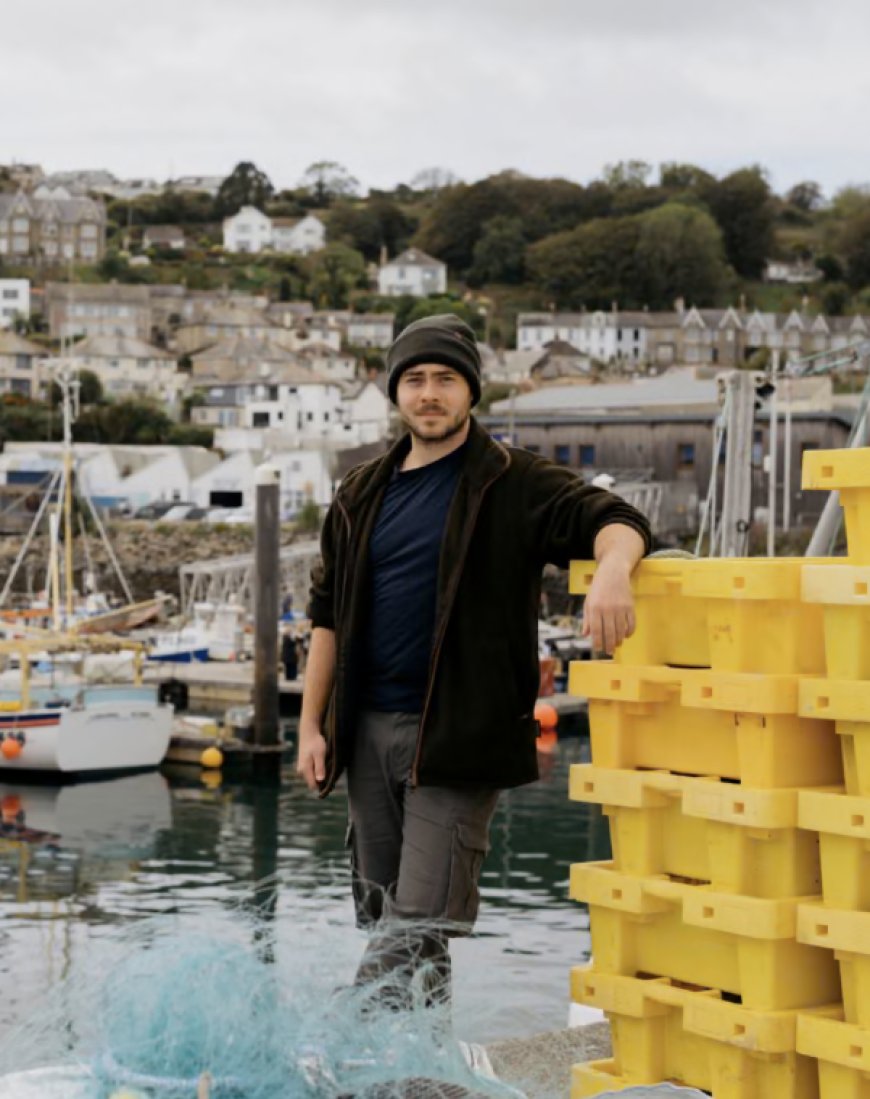
It’s mid-morning on a rare calm day in Newlyn, Cornwall. Will Roberts is back at the quayside with a catch of mackerel to unload, having set off from the harbour before dawn. At 22, he is something of a rarity here, one of a handful of young fishers running his own small commercial boat from the port.
“It’s a magical feeling when you set out in the dark, with no one else around, and see the Milky Way in the sky above you,” he says. “I couldn’t imagine working in an office or somewhere indoors, and not be surrounded by all of this.”
Potential recruits learn more about career opportunities at sea at a taster day for young people in Newlyn
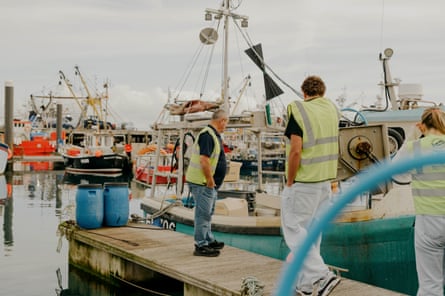
Watching Roberts climb up the quay wall to land his catch is a group of potential new young recruits keen to learn more about career opportunities at sea. They are here as part of a taster day run by Seafood Cornwall Training and the Cornwall Fish Producers’ Organisation (CFPO), with the aim of encouraging young people into fishing.
Cornwall has high levels of self-employed, part-time work, much of it tourism related, meaning many young people’s job options are often poorly paid and insecure. Fishing is one of the anchors of Cornwall’s year-round economy, worth £130m and responsible for 7,800 jobs across the supply chain, according to a report by the CFPO. Every fisher out at sea supports another 15 jobs onshore, from wholesalers to chefs dishing up the catch of the day.
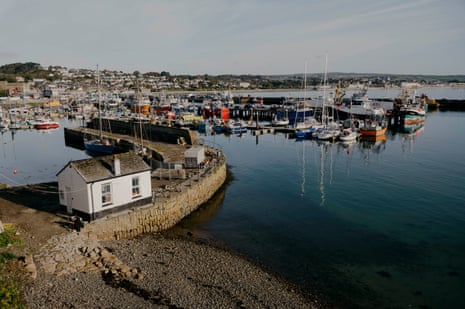
Newlyn’s harbour – fishing plays a large part in Cornwall’s year-round economy, worth £130m and responsible for 7,800 jobs across the supply chain
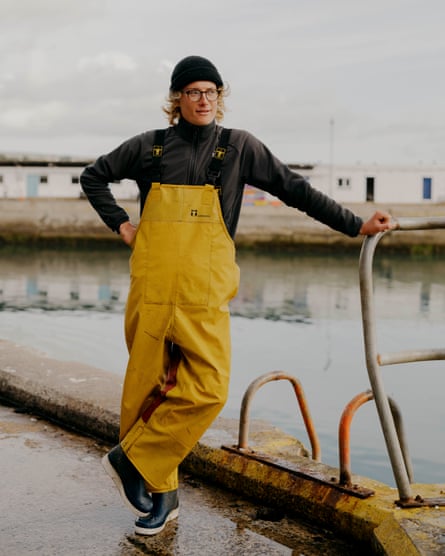
Fisherman Will Roberts, 22, on the quay at Newlyn. ‘I couldn’t imagine working in an office or somewhere indoors, and not be surrounded by all of this’
A couple of fishing veterans show the group around the harbour, demonstrate some basic knots and splices and give them an insight into what can be a lucrative and long-term way of life, here on their home shores.
Fifty-three-year-old Nigel Taylor is from a village on the outskirts of Newlyn and has worked at sea for decades. “When I was growing up, everybody had connections with the port, either working in it or around it or some sort of job connected to it.”
Working-class kids, he says, could start at entry level straight from school and make a lot of money.
“We used to be called three-day millionaires, because we were only out at sea for three days and could make a small fortune,” he says. “That has changed – but there are still fish out there to catch and you can still make a very good living.”
According to the National Careers Service, the average wage for a deckhand is between £22,000 and £30,000 a year but one of the older men tells the prospective fishers they could be earning “up to £40,000 to £50,000 in a short space of time”. The level of pay is eye-opening to the participants. Ranging in age from 14 to 22, their work situations read like a case study in Cornwall’s low-wage job market – one works in Tesco, another in a holiday park that closes for the season, another in an ice-cream shop that is also shut for winter. Several have friends who have moved away to find better opportunities elsewhere. All want to stay in Cornwall, but doing a job that offers more than seasonal hours at minimum wage.
At the end of the tour, Tom Miller, 17, a labourer from Newquay, eagerly signs up to the 10-day training course that will provide the mandatory certificates needed to go to sea. “People tend to think that fishing is just being cold and wet all the time,” he says. “I spent a lot of time as a kid fishing with my dad. I’ve always really liked it, and so why not give it a go as a job? It’s a more steady income than labouring jobs. And I love being out at sea. I honestly wouldn’t care what the weather is like.”
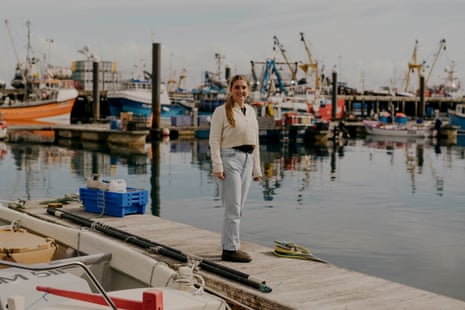
Matilda Phillips on the harbour at Newlyn: ‘Fishing gives you an identity, a sense of belonging’
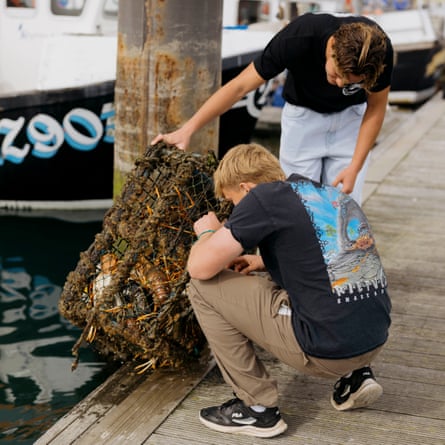
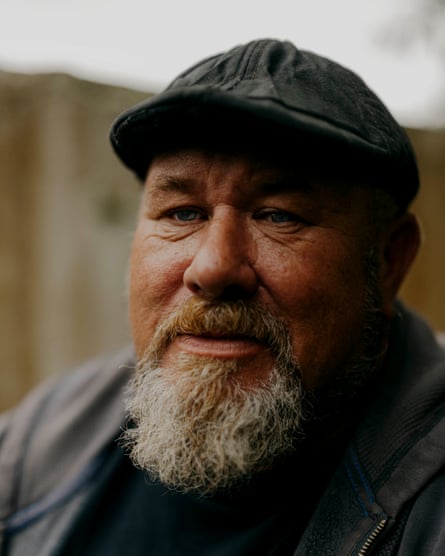
Tom Miller, standing, top, and Guy Mitchell at the taster day for young people; Reece Kelly, left, can’t wait to get started on a fishing boat; fisher Nigel Taylor, right, who has decades of experience at sea
Reece Kelly, 22, who lives in Camborne, an inland town in the centre of Cornwall, also can’t wait to get started. “I am getting pretty bored working in a supermarket,” he says. “I love the sea and I like the idea of doing something outside in the open air that’s a bit more exciting than Tesco.”
For Matilda Phillips, 22, the success of the training course is proof that young people are keen to keep Cornwall’s fishing industry alive. “Fishing gives young people the opportunity to stay here in Cornwall,” she says. Phillips is from a fishing family in Cadgwith, a small cove on the Lizard peninsula, and helped set up the Young Fishermen Network (YFN) two years ago to support young people coming into the industry. It is the first network to focus on young fishers in the UK and now has more than 70 members in almost every port in Cornwall.
“People talk about decline in fishing but what I see is an industry that’s thriving. In Cadgwith there are six full-time boats all crewed by people under the age of 30,” she says. “Many members of the network really enjoy being part of a heritage industry that’s gone on for hundreds of years, and the fact that fishermen are still highly respected in our communities and are at the centre of life in them. Fishing gives you an identity, a sense of belonging.”
Will Roberts is one of a handful of young fishermen running his own small commercial boat from Newlyn
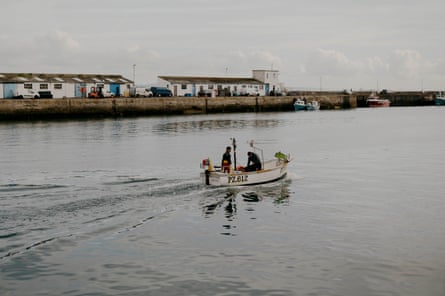
Becoming a fixture in Newlyn harbour’s fishing scene has certainly been transformative for Roberts, who experienced mental health issues as a teenager and struggled at school. “I had severe social anxiety and found it really hard to talk to people,” he says. “When I started fishing, I didn’t have a clue what I was doing and I didn’t know anyone in the harbour. But then the older guys all started talking to me. They’ve been amazing and given me so much help. My anxiety has pretty much disappeared now.”
He even has his own YouTube channel, under the moniker the Cornish Fisherman, where his videos get more than 50,000 views. “I am not sure why people like the videos so much, they are just me in the boat, having good days, having bad days. But I enjoy showing what my life is like,” he says. “There aren’t that many other fishermen using a rod and line like I do; this way of catching has been fading out. But people seem to want to buy fish that’s been line-caught, so maybe it will become more popular again.” Not too popular, though, he hopes. He turns the camera off when heading to his favourite catching grounds to keep his best locations a secret.
Cornwall has been battered by horrendous storms over the past few months, but Roberts has no plans to quit fishing anytime soon. “There are some older fishermen who meet up on a bench in front of the lifeboat station every day, just to chat and tell wild stories,” he says. “They keep joking that one day it will be me sitting on that bench and I’ll be the old man telling stories to the young folk. They are probably right – that probably will be me one day. Because once fishing is in your blood, it seems to stay there.”
[Source: The Guardian]
/file/attachments/orphans/20250610_UNEPDecadeonEcosystemRestoration_SouthAfricanThicket_ToddBrown_18_275286.jpg)