


/file/attachments/orphans/ED_543155_209242.jpg)


























Fin Smith: Jonny Wilkinson helped me get out of my own head
Fly-half reflects on his topsy-turvy Six Nations, the influence of his boyhood hero and high standards at Northampton

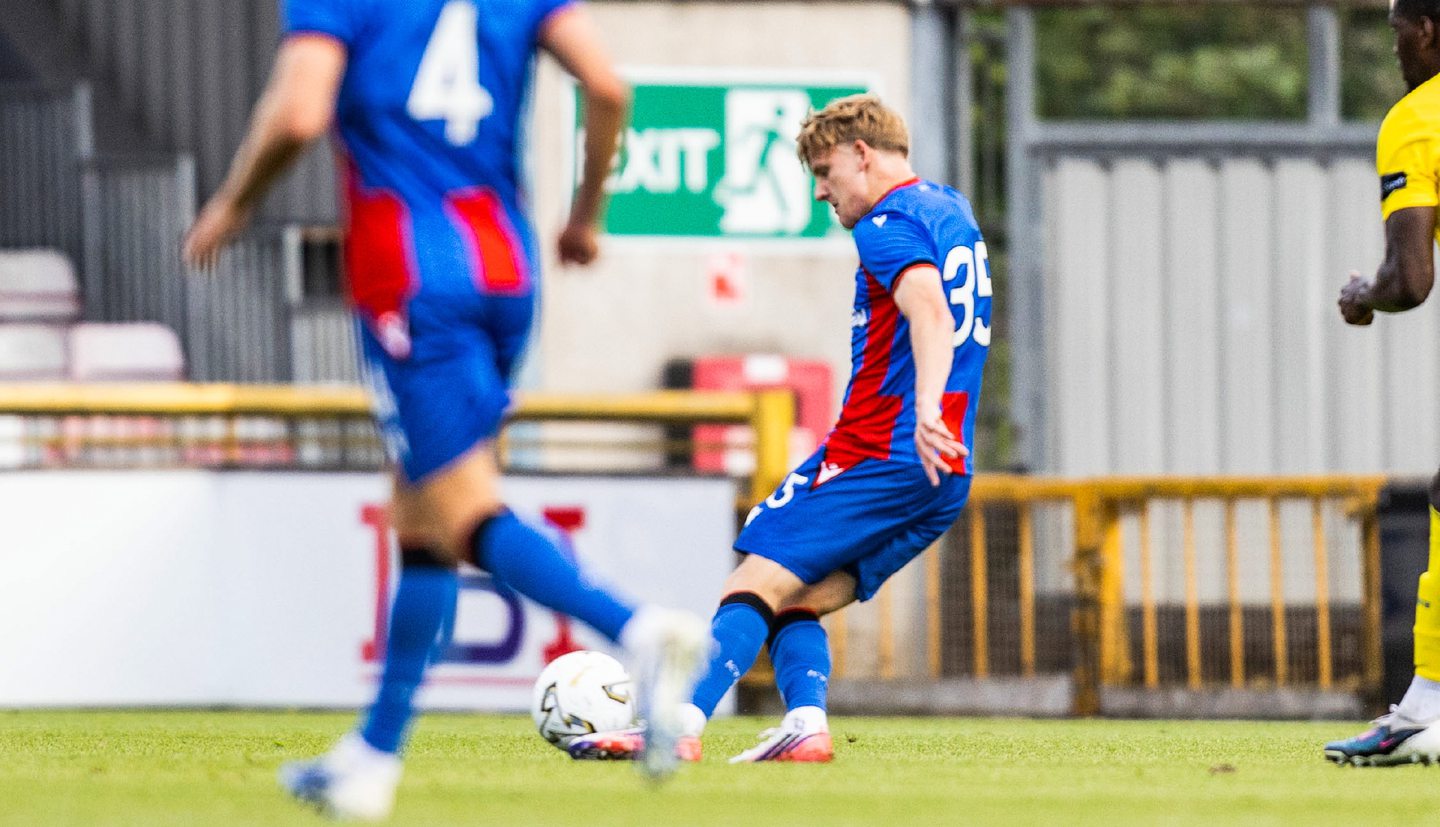
In some ways, little has changed for Fin Smith. The Northampton Saints fly-half is preparing for a Champions Cup quarter-final on Friday night, having finished the Six Nations as England’s starting 10 just as he did this time last year.
Yet as he basks in a sun-trap, dodging heckles from Henry Pollock at Cinch Stadium at Franklin’s Gardens, Smith reflects upon the past 12 months as “a weird old time”. That might be putting it mildly. A brief synopsis would be: lost Champions Cup final, called up for the Lions, overlooked for the Test series, dropped from England’s match-day squad before finally being recalled for the back end of the Six Nations. The highs have been exhilarating; the lows, especially his absence from England’s squad, crushing. Smith compares it to being thrown into a blender – “You just get chucked around: you are playing here, you’re playing there, you’re not picked this week, you are picked this week.”
Northampton has always been Smith’s sanctuary, his safe place where he remembers rugby is supposed to be fun. Yet of all the figures that have helped him to navigate the past 12 months, Smith highlights the role of Jonny Wilkinson acting as his “main sounding board”.
Nominally, Wilkinson is England’s kicking coach, but Smith says the relationship goes far deeper than tees and technique. The 2003 World Cup winner was also Smith’s childhood hero and Phil Dowson, the Northampton director of rugby and a former team-mate of Wilkinson’s at Newcastle, recognises a few similar character traits. In his playing days, Wilkinson was crippled with introspection. This also afflicts Smith, who has a tendency to pore over hypotheticals, and it has been Wilkinson’s advice that has recently helped him get out of his own head.
“I think people think our relationship is just as a kicking coach and stuff,” Smith tells Telegraph Sport. “But actually more of it is that sort of psychology and feeling a certain way about the game. Jonny has probably been the main sort of sounding board I’ve chatted to around a lot of the psychology stuff.
“A lot of it’s been around enjoying yourself and doing what feels right rather than what you think you should be doing. He was someone that spoke to me a lot about that side of things, around getting out of your head. He says to me a lot that your body knows exactly what to do when you’re out on the pitch. I used to be someone that was very much like right in this position, I’m going to do this. And if this defender comes to me, I’m going to do this. Actually, I’ve managed to get rid of a lot of that and just be like: ‘Look, there’s certain focuses for the week.’ But once I’m out there, just trust myself and let my instincts come out.”
Smith has always been fascinated by sports psychology. Sam Vesty, the Northampton head coach, recently lent him a book called The Inner Game of Golf which touches on many of the same themes Wilkinson espoused, of letting muscle memory take over. Yet by Smith’s own admission his career had been “fairly plain sailing” until recently.
Being called up by the Lions was a dream come true but he left with regrets that he proved to be the only fly-half in the squad not to get a Test minute. “I wish I had slightly focused a bit more on myself and just been a tad more inward focused just so I made sure that my house was in order before I was worried too much about what moves we’re doing, all that sort of stuff,” Smith said. “I was 22-23 doing that, and it’s a pretty overwhelming experience. I was more just grateful to have done that, and if I get an opportunity to go again, I’ll definitely have a slightly different approach towards it.”
Returning to the England set-up, he found himself supplanted by George Ford as starting fly-half for the autumn. Not only that but with England head coach Steve Borthwick favouring Marcus Smith’s versatility off the bench, Smith suddenly found himself on the outside of England’s Test bubble looking in without ever putting a foot wrong. “I was sat in the stands for the All Blacks game thinking: ‘This is so good.’ All the boys out there doing doing us all so proud and it’s like just tough not being out there,” Smith said.
“It was really difficult and something I struggled with for the first couple of weeks being back in camp. At the start, it was definitely a case of feeling a bit sorry for myself. I was having conversations with Steve of just trying to get my head around it of what could I have done differently? And a lot of it was there’s nothing you could have done differently. It’s just someone else has come in and played really well, which was absolutely true. Steve was almost sort of saying it’s his decision, and that’s what he felt like doing at the time.”
A conversation with team-mate Fraser Dingwall helped Smith realise that sometimes selection is out of your control and things “always come back around”. This came to pass when Smith was recalled for the Six Nations match against Italy, which may have proved to be a poisoned chalice with the hindsight of England’s 23-18 loss.
Even before the game, Smith had made a decision to delete the social media app X on his phone. “I was sort of reflecting on this is great when I’m doing well, I’m reading nice stuff about the team on there and reading nice stuff on myself on there,” Smith said. “But actually, if I’m sort of using that to almost dictate how I’m feeling about myself, then actually, what’s the point?”
At least both Smith and England managed to finish the Six Nations on an encouraging note in their 48-46 defeat by France. While Smith says he was “pretty dark” about the loss in the immediate aftermath, he says that the attacking performance was “a decent blueprint for how we want to look at a team”. Smith disputes the notion that a handbrake was suddenly lifted in Paris, but does admit that the attack received a renewed focus in the build-up. “I think that France week, we just really focused on our attack a little bit more, and that’s probably why it seemed to flow slightly better,” Smith said. “It was that rather than it being, ‘Yeah look this week, we’re just gonna chuck it around and sack off what we’ve been doing before.’ It was just probably that we were executing it slightly better.”
Coming out of the Six Nations, Smith went for a week’s holiday in Majorca with his girlfriend – “We were going to go to Dubai but that probably was not the most sensible trip idea” – allowing him to thoroughly decompress. His mind cleared, his body rested, he returned to Northampton with a renewed focus.
“We’re so clear of the standard that we expect of each other in training that you almost just catch back up with how the rest of the group and sort of just fall into line,” Smith said. “There’s also the element that we just love it. I love coming here and training with my mates, and love how we play here. I love competing, I love just running around and playing rugby. There’s never an element where it feels like,‘I’ve got to go do this now.’ It’s just fun, isn’t it?”
“Fun” is exactly what Friday night’s Champions Cup quarter-final against Bath is, in a match-up of English rugby’s two outstanding teams. The contest against Finn Russell, the man who beat him to the Lions No 10 jersey, will be box-office viewing on its own. “It’ll be a big one, definitely,” Smith said. “When the lights come on on a Friday night, you know this is going to be tasty. We’re pretty much close to a full international side, and they’ll be the same. Because of what’s gone in the years before, obviously the Prem final a couple of years ago, and some of the big games we’ve had against them in the last couple of years, this one will have a bit of spice.”
[Source: Daily Telegraph]