








/file/attachments/orphans/iStock-802203090_325419.jpg)


















Green-veined White
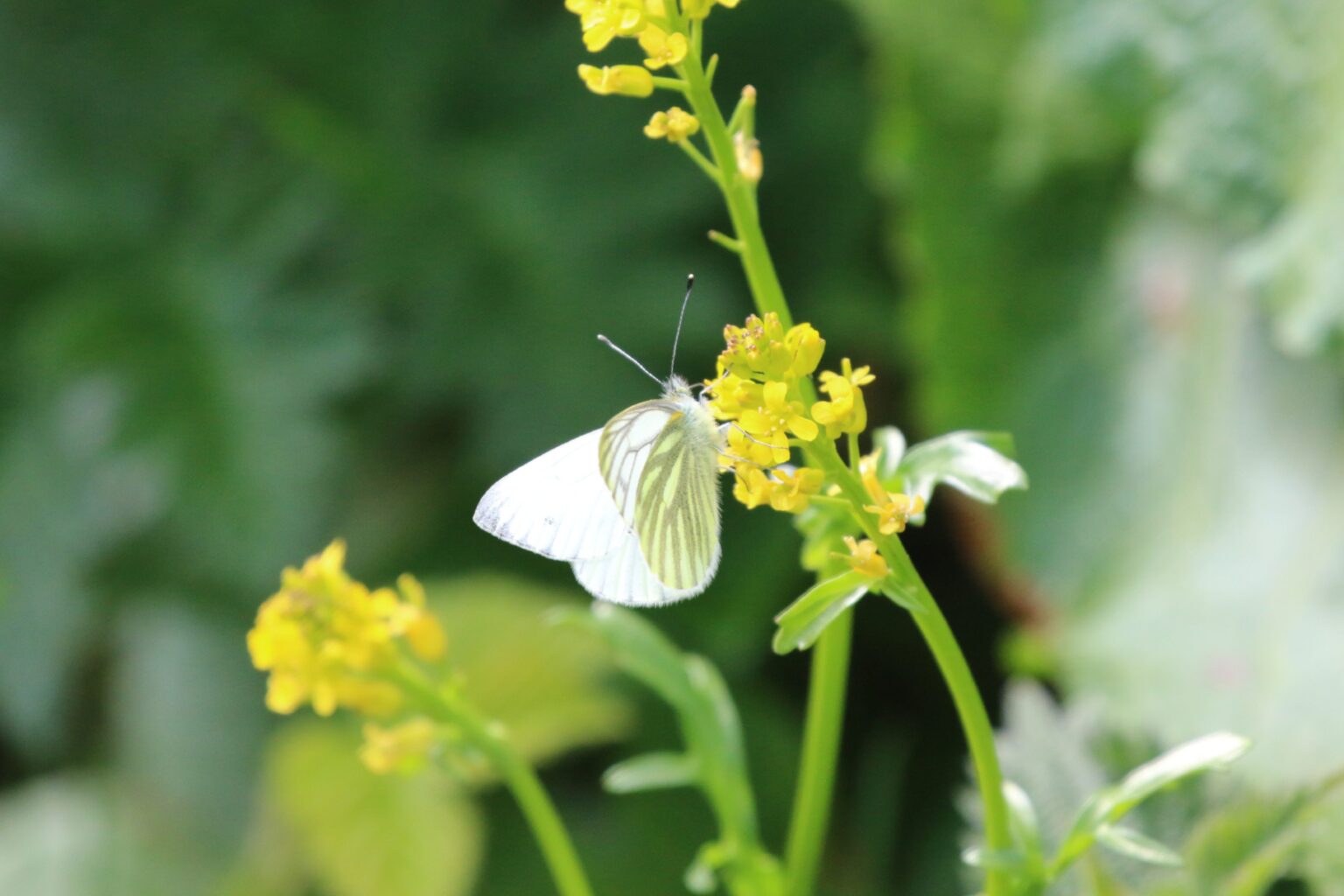
A Green-veined White butterfly settles on a flowering plant at Howe o’ Buchan, Peterhead, Scotland.
Pieris napi
The wings are white, with prominent greenish veins on the hind wing. The upper wings have one or more spots. The Small White is similar but lacks the green veins.
Size and Family
- Family: Whites and yellows
- Size: Medium
- Wing Span Range (male to female): 50mm
Conservation Status
- GB Red List (2022): Least Concern
- Butterfly Conservation priority: Low
- European status: Not threatened
Caterpillar Foodplants
A range of wild crucifers is used: Garlic Mustard (Alliaria petiolata), Cuckooflower (Cardamine pratensis), Hedge Mustard (Sisymbrium officinale) Water- cress (Rorippa nasturtium-aquaticum), Charlock (Sinapis arvensis), Large Bitter-cress (C. amara), Wild Cabbage (Brassica oleracea), and Wild Radish (Raphanus raphanistrum). Nasturtium (Tropaeolum majus) and cultivated crucifers are used occasionally.
Lifecycle

Habitat
This common butterfly prefers damp areas with lush vegetation, where its foodplant is found. It usually occurs in hedgerows, ditches, banks of rivers, lakes and ponds, damp meadows, moorland and woodland rides and edges. The butterfly can also be found in gardens but favours damp areas.
Distribution
- Countries: England, Scotland, Wales and Ireland
- Widespread throughout Britain and Ireland
- Abundance trend: -14% (1976-2019)
- Distribution trend: -11% (1973-2019)
[Source: Butterfly-conservation.org]