

/file/attachments/orphans/Nonku-Nombasa-Mapisa3_550805.jpg)



















My experiences at the Moscow Olympic Games
Dr Elena Rounkova - Moscow State University Institute of Asian and African Languages (1983)
Dear reader! I would like to tell you about an event that happened forty-six years ago. In 1980 the Soviet Union welcomed the Moscow Olympic Games. Being a third year student at the historical-philological faculty of the Asian and African Institute at Moscow University I had an exciting life time opportunity of working at the Olympics as an Arabic language interpreter. Here I am intending to tell you about what I saw there from an insider's perspective.
In many universities and institutes the whole academic year of 1979-80 was dedicated to preparing the students to work during the Olympics in many different spheres according to the professions they were being prepared for. Our academic year group completed its studies in the middle of April; we did not have exams, and after finishing the year all of us began studying to improve our Arabic language abilities.
One month before the opening ceremony we were given the names of the locations we were expected to work for. I was sent to the Olympic Village. There were two types of interpreting jobs there - working with an Olympic team and working with the interpreting centre. I was sent to the interpreting centre. Several days later students of our institute were taken on an excursion to the Olympic village. Some of us stayed in the Village after the excursion, because they were briefed at their work place. Those were the ones who were honoured to meet Leonid Iliych Bredznev, General Secretary of the CPSU. I was not a lucky one as I left after the briefing in the interpreting centre.
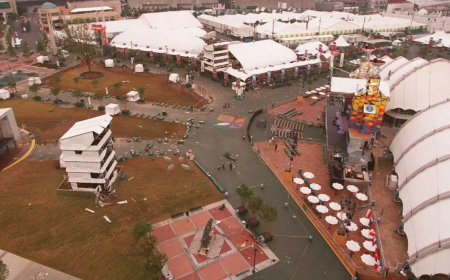
The Village itself looked comfortable and well built.

This is the view from the Directory building where I worked.
The Olympic Village was meant to host 14,500 people. There were eighteen 16-storey residential apartment buildings, sports grounds, the Directory, recreation areas with restaurants, bars, hair dressing salons, a library and a concert hall, there was even a school and kindergartens. For security reasons the Village was surrounded by a fence, and it was not possible to enter without a special identity card. Every apartment building had a medical facility, while the second floor of every building had the headquarters of the Olympic teams that lived in that apartment building. The living quarters of the buildings were divided into male and female areas. The rooms were intended for two people.
The beds were quite long, however the people who were members of national basketball teams had the longest beds - they were 230 cm long.
For those who might be curious about what the menu for members of the Olympic teams was, I here provide a menu for one day.
BREAKFAST
Option 1: Salmon with mayonnaise, boiled pork with vegetables (zucchini and gherkins) and cream of spinach soup.
Option 2: Steamed cod with sauce, langet (a meat dish), spikachki (fried hot dogs), and rice pudding with a sugar crust.
LUNCH
Option 1: Salmon with lemon, meat with a side dish, chicken broth, Arabic-style bean and kidney soup, Moscow-style borscht.
Option 2: Sturgeon with Russian-style sauce, pork schnitzel, roasted turkey, roasted cauliflower with butter, apple in syrup, stewed pineapple.
DINNER
Sprats with lemon, boiled tongue with a side dish, sorrel soup with egg and sour cream, pike perch cocotte, beefsteak, chicken in milk sauce, vegetables in milk sauce, stewed apricots.
There was a free cultural programme arranged each day for the Olympic Village (for people who worked with the teams and interpreters it was also for free, we could even stay after work and visit any entertaiment we liked).
Working at the Olympic Village was refreshing, interesting, entertaining and highly educating. I got acquainted with many sportsmen coming from Arabic countries - Egyptians, Kuwatis, Iraqis, and Jordanians. I saw beautifully dressed Nigerians in their hand made clothes, Vietnamese sportsmen and so on. There was a really friendly atmosphere at the Olympic Village.
There were some funny things happening there. Once I saw from the window of our office the legend of Soviet basketball Uliana Semenova followed by a very short Asian person who was rather shy, but in the end he touched her arm. As one of interpreters explained to us, touching such a tall person was regarded as bringing good luck to oneself. I myself experienced an embarrassing moment. One of the interpeters taught me the wrong Arabic word for the word “on duty”, and, answering the question of a member of a Jordanian National team I said instead of being “an interpeter on duty” “interpeter of the security services”. The face of the Jordanian sportsman became pale, he stopped smiling and suddenly remembered that he had a lot to do.
What was wonderful about working in the Village? Smiles which one met everywhere and the respect with which people treated each other.
The weather during the Olympics in Moscow was not as one would have expected... Every day dark clouds gathered over our beautiful capital threatening to pour out all their water exactly at the time when track and field events were supposed to happen. However, it never happened. The moment the events were supposed to happen the skies became clear. This was due to a special way of clearing the clouds with the help of silver flour embedded into clouds, and the same technique was used for clearing the skies for the parades.
Moscow during the summer Olympic Games looked underinhabited. Moscovites were working, tourists and Olympics participants were in the places where it was programmed for them to be. And Soviet citizens who usally came in summer to visit the capital on their own were not allowed to come - security in the city was at its best. The streets were clean, the people who worked in the retail shops were exclusively kind and welcoming. The Olympics brought out our best qualities, as they are intended to.
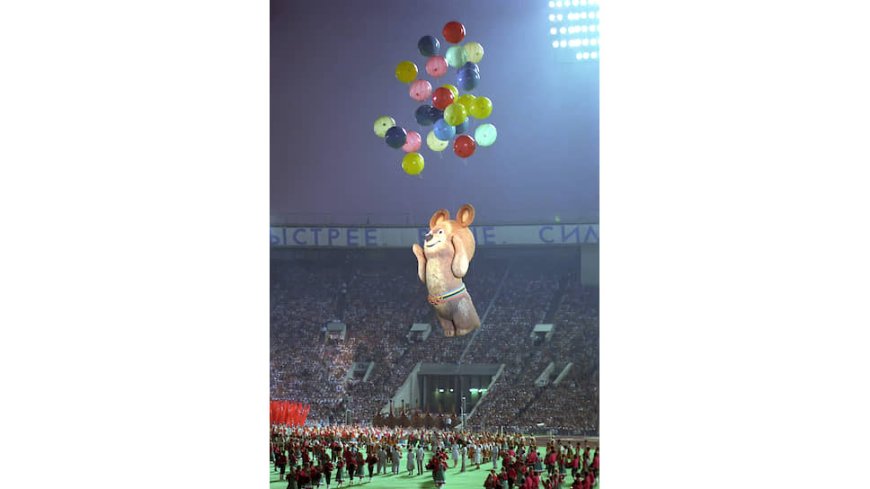
The most tearful moments for me were two. Number one - the flight of the Olympic bear... And number two - my arrival at the Olympic Village in the afternoon the day after the closing ceremony. The village was empty. There were some teams, but they were very few and all the Arab people were gone, so there was no work.
For the benefit of our work as interpreters I should say that we received a salary for three whole months. And it was substantial, I was paid 160 roubles per month (my first salary when I became a junior research fellow was 120 roubles) and that was quite a big sum! Many of the students who worked at the Olympics found their future spouses - we met many people of different professions and we were all young. I will always remember the Olympics as one of the most beautiful events in my life...
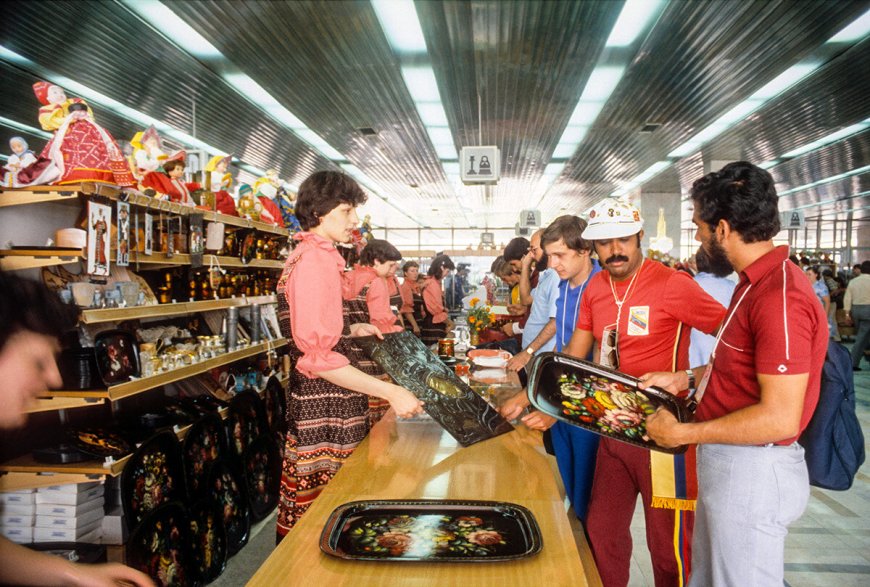
Sale of souvenirs in the Olympic Village





/file/attachments/orphans/ED_543155_209242.jpg)
