



/file/attachments/orphans/Nonku-Nombasa-Mapisa3_550805.jpg)


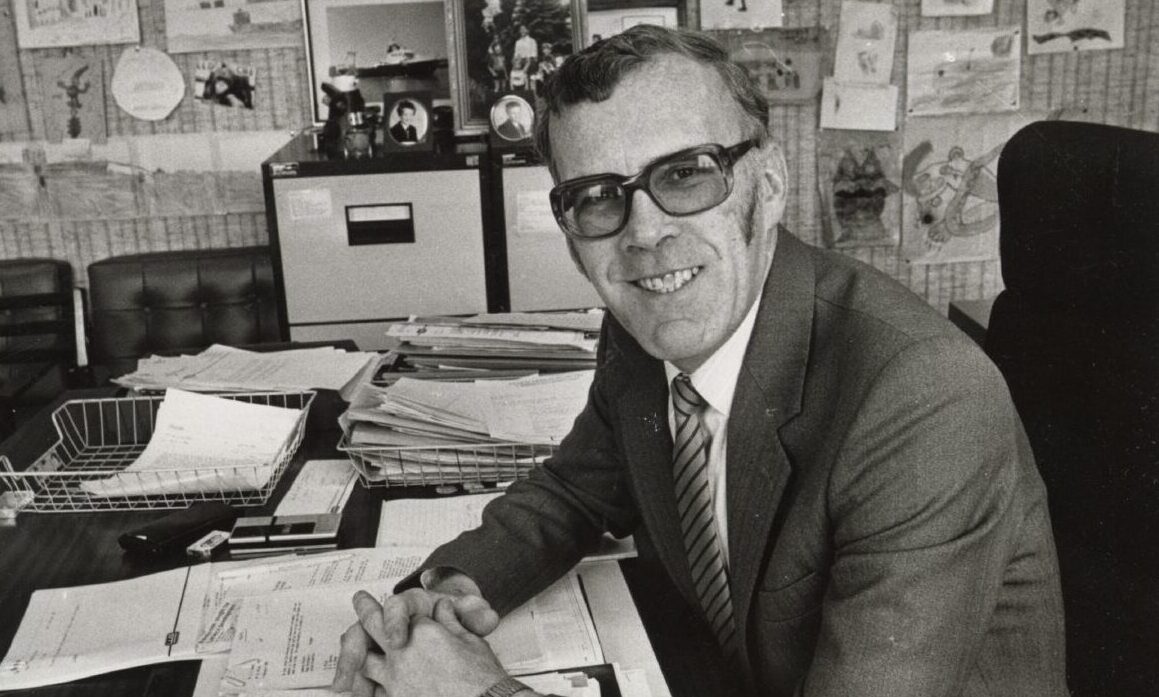






















John Croft, Bletchley Park codebreaker and painter who later launched the British Crime Survey
While reading history at Christ Church, Oxford, in 1942 Croft was asked by his tutor whether he would be interested in intelligence work

John Croft, who has died aged 103, had a varied career as a codebreaker during the Second World War, as a civil servant who rose to be head of the Home Office Research Unit (1972-83), and as a painter of “non-figurative, minimalist, work derived from landscape”.
He was born Ivor John Cohen in Brondesbury, north London, on January 6 1923 to Jewish parents, Oswald Cohen, whose family were of Dutch origin, and Doris, née Phillips. The family changed its name to Croft in the 1930s.
From Westminster School, John read history at Christ Church, Oxford. There, in the spring of 1942, he was asked by his tutor whether he would be interested in intelligence work. He was interviewed by AD Lindsay, the Master of Balliol, and by Colonel John Tiltman, then (though Croft did not know it) head of the military section at Bletchley Park.
At the end of May he was told that he had been selected for a special intelligence course and sent to a Government Code and Cypher School in Bedford, where he undertook courses in basic cryptography and intensive German before being assigned to Hut 15 A at Bletchley Park.
This was home to the “Testery” which, under Major Ralph Tester, was tasked with breaking the German High Command’s top-level cypher system, Tunny (the nickname given to the Lorenz cypher system), after Bill Tutte deduced the internal mechanics of the Lorenz machine in the spring of 1942.
A machine known as the Heath Robinson had been installed at one end of the hut to help speed up the process, but it was slow and unreliable, and during Croft’s six months at Bletchley the cryptographers used laborious manual methods to break Tunny traffic. On one occasion Croft’s team broke a message from Hitler demanding the arrest of the Yugoslav Chetnik partisan Draža Mihailović, for which the reward would be “a large quantity of gold”.
Most of the traffic was humdrum, however, and in 1943 Croft secured a transfer to the Government Communications Bureau (MI6) in central London.
There, though the Soviet Union was nominally an ally against Nazi Germany, Croft joined a specialised group tasked with intercepting and analysing Soviet and Comintern cryptographic communications across Europe.
Soviet intelligence rings are known to have tried to compromise this operation. Later, after Kim Philby was unmasked as a Russian spy, Croft recalled how a colleague had arrived in the office to find that someone had broken into his files. Croft speculated that Philby, then a senior intelligence officer, had been behind the break-in.
In 1945 Croft returned to Oxford to finish his degree. After graduation he qualified as a teacher at London University’s Institute of Education and from 1949 taught at local authority schools in London before joining the Civil Service as an inspector in the Home Office children’s department in 1951.
There he became interested in criminology, and in 1953 took an MA at London University with a thesis on juvenile delinquency. In 1966 he moved to the Home Office research unit as a senior research officer, becoming head of the unit in 1972 and publishing numerous articles on criminal justice issues.
By the late 1970s the unreliability of police-recorded crime statistics was causing concern, and in 1982 Croft oversaw the launch of the first British Crime Survey (now the Crime Survey for England and Wales, CSEW), a parallel independent statistical measure aimed at addressing this acknowledged “crisis” in official statistics. The CSEW is now generally regarded as the most reliable source of long-term trends in crime.
Croft was involved in international forums on criminology, including serving as chairman of the Criminological Scientific Council of the Council of Europe (1981-83) and joint chairman of the International Congress on Criminology in 1988.
Throughout his career he pursued a hobby of oil painting, inspired by abstract expressionism. Though self-taught, he was proficient enough to have his work exhibited in group and solo exhibitions.
In 1967 he was one of 15 artists featured in the Survey ’67 exhibition at Camden Arts Centre and in the early 1970s he had solo exhibitions at the universities of Sussex and Warwick. His friend Brian Sewell wrote admiringly of Croft as “a painter of exquisitely judged hard-edged abstracts” in his autobiography, Outsider.
He continued to paint and exhibit after his retirement in 1983 from the Home Office, when he moved to the Isle of Man, and later to Bath. He was represented by David Simon Contemporary from 2016 to 2026 and his work can be found in collections including those of Oxford and Cambridge universities and the LSE.
Croft was appointed CBE in 1982 and was predeceased by his partner, Ray Kelly.
John Croft, born January 6 1923, died July 12 2026
[Source: Daily Telegraph]








/file/attachments/orphans/ED_543155_209242.jpg)
