


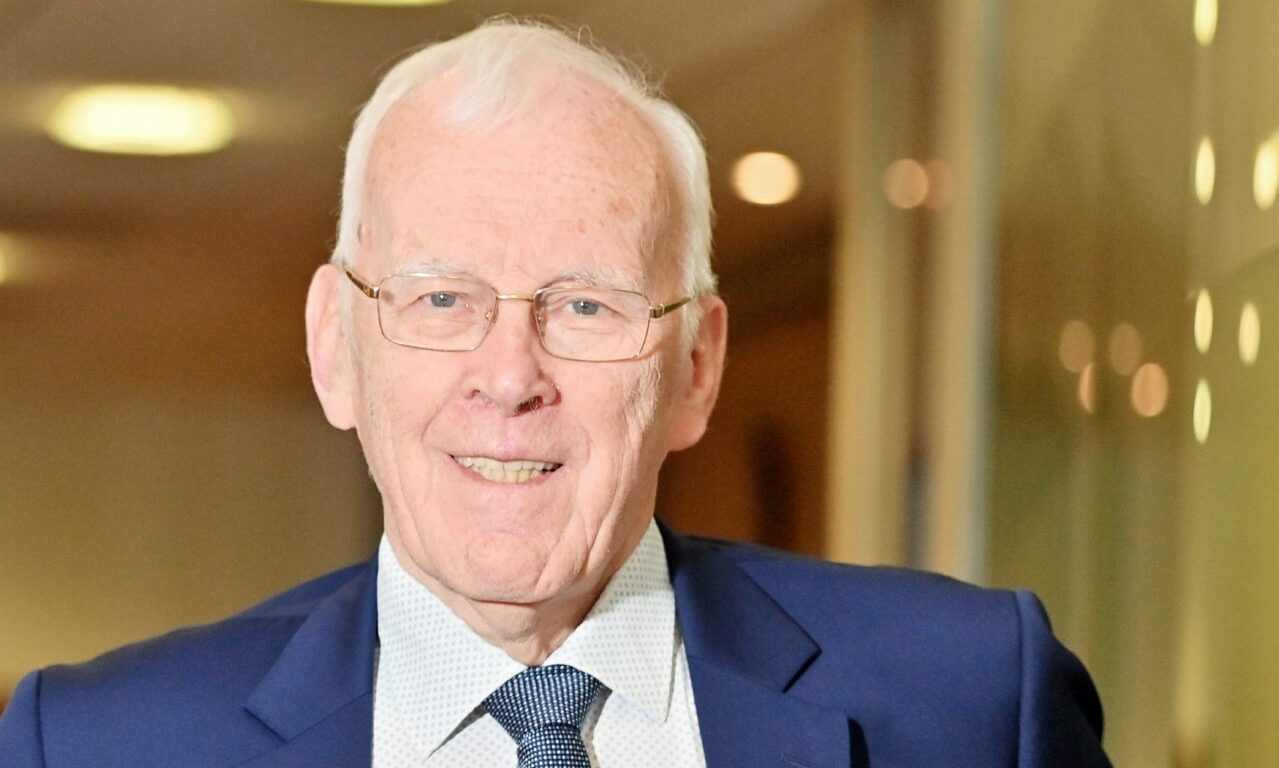















How Sir Ian Wood built a global giant and put Aberdeen on the world stage
The businessman who built Wood Group into a global energy giant left what Martin Gilbert described as a legacy "no one else has ever done and I suspect no one else ever will".
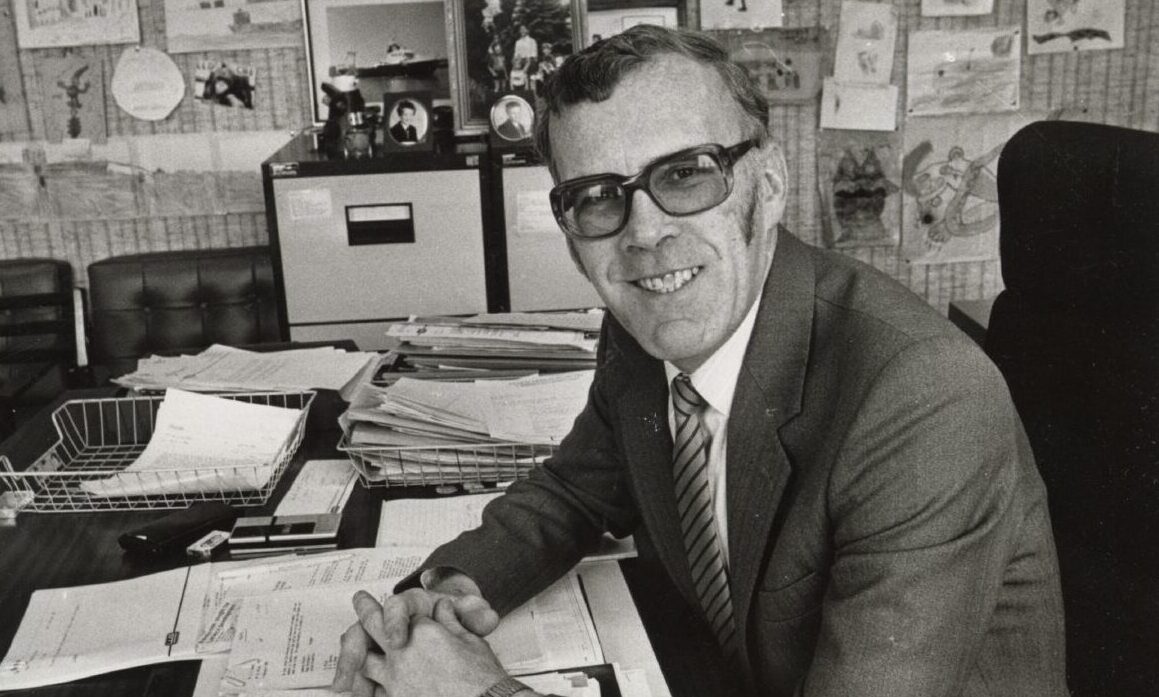
No business leader has shaped the north-east economy more profoundly than Sir Ian Wood.
Over six decades, he transformed a modest Aberdeen family engineering firm into a global energy services giant, helping establish the Granite City as the oil and gas capital of Europe while becoming the region’s most influential business figure.
His death at the age of 84 marks the end of an era for Aberdeen and the energy industry he helped build.
The business that would become Wood Group had humble beginnings. Founded in 1912 by William Wood as Wood & Davidson, it repaired ships serving Aberdeen’s thriving deep-sea fishing fleet at a time when the city was renowned for its granite exports and maritime heritage.
Sir Ian joined his father John Wood’s business in 1964, beginning a career that would redefine not only the company but the north-east economy.
As fellow businessman Martin Gilbert put it, “What he did for Aberdeen no one else has ever done and I suspect no one else ever will.”
To many who worked alongside him, Sir Ian was more than a boss.
Former Wood Group managing director Bob Drummond described him as a “father figure” whose belief in people inspired generations of business leaders.
Wood Group growth
When Sir Ian took control as managing director in 1967, the firm employed around 600 people and was already one of Scotland’s largest engineering businesses.
But he recognised that the days of relying on the fishing industry were numbered. With the discovery of North Sea oil around 100 miles east of Aberdeen in 1970, he saw an opportunity others had yet to grasp.
He steered the company towards the emerging offshore sector, laying the foundations for what would become a multinational engineering group operating around the world.
By the late 1970s, it was making £50m in turnover with a £3m profit – equivalent to about £20m today.
In 1980, a separate company within the organisation was launched, known as the John Wood Group Engineering Ltd.
In 1982, aged just 40, the business leader became one of the youngest north-east men ever to be made a Commander of the British Empire (CBE).
Wood Group grew to become one of the UK’s biggest energy services groups in the years that followed.
Encouragement and belief
For Bob Drummond, who joined Wood Group as a managing director on October 1, 1992, Sir Ian’s ambition was evident from the moment they met.
“I remember my final interview in his office and remembering that feeling of both excitement and awe,” he said.
“He had banks and banks of paper trays around him. He knew where everything was.
“I remember him saying to me: ‘We’re not only going to get into the big league, we’re going to be the champions of the big league. It’s not just about getting into the Premier League. We’ve got to be the champions’.”
Mr Drummond said that vision defined Sir Ian’s leadership.
“It was the way he encouraged you, and challenged you but in a really empowering sort of way,” he said.
“He had this great knack of literally putting his arm around your shoulder and saying, ‘I’ve got every belief in you’.
“It supercharged your confidence. He understood people so well and knew how to inspire them and get the best out of them.
“Over the years, I came to know not only one of the finest business leaders I have ever had the privilege to work alongside, but someone I regarded as a father figure.
“Sir Ian’s contribution to Aberdeen, the north-east and Scotland is beyond measure. He built a remarkable global business, but he also transformed communities through his generosity, his vision and his unwavering belief in the potential of this region.
“His legacy will endure for generations.”
Drive to succeed
He credits Sir Ian, who was knighted in the New Year Honours for services to the energy industry in 1994, with instilling a culture centred on excellence, customer relationships and collaboration long before those ideas became commonplace in corporate leadership.
That philosophy helped Wood Group attract some of the industry’s best engineers, invest heavily in training and development and earn a reputation for delivering major projects to the highest standards.
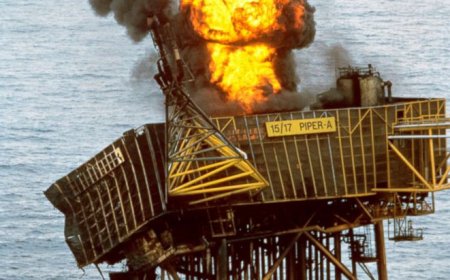
Following the Piper Alpha disaster, in which Wood Group employees lost their lives, Sir Ian also made safety a defining principle of the business.
Alongside strengthening the company’s culture, he drove an ambitious programme of international expansion, reinvesting profits into acquisitions while continuing to win major contracts with companies including BP and Shell which Bob described as “game changers” for the firm.
Mr Drummond said: “The other thing that really changed gear during the early 90s and beyond was the way they invested everything in further acquisitions to power the growth of the global business.
“It was that really ambitious reinvestment. They went on a super-successful round of strategic development with acquisitions on top of winning contracts from the core businesses.”
Ambassador for Aberdeen and the region
By 2001, revenues were in excess of £900m.
The business hit another milestone in 2002 when it was floated on the London Stock Exchange.
Sir Ian, who was Scotland’s richest man at the time, received around £50 million from the shares he sold on the first day of trading, with the value of his remaining 45% stake increasing by almost another £50 million.
Despite building a global company, Mr Drummond said Sir Ian never forgot where he came from.
“Wherever he went, he was such an ambassador, not just for his own company, but for Aberdeen and the region,” he said.
“He really positioned it as not just the oil capital of Europe, but one of the oil capitals of the world.”
Sir Ian was chief executive until 2006 and chairman until 2012.
From the time of the stock market floatation to Sir Ian stepping down as chairman he and his family gradually sold off most of its shareholding in Wood Group to fund philanthropic ventures.
By the time he stepped down, Wood Group had become one of the world’s leading energy services companies, employing tens of thousands of people across dozens of countries.
‘Deep and wide legacy’
It was after leaving the board that Sir Ian devoted even more of his time to philanthropy and the long-term future of the north-east through initiatives including The Wood Foundation, Opportunity North East and ETZ Ltd.
Reflecting on Sir Ian’s legacy, he added: “It’s hard to imagine how you can possibly fill a pair of shoes that has been so influential and leaves such a deep and wide legacy.
“He’s the only guy I know that still called me ‘young Bob’. Even as recently as the tail end of 2025, he still called me young Bob, which always brought a wee smile.
“I will always be grateful for his friendship, his guidance and the confidence he placed in me. It was one of the greatest privileges of my career to work with him, and I will never forget our time together.”
Wood’s fortunes changed dramatically after Sir Ian’s departure.
Following years of losses, failed takeover attempts and financial turmoil, the Aberdeen-founded engineering giant agreed a £217 million takeover by Dubai-based consultancy Sidara earlier this year.
The deal came after the company published long-delayed accounts revealing a £2.1 billion loss for 2024, a stark contrast to the business Sir Ian had built into one of the world’s leading energy services firms.
Huge influence on people
Sir Ian’s legacy was measured not only in the company he built, but in the people he inspired.
One of them was Martin Gilbert, who first met him in 1982 before they worked together at Aberdeen Asset Management.
“He was an original director of Aberdeen Asset Management, which is a little-known fact,” Mr Gilbert said.
“For me personally he had a huge impact on my career. His effect on the oil industry has been huge.
“What he’s contributed to Aberdeen, no one’s done anything like it probably since the Victorian era.
“What he did for Aberdeen no one else has ever done and I suspect no one else ever will.”
[Source: Press and Journal]





/file/attachments/orphans/ED_543155_209242.jpg)