








/file/attachments/orphans/iStock-802203090_325419.jpg)


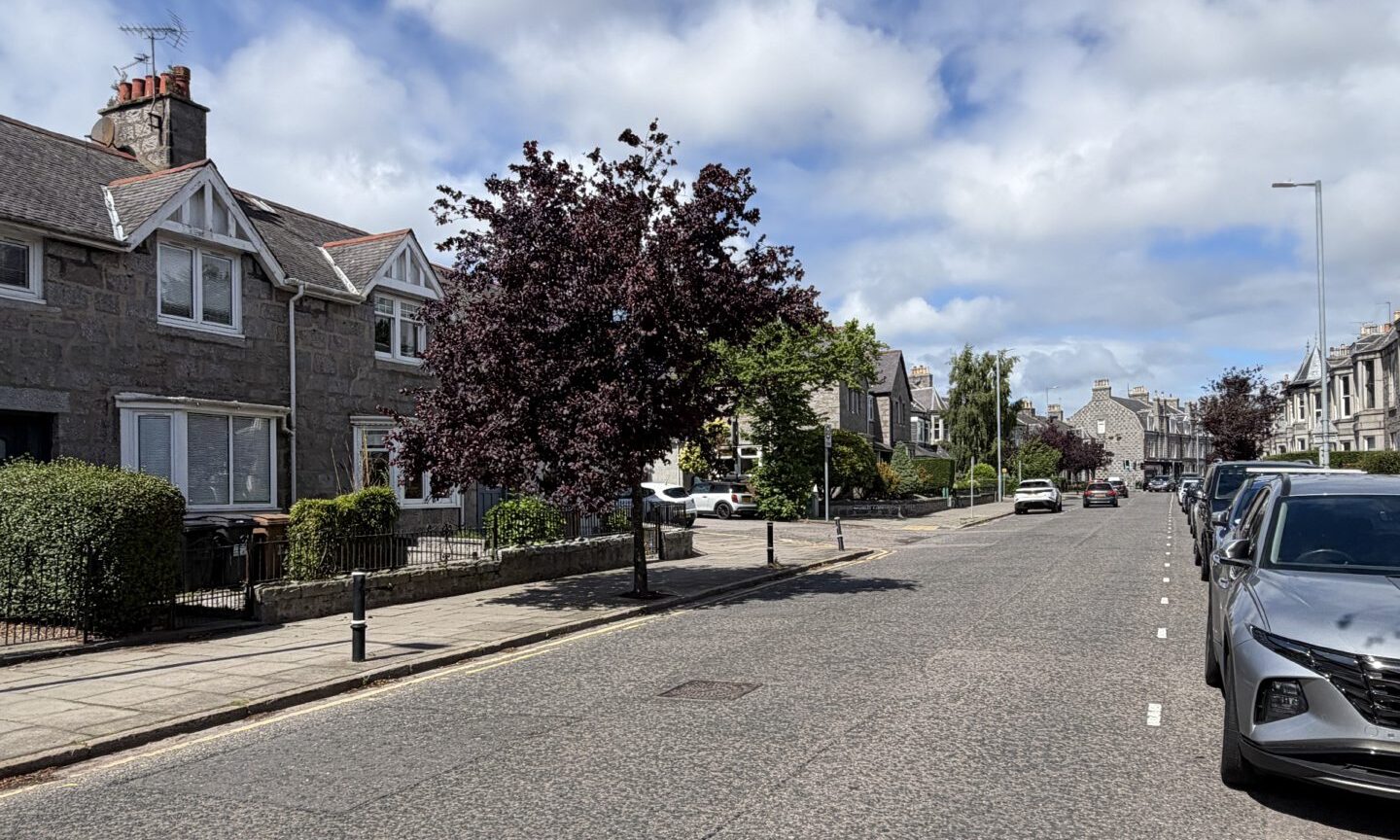











Lord Mackay of Clashfern, Lord Chancellor whose sweeping reforms upset the legal establishment
He became Lord Advocate and later Lord Chancellor under Mrs Thatcher, who liked his mix of intelligent radicalism and innate conservatism

Lord Mackay of Clashfern, who has died aged 99, was a great reforming Lord Chancellor; he made history by being the first member of the Scottish Bar to occupy the Woolsack, and by attempting – not entirely successfully – to dismantle some of the restrictive practices of the Bar.
A gentle man of deep religious convictions, Mackay rose to the height of office from humble beginnings as a Scottish railwayman’s son. A mathematician before he turned to study law, he was one of the most intellectually gifted men to become Lord Chancellor in modern times. He always, though, conducted himself with self-effacement, and as a Cabinet minister was respected for his intelligence and probity by all his colleagues, and most of his opponents.
James Peter Hymers Mackay was born on July 2 1927. His father, a signalman, brought his son up in a fiercely Protestant family within the Free Presbyterian Church of Scotland. His childhood was divided between Edinburgh and Caithness, where he spent much time on an uncle’s farm.
He won a scholarship and a bursary to George Heriot’s School in Edinburgh and was quickly marked out as intellectually distinguished. In 1945 he went to Edinburgh University to read mathematics and natural philosophy, and while there won a major scholarship to Trinity College, Cambridge.
He did not take it up immediately; because of a shortage of university staff available to teach mathematics, and with university rolls bulging after the war, he chose instead to go to St Andrews, where he spent two years lecturing in mathematics. He then, at last, went on to Trinity in 1950, becoming an undergraduate again.
It was at Trinity that Mackay first became interested in the law, not least because of the intellectual similarity between legal and mathematical argument. He had intended to stay at Cambridge and undertake research, but the death of his mother induced him to return to Scotland to be with his father.
He became a solicitor, working while attending law classes twice daily, taking an LLB with distinction and becoming a pupil advocate to William Grieve, subsequently a prominent Scottish judge. He was called to the Scottish Bar in 1955.
Mackay’s intellectual brilliance and capacity for hard work ensured success in his new career. In 1965, only 10 years after being called to the Bar, he took Silk. He came to be regarded as the most outstanding lawyer of his generation and in 1972 was appointed Standing Junior Counsel to the Queen’s and Lord Treasurer’s Remembrancer, the Scottish Home and Health Department and the Commissioners of Inland Revenue in Scotland.
His excellence was matched by his popularity among his colleagues, and they chose him, at the remarkably early age of 46, to be Vice-Dean of the Faculty of Advocates. In 1976, three years later, he became Dean of the Faculty, the leader of the Scottish Bar.
There was still no hint in Mackay’s life of an interest in politics. Given his rapid advancement, a senior place on the Scottish bench seemed inevitable. Margaret Thatcher, however, always anxious to bring into her Government those with a reputation for making short work of problems, had plans for him.
It had been expected that when she formed her first administration in 1979 Nicholas Fairbairn, the leading legally qualified Scottish Tory MP, would be appointed Lord Advocate. However, Mrs Thatcher wanted a less flamboyant and more academic figure, and asked a surprised Mackay to assume the post. With his natural sense of duty, he accepted. He took a peerage and was appointed to the Privy Council.
“It was out of the blue,” he later said. “I never got to know the whole story. I first met Mrs Thatcher after I was already Lord Advocate. I was introduced to her at the door of the Station Hotel in Perth.”
His reputation had preceded him, though, and it was not merely his legal excellence but also his rigid Calvinism that appealed to the Prime Minister; the mix of intelligent radicalism and innate conservatism was exactly what she required.
Taking on the post did not mean any sudden shift in Mackay’s politics. There is the story of him meeting the future Labour leader John Smith, a colleague of Mackay’s at the Scottish Bar, shortly after his preferment. Smith is said to have congratulated Mackay on his new position, and to have expressed surprise that Mackay was a Tory. Mackay reputedly replied: “Who said I was?”
He spent five years as Lord Advocate before, at his own request, departing to become, first, a senator of the College of Justice in Scotland, and then a Lord of Appeal in Ordinary. He attracted admiration from ministers during his time in government, particularly in helping Norman Tebbit frame the Conservatives’ trade union legislation.
Mackay’s involvement in politics, and his consequent exposure to the English Bar, also stimulated ideas in his mind for the reform of the Bar. But he did not imagine, at that stage, that he would ever be in a position to implement them.
Lord Hailsham, Lord Chancellor since Mrs Thatcher had come to power, retired in 1987, and any thought Mackay might have had of succeeding him was dashed by the appointment of the Attorney-General, Sir Michael Havers, to the Woolsack. But ill health had dogged Havers as Attorney-General, and never allowed him to establish a grip on the post of Lord Chancellor. After only three months in the job he was persuaded to retire by Mrs Thatcher, and Mackay succeeded him.
His appointment caused immense surprise. The English legal establishment had always counted on having one of their own at the top of their profession. In Lord Hailsham, they had long had a leader indulgent toward their desire for stagnation and avoidance of reform. The Scottish lawyer who now took over soon made it clear that one of his main tasks would be to bring the mind of an outsider to the question of reform.
He immediately set about drawing up a controversial Green Paper on legal reform; it turned out to be a full-scale attack on restrictive practice. Barriers were to be broken down between solicitors and barristers, and the monopoly of the latter on rights of audience in Crown Courts was to be challenged. Moreover, there would be an element of joint training for the two halves of the legal profession.
The first member of the Scottish Bar to sit on the Woolsack was having the predictable effect of outraging the English establishment, and anxious judges, rather like trade unionists, went into conclave to discuss these shocking proposals. Meanwhile, their author took a dignified but active role in public debate on the reforms, anxious to present himself as the voice of reason.
In an article for The Daily Telegraph on April 28 1989 – one of several he wrote in the national press during an assiduous campaign to win acceptance for his proposals – Mackay justified one of these proposals that had most shocked the sensitivities of solicitors, broadening advertising, and publishing fees. “Like it nor not,” he wrote, “we are in a consumer age when it is crucial for suppliers of services to think carefully about their potential clients and how to reach them.”
This creed – of making the legal profession serve the public better – was what motivated Mackay in all his reforms, and what, his supporters in politics argued, upset the profession most about them. For this reason he pushed the idea of contingency fees – allowing solicitors to take cases on a “no win no fee” basis – and this, too, scandalised the profession.
Mackay believed that such arrangements would help those for whom going to law for redress of grievances was not then an option – “that section of the population which, although not wealthy, is sufficiently well-off not to be eligible for legal aid”. The consumer was lucky, in this respect as in many others, not to have a Lord Chancellor who, like most of his predecessors, came from a comfortable and privileged background.
Mackay had a fearful argument with the Bar in particular over his proposals. He accused them of stifling the views of barristers who did not oppose reform, and disputed the Bar’s adherence to the sanctity of the “cab-rank” principle by which a barrister must accept any brief offered.
He claimed that barristers were rejecting legal aid briefs – which could have gone to solicitors had the monopoly been ended – and told the Bar: “It would be helpful if the Bar ceased living in an age of wish fulfilment and dealt with the Bar as it actually is, rather than the Bar as they would like it to be.”
Eventually, Mackay was forced into compromise with the Bar, though the legal establishment feared he had “softened them up” for further assaults later. It was widely reported that much of the pressure for compromise had come from Sir Patrick Mayhew, the Attorney-General, who had reportedly threatened to resign unless some of the proposals were moderated.
Mackay had other pressing business to address, notably the reform of the civil justice system, a move toward family courts, and reform of legal aid. He was also under pressure at this time in his private life, ironically so for a man who had always behaved blamelessly and with the highest moral rectitude, and had kept that part of his life very private indeed.
In his official capacity as Lord Chancellor, Mackay had attended Requiem Masses for two of his judicial colleagues. This outraged other members of his church – the “Wee Frees”, as they were colloquially known. Mackay was an elder, and such contact with the Roman Catholic Church was held to be unthinkable.
The “Wee Frees’” creed was that the Catholic Church was “the whore of Babylon” and was “idolatrous and blasphemous”. The Pope was held to be “the anti-Christ, the son of Perdition, a Man of Sin and the Masterpiece of Satanism”. They did not, therefore, take too kindly to Mackay’s attendance at the masses.
Mackay had always taken his religion extremely seriously. Sundays were spent in contemplation and inactivity, except for prayer. Even when a Cabinet minister, he would not work or answer the telephone on the Sabbath.
It surprised and astonished his friends and colleagues that a man so humane and intelligent could still subscribe to a church so reactionary and bigoted, and which repudiated Darwin. Other friends had long suspected that Mackay was intellectually dissatisfied with the church, and had long contemplated a move toward mainstream Calvinism.
Mackay was summoned in November 1988 to appear before a meeting of the Church’s Southern Presbytery, which suspended him as an elder and barred him from taking communion for six months. It was a harrowing experience for Mackay, but he remained loyal to his Church.
He appealed, but when the Church’s synod heard the appeal the following May they rejected it, and Mackay was effectively cast aside by his church. He continued in his old observances. He would not even consent to be interviewed for the Sunday papers unless convinced that the part in which his interview would appear would be distributed on a Saturday.
Mackay’s decency, intellect and freedom from pomposity – rare in a Lord Chancellor – won him respect and admiration. As Speaker of the House of Lords – then one of the functions of the office – he was firm but charming, thoughtful and popular.
Taken together with his industry in reform, he established himself as one of the great Lord Chancellors. Asked how he stopped himself from being bored when listening to tedious debates from the Woolsack, Mackay replied: “I am never bored.”
The only recreation to which he would admit was walking. Such free time as he had was spent with his family, or reading, or in contemplation. Even while Lord Chancellor, he spent as much time as he could at home in Edinburgh.
He was succeeded as Lord Chancellor by Lord Irvine of Lairg, on Labour’s return to power in 1997. He was appointed a Knight of the Thistle in 1997, served two terms as Lord High Commissioner to the General Assembly of the Church of Scotland from 2005, and was Lord Clerk Register of Scotland.
He married, in 1958, a cousin, Elizabeth Hymers; she survives him with their daughter and two sons.
Lord Mackay of Clashfern, born July 2 1927, died July 7 2026
[Source: Daily Telegraph]