
/file/attachments/orphans/Nonku-Nombasa-Mapisa3_550805.jpg)


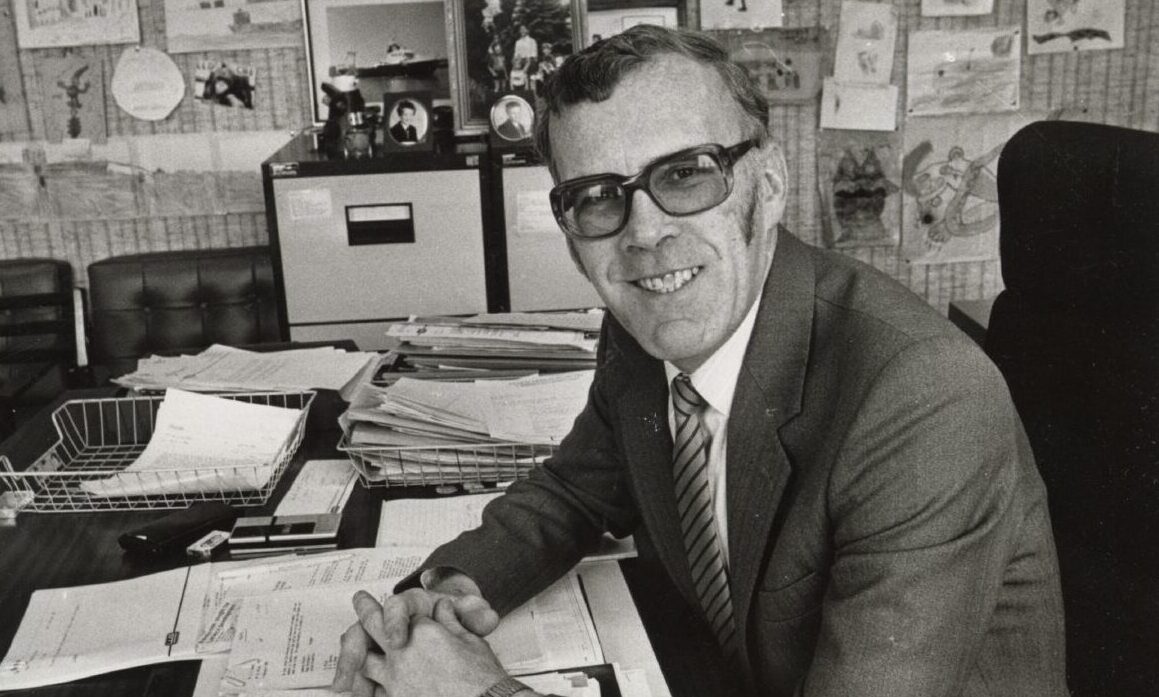


















Rear-Admiral John Roberts, naval aviator who served in the Arctic convoys and on D-Day
He helped to fight off an invasion of British Honduras in an operation he described as ‘a classic demonstration of carrier air power’

Rear-Admiral John Roberts, who has died aged 101, was a naval airman and veteran of D-Day, the Arctic convoys and the Korean War; when he died, he was Britain’s oldest admiral.
On January 26 1972, Roberts was commanding the aircraft carrier Ark Royal and refuelling from the tanker Olmeda in mid-Atlantic when his yeoman of signals showed him a message from London saying: “PROCEED WITH ALL DISPATCH TO BRITISH HONDURAS”.
He had only read similar words in Hornblower novels, but a follow-up signal told him that Guatemala was poised to invade the British colony of British Honduras (now Belize) using US-trained paratroops. An air presence over the colony was wanted: how quickly could Ark Royal provide it?
From the moment Roberts read the signal he knew that this was his opportunity to show the world the reach and flexibility of a British aircraft carrier. He told his people: “This is a classic demonstration of carrier air power. The world is watching but we’re Ark Royal, and you are 809 Naval Air Squadron. I know you’ll do a good job.”
Within minutes Ark Royal had turned to port and was pointed at Central America 2,500 miles away. Steaming at 25 knots or 600 nautical miles per day, Ark Royal headed for the channel between Florida and Cuba while preparing to launch two Buccaneer bombers towards Honduras and two Phantoms as air-refuelling tankers on the way out and back.
Overcoming all engineering, navigational and operational problems, and heavy weather, two days later Roberts launched his Buccaneers at 1,300-miles range.
Shortly after 1300 on July 28, observers at Fort George and at Belize airport heard the two Buccaneers roar noisily overhead at 250 feet, leaving a faint smoke trail against the blue sky. Looking up, the potent shapes of the two bombers with their red, white and blue roundels under their wings seemed locked in a grim formation. With the arrival of the Buccaneers, the threat from Guatemala collapsed.
In Parliament, Lord Carrington, the Defence Secretary, told the House how useful it was to have an aircraft carrier around, and this forgotten crisis, chronicled by Rowland White in Phoenix Squadron (2009), serves as a lesson in deterrence.
John Oliver Roberts was born on April 4 1924 in Rawalpindi, where his father was serving in the RAF. In 1938 he entered the Royal Naval College, Dartmouth. His first ship, while still under training in 1941, was the battle cruiser Renown, where he showed himself to be a promising officer, and then the destroyer Tartar, both in the Mediterranean. After sub-lieutenant courses in 1943, he joined the destroyer Serapis on Arctic convoy duties that winter and the following spring.

Then in June 1944, Serapis escorted a convoy of landing craft to Sword Beach. Roberts recalled that at 0530, as they approached the French coast, there was a huge bang as Serapis’s sister ship, the Norwegian Svenner, was hit by two torpedoes and sank – the only Allied warship to be sunk on D-Day. Undeterred, Serapis delivered her convoy to the beach at 0730. Roberts felt sorry for the soldiers who had endured a choppy crossing of the Channel, when many were seasick, and thought they were only too pleased to step on to dry land.
As Serapis closed on the shore, “we started bombarding the coast and there were cruisers doing the same, battleships even further back and hundreds of aircraft dropping bombs… It was the most amazing sight. It was so astonishing I have never forgotten it, and I haven’t forgotten those poor Norwegian sailors who died so far from their homeland.”
Serapis remained close off the coast for the next several days to give fire support to the battle ashore with her 4.7-inch guns. That autumn Serapis escorted “the Queens”, RMS Queen Mary and Queen Elizabeth, each carrying 15,000 troops across the Atlantic to the war in Europe.
When Roberts heard that career officers were wanted for the Fleet Air Arm, he volunteered. He flew solo in a Cornell in Canada in 1945 and made his first deck landing on Vengeance in 1947 in a Seafire III (a navalised version of the Spitfire). In January 1949, Roberts experienced the first of several flying accidents, when he crashed on the deck of the carrier Triumph in a Seafire XVII: the aircraft came to rest in the barrier, preventing damage to other aircraft, but it was a write-off.
During the Korean War he served with 850 Naval Air Squadron in the Australian carriers Vengeance and Sydney, and was in Sydney, preparing for her second war patrol off the peninsula, when armistice was declared. In August 1954, flying a Sea Fury, he bounced on landing, missed all the arrester wires and again entered the barrier, but this time the aircraft was repairable.
Next, Roberts commanded the Southern Division of the RNVR, and in 1957 and 1958 803 Naval Air Squadron in Eagle, whose CO, the future Admiral of the Fleet Sir Michael Le Fanu, reported Roberts to be “a fine, fearless officer who has led his squadron with skill, determination and devotion”.
In 1960-61, based in Singapore, he commanded the frigate St Brides Bay, which he took on a deployment into the Pacific and to Pearl Harbor as flagship of his commander-in-chief, Admiral Sir David Luce. At Nouméa in New Caledonia he was carried dryshod to the beach in his ceremonial white uniform wearing sword and medals by burly islanders but ended the evening shirtless and dancing in a grass skirt.
Roberts excelled at a wide range of other sea and shore appointments, including command of the frigate Galatea (known as “the Black Pig”), and was promoted to flag officer. As a rear-admiral, his appointments were: Flag Officer Sea Training (1972-74); Chief of Staff to the Commander-in-Chief Fleet (1974-76); and Flag Officer, Naval Air Command (1976-78). He was appointed CB in 1976.
In some 3,241 hours of flying, Roberts flew a score of aircraft, from the Tiger Moth biplane to the twin-engine Meteor jet, and logged 424 deck landings.
After the Navy, he was non-executive director of Aeronautical & General Instruments, director general of the British Printing Industries Federation, a Fellow of the Royal Society of Arts and a staunch supporter of his local branch of the Royal British Legion in Kent.
In 2014 he was interviewed with Kristin Scott Thomas for the Channel 4 programme My Grandparents’ War, and in 2022 he appeared as himself Michael Caine and Glenda Jackson in the unexpected box-office success The Great Escaper.
He remained alert, suffering few of the indignities and illnesses of old age, and recently published his memoir J.O.R. 101 Not Out.
He married four times: in 1950, to Lady Hermione Stuart; in 1963, to Marigold Gordon Gray; in 1987, to Sheila Traub; and after her death in 2012 to Gillian Ffrench-Reckitt, who survives him with a daughter from the first marriage, a son and a daughter from the second marriage, and four stepchildren.
Rear-Admiral John Roberts, born April 4 1924, died December 28 2025
[Source: Daily Telegraph]







/file/attachments/orphans/ED_543155_209242.jpg)