

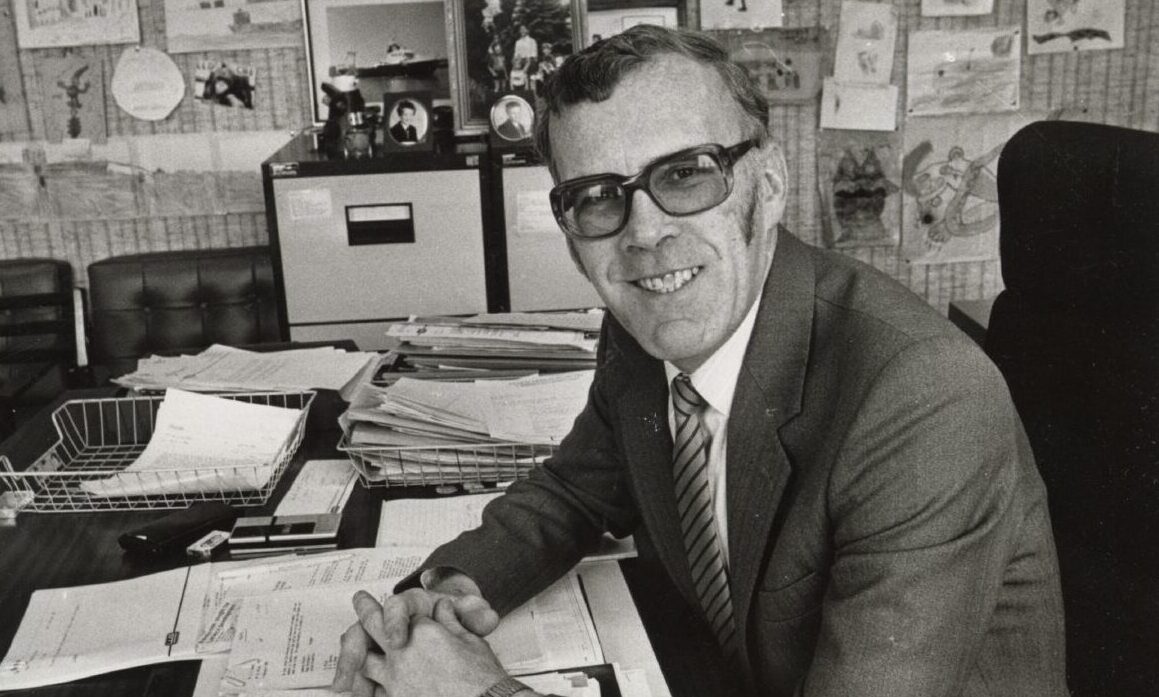

















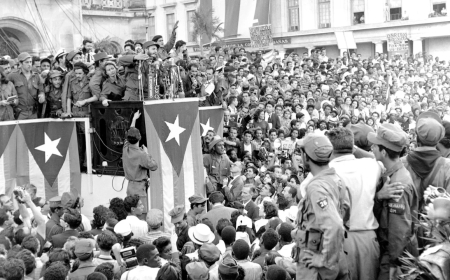

Lalbahadur Pun, Gurkha awarded the MC for his courage during an operation in Malaysia
His MC citation stated: ‘This was an outstanding example of inspired leadership under appalling conditions by a brave young officer’

Lieutenant-Colonel Lalbahadur Pun, who has died aged 88, was awarded an MC in 1965 during the Confrontation with Indonesia; he was the first Nepalese citizen and Sandhurst-commissioned Gurkha officer to achieve the rank of lieutenant-colonel in the British Army.
Early in 1965, Lalbahadur was a captain serving with the 1st Battalion 2nd Gurkha Rifles (1/2GR) in Sabah, Malaysia. In command of a company based at Long Pasia, a mountain village, he led a number of successful cross-border patrols.
On September 25 he was patrolling with two platoons on the Indonesian side of the border when they picked up fresh tracks of a force estimated to be about 60-strong. This led them to the banks of the River Sembakung, the main communication route between the Indonesian forward bases and their headquarters and supply depots in the rear.
After watching for three hours, they spotted four boats about 1,500 yards away. These disembarked 25 men and picked up another 18. Moving through dense, rugged terrain in the oppressive heat, they were unable to find the camp and spent a miserable night in the jungle in heavy rain. There was no possibility of eating or making fires for cooking in case they gave their position away.
The next morning they moved off at first light. The downpour had produced treacherous conditions underfoot, but after two hours slogging through the jungle, the tantalising smell of roasting meat gave away the enemy’s position.
A reconnaissance showed that there were about 60 Indonesian soldiers in a newly built camp. Lalbahadur sent part of his force around the flank to try to cut off the enemy’s retreat, but when they came up against a cliff they had to be recalled, and joined the main attack.
The enemy were taken completely by surprise. At least 13 were killed and the remainder fled. Twenty-five weapons were found, including two light machine guns, as well as documents. The citation for the award to Lalbahadur of a Military Cross paid tribute to his courage and determination. His divisional commander wrote: “This was an outstanding example of inspired leadership under appalling conditions by a brave young officer.”
Lalbahadur Pun was born on November 17 1937 at Shikha, a village in Myagdi District, Nepal. His father, the highly regarded Honorary Captain Tikajit Pun, served on the 1st Chindit Expedition in Burma with the 2nd King Edward VII’s Own Gurkha Rifles and was awarded the Indian Distinguished Service Medal.
The young man was educated at St Joseph’s School, Dehra Dun, India; after serving in the ranks he attended RMA Sandhurst. He was commissioned into 2GR, and in 1960 he joined the 1st Battalion in the Far East.
Lalbahadur was ADC to Major-General (later General Sir) Walter Walker from 1963 to 1965 during the Confrontation with Indonesia. Walker, who was then Director of Operations in Borneo, was a tough, experienced soldier and a hard taskmaster.
In late 1969, Lalbahadur left the Battalion to attend Staff College Camberley, the first Gurkha to do so. After a staff job in Hong Kong, he moved to Brunei, first as a company commander of 1/2 GR and then as Chief Instructor at Tutong Training Camp, the British Army Jungle Warfare Training School. On June 14 1975 he commanded the guard for the Queen’s Birthday Parade.
Known by his nickname “Bhalu” (“Bear” in Gurkhali), Lalbahadur was highly regarded as a trainer. He was also a strong and fearless sportsman – although his footballing skills were chiefly remembered for their enthusiasm and energy rather than their accuracy.
He had a great sense of what was fair and a determination to do the best for his soldiers. On one occasion, a helicopter bringing the ration resupply dropped a large bag of meat at his company’s base. Realising that the other companies needed the protein just as much but were not going to get any, he insisted that the pilot land again, pick up a large proportion of the meat and take it to the other company locations.
Promoted to lieutenant-colonel, the first Gurkha to achieve this rank, he was Commandant of the Brigade of Gurkhas Training Depot, Hong Kong, from 1979 to 1981. In order to cope with large increases in illegal immigration into Hong Kong by Vietnamese arriving in boats and Chinese crossing the Sino-Hong Kong border, the throughput to the Training Depot had to be trebled.
This was achieved by the 12-month deadline without any sacrifice of standards and despite heavy constraints on costs and manpower. Lalbahadur was appointed OBE at the end of his tour.
After appointments as Deputy Commander Support Troops in Hong Kong and Chief Instructor at the Small Arms Wing of the School of Infantry in the UK, Lalbahadur retired from the Army in 1988. In early 1989 he joined the Sultan of Brunei’s Gurkha Reserve Unit (GRU) as a battalion commander. He retired from the GRU in 2000 to live in Kathmandu.
Latterly, Lalbahadur Pun suffered with medical issues, including dementia, for several years. During that time, he made every effort to attend regimental gatherings and reunions. He married, in 1965, Sara Punini; she survives him with their two sons.
Lalbahadur Pun, born November 17 1937, died January 9 2026
[Source: Daily Telegraph]





/file/attachments/orphans/ED_543155_209242.jpg)